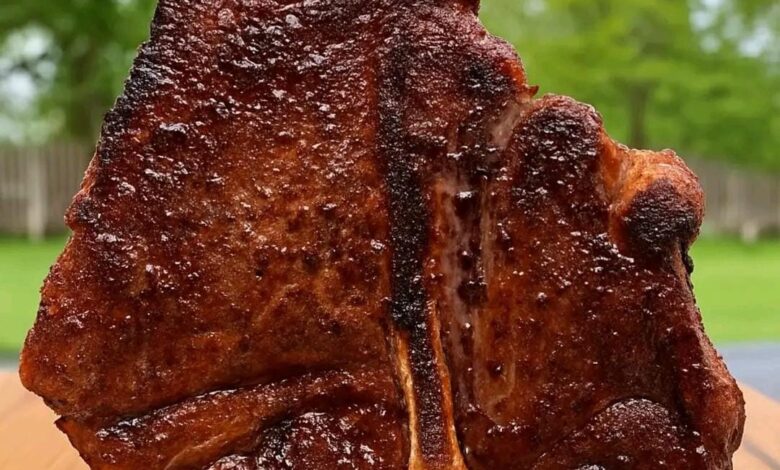
Grilled or Pan-Seared Porterhouse Steak
Introduction
A porterhouse steak is often considered the king of steaks—combining the tenderness of a filet mignon with the rich flavor of a New York strip, separated by a signature T-shaped bone. Cooking a porterhouse properly elevates it from a mere meal to a culinary experience. This guide will walk you through achieving a beautifully seared crust, a juicy interior, and restaurant-quality flavor, whether you’re using a grill or a cast-iron pan.
Ingredients & Quantities
Main Ingredients
1 porterhouse steak, 1.5–2 inches thick
1 tbsp olive oil or neutral oil
1 tbsp kosher salt
1 tbsp freshly cracked black pepper
1 tsp garlic powder
1 tsp smoked paprika (optional for smokiness & color)
½ tsp onion powder (optional)
Finishing (Optional but Highly Recommended)
2 tbsp unsalted butter
2–3 garlic cloves, smashed
Fresh rosemary or thyme sprigs
Instructions
1. Prep the Steak
Let the porterhouse rest at room temperature for 30–60 minutes.
Pat dry thoroughly with paper towels.
Rub lightly with oil.
Season generously on all sides with salt, pepper, and spices.
2. Sear or Grill
Option A: Cast-Iron Pan Sear
1. Heat a cast-iron skillet over high heat until smoking hot.
2. Lay the steak in the pan—do not move it for 2–3 minutes to form a crust.
3. Flip and sear another 2–3 minutes.
4. Reduce heat to medium. Add butter, garlic, herbs to the pan.
5. Tilt the pan and baste the steak with the melted butter for 1–2 minutes.
6. Transfer to a 400°F (204°C) oven if needed to reach your desired doneness:
Rare: 120–125°F
Medium-rare: 130–135°F
Medium: 140–145°F
Option B: Grill
1. Preheat grill to 450–500°F (high heat).
2. Sear steak over direct heat for 2–3 minutes per side.
3. Move to indirect heat and cook until it reaches your desired internal temperature.
4. Remove from grill and top with herb butter.
3. Rest & Serve
Rest steak for 10 minutes before slicing.
Carve by separating the filet and strip from the bone, then slice against the grain.
Origin & Cultural Significance
The porterhouse steak traces its name back to the 19th-century American porter houses—small taverns that served hearty meals alongside dark porter beer. Over time, the steak became synonymous with abundance and celebration due to its impressive size and combination of two premium cuts. Today, the porterhouse remains an iconic centerpiece of American steakhouse dining, symbolizing craftsmanship, quality beef, and communal feasting.
Description
This dish features a thick, well-marbled porterhouse seared to perfection. The crust is smoky, salty, and slightly crisp, while the interior remains tender, juicy, and richly flavored. Butter, garlic, and herbs melt over the steak, infusing it with aromatic depth and elevating it to steakhouse quality.
Optional Additions
Steakhouse compound butter (parsley, lemon zest, garlic, and butter)
Chimichurri for a bright, tangy finish
Cracked peppercorn crust for bolder flavor
Blue cheese crumble added while resting
Smoked salt for post-searing seasoning
Caramelized onions or sautéed mushrooms
Tips for Success
Dry the steak thoroughly before searing to achieve a crisp crust.
Use high heat for the initial sear—don’t be shy.
Don’t overcrowd the pan; one steak at a time ensures proper browning.
Thermometer = perfection. Always check internal temperature.
Resting is essential—it redistributes juices.
Season boldly, especially with thick steaks.
Nutritional Information (Approx. per 12 oz serving)
Calories: ~850
Protein: ~65g
Fat: ~62g
Carbohydrates: 0–2g
Iron: High
Vitamin B12: High
Values vary based on cut, marbling, and added butter.
Conclusion
A porterhouse steak is a masterclass in flavor and texture—perfect for special occasions or anytime you want to indulge in a high-quality cut of beef. With the right technique, you can achieve restaurant-quality results at home with minimal ingredients.
Recommendation
Pair your porterhouse with:
Roasted garlic mashed potatoes
Grilled asparagus
Red wine reduction
Cabernet Sauvignon or Malbec
These sides enhance the rich, savory notes of the steak.
Embracing Healthful Indulgence
While a porterhouse is undeniably decadent, it can be part of a balanced lifestyle when enjoyed mindfully. Serve with leafy greens, roasted vegetables, or a fresh salad to add nutrients and balance richness. Quality ingredients, thoughtful cooking, and moderation allow you to savor indulgent flavors while still embracing a health-forward approach to eating.
If you’d like, I can format this as a recipe card, PDF-style layout, or social-media-ready post.