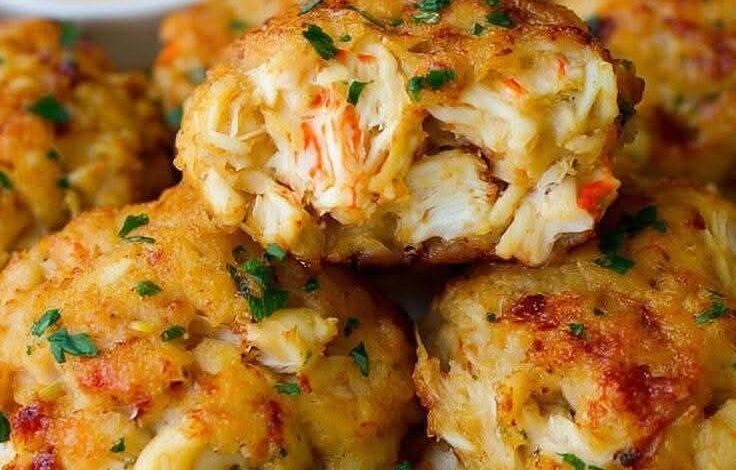
Classic Maryland Crab Cakes: A Taste of the Chesapeake Bay
Introduction
Classic Maryland Crab Cakes represent more than just a recipe—they are a culinary embodiment of the Chesapeake Bay region’s culture and history. Unlike their breadcrumb-heavy counterparts found elsewhere, authentic Maryland crab cakes celebrate the sweet, delicate flavor of blue crab with minimal filler. This recipe honors that tradition, allowing the crab to shine as the true star.
History
Crab cakes have been part of Chesapeake Bay cuisine since Native American tribes first harvested blue crabs. European settlers adopted and adapted these preparations, with recipes appearing in cookbooks as early as the 1930s. The dish gained national prominence when Maryland congressmen would host crab cake feasts in Washington D.C., showcasing their state’s prized crustacean. The “minimal filler” philosophy became codified as a point of regional pride, distinguishing Maryland crab cakes from all others.
Ingredients
For the Crab Cakes:
· 1 pound jumbo lump crab meat, carefully picked for shells
· ¼ cup mayonnaise (Duke’s brand is traditional)
· 1 large egg, lightly beaten
· 1 tablespoon Dijon mustard
· 1 teaspoon Worcestershire sauce
· 1 teaspoon Old Bay seasoning (plus extra for garnish)
· ¼ teaspoon kosher salt
· ¼ cup finely crushed saltine crackers (about 6 crackers)
· ¼ cup finely chopped fresh parsley
· 2 tablespoons thinly sliced scallions
· 1 tablespoon unsalted butter
· 1 tablespoon olive oil or vegetable oil
For the Remoulade Sauce (optional but recommended):
· ½ cup mayonnaise
· 1 tablespoon capers, drained and chopped
· 1 tablespoon cornichons or dill pickles, finely chopped
· 1 teaspoon Dijon mustard
· 1 teaspoon fresh lemon juice
· 1 teaspoon fresh parsley, chopped
· ¼ teaspoon smoked paprika
Methods & Instructions
Preparation Method:
1. Handle the crab meat gently: Place crab meat in a large bowl and carefully check for any remaining shell fragments. Try to keep the lumps intact as much as possible.
2. Make the binding mixture: In a separate medium bowl, combine mayonnaise, egg, Dijon mustard, Worcestershire sauce, Old Bay seasoning, and salt. Whisk until smooth.
3. Combine ingredients: Pour the binding mixture over the crab meat. Sprinkle crushed saltines, parsley, and scallions evenly over the top. Using a gentle folding motion with a rubber spatula or your hands, combine just until mixed—overmixing will break down the lumps.
4. Form the cakes: Divide mixture into 4 equal portions for large cakes or 8 portions for smaller ones. Gently shape each portion into a round cake about ¾-inch thick. Place on a parchment-lined baking sheet, cover with plastic wrap, and refrigerate for at least 30 minutes (up to 4 hours). This chilling helps them hold together during cooking.
5. Prepare the remoulade: While crab cakes chill, combine all remoulade ingredients in a small bowl. Cover and refrigerate until ready to serve.
Cooking Method:
1. Pan-fry to perfection: Heat butter and oil in a large non-stick skillet over medium heat until butter melts and foam subsides.
2. Cook the crab cakes: Add crab cakes to the skillet without crowding (cook in batches if necessary). Cook until golden brown, about 3-4 minutes per side.
3. Alternative baking method: For a lighter version, place chilled crab cakes on a parchment-lined baking sheet, brush lightly with oil, and bake at 375°F (190°C) for 12-15 minutes, flipping halfway through.
Formation Tips
The key to proper Maryland crab cake formation lies in gentle handling:
· Use a light touch when mixing—fold ingredients rather than stirring vigorously
· When forming cakes, compress just enough to hold together
· Chilling is non-negotiable; it prevents crumbling during cooking
· For uniform sizes, use an ice cream scoop or measuring cup
Nutrition Information (per serving, based on 4 servings)
· Calories: 320
· Protein: 23g
· Carbohydrates: 6g
· Fat: 22g
· Saturated Fat: 5g
· Cholesterol: 150mg
· Sodium: 850mg
· Omega-3 fatty acids: 0.5g
· Excellent source of selenium, vitamin B12, and zinc
Health Benefits
· High-quality protein: Crab meat provides complete protein with all essential amino acids
· Low in saturated fat: A heart-healthier alternative to many meat dishes
· Rich in minerals: Excellent source of selenium (antioxidant properties) and zinc (immune support)
· Omega-3 fatty acids: Supports brain and heart health
· Vitamin B12: Essential for nerve function and energy production
For Crab Cake Lovers
True Maryland crab cake enthusiasts know:
· The debate over backfin vs. jumbo lump (jumbo lump is preferred for premium cakes)
· The importance of minimal filler—a true Maryland crab cake contains less than 20% filler
· Regional variations: Eastern Shore style often includes more seasoning, while Western Shore favors simplicity
· Serving traditions: Usually presented on a plate rather than a bun, though sandwich versions exist
Conclusion
Classic Maryland Crab Cakes represent a perfect marriage of simplicity and sophistication. By respecting the delicate flavor of blue crab through minimal interference, this recipe captures the essence of Chesapeake Bay cuisine. Whether served as an elegant appetizer, light lunch, or main course with summer corn and tomato salad, these crab cakes celebrate regional tradition in every bite. The careful balance of seasoning, the gentle preparation, and the perfect golden crust create a dish that has earned its place as an American culinary icon.
For those who wish to experiment, consider adding a dash of hot sauce to the mixture or substituting panko for saltines for a different texture. But remember—purists will tell you that the true magic lies in the recipe’s beautiful restraint, allowing the sweet, delicate crab to speak for itself.