The Art of Simplicity: A No-Knead Sandwich Bread Obsession 🍞
Introduction
In a world of complex baking techniques and lengthy ingredient lists, this no-knead sandwich bread stands as a testament to culinary simplicity. Born from the realization that perfect bread requires neither strenuous effort nor lavish components, this recipe has sparked what many followers call “bread mania” in kitchens worldwide. The magic lies in its humble approach—transforming basic pantry staples into a cloud-soft, versatile loaf through patience and understanding rather than muscle and butter.
Historical Context
The no-knead bread revolution traces back to ancient baking traditions, but gained modern fame through Jim Lahey’s 2006 Sullivan Street Bakery method. This particular sandwich bread adaptation democratizes homemade baking, removing barriers for beginners while satisfying seasoned bakers. Unlike enriched breads requiring eggs and butter that were historically luxuries, this recipe echoes peasant bread traditions—relying on flour, water, salt, and yeast’s alchemy.
The Science Behind the Simplicity
Formation & Fermentation: The extended rise (autolyse) allows gluten to develop naturally through hydration and yeast activity, eliminating kneading. The sticky dough isn’t a mistake—it’s high hydration (around 82%) creating that tender crumb. Yeast feeds on sugar, producing carbon dioxide bubbles trapped in the gluten network, while salt regulates fermentation and strengthens structure.
Complete Recipe
Ingredients
· 3 ½ cups (440g) all-purpose flour (bread flour works too)
· 1 ½ cups (360ml) warm water (105-110°F / 40-43°C)
· 2 tsp granulated sugar
· 1 ½ tsp fine sea salt
· 2 ¼ tsp (1 packet) instant yeast (not active dry)
Optional enhancements:
· 1 tbsp honey or maple syrup instead of sugar
· 2 tbsp milk powder for richer color
· 1 tbsp olive oil for slightly softer crust
· Seeds or rolled oats for topping
Equipment
· Large mixing bowl
· Wooden spoon or spatula
· 9×5 inch loaf pan
· Plastic wrap or damp kitchen towel
· Cooling rack
Detailed Instructions & Methods
Day 1: The Foundation
Step 1 – Activate & Combine
1. In your mixing bowl, combine warm water, sugar, and yeast
2. Let sit undisturbed for 5-10 minutes until foamy (this “proofs” your yeast is alive)
3. Add flour and salt all at once
Step 2 – The Mix (No-Knead Method)
1. Stir with wooden spoon until no dry flour remains (about 1-2 minutes)
2. The dough will be shaggy, sticky, and seem “wrong” – this is correct!
3. Scrape down sides, ensure all flour is incorporated
Step 3 – First Fermentation (Bulk Rise)
1. Cover bowl tightly with plastic wrap or damp towel
2. Place in draft-free area at room temperature (70-75°F ideal)
3. Let rise 1-2 hours until doubled (time varies with room temp)
4. Key technique: Don’t punch down – we’re preserving delicate bubbles
Step 4 – Shape & Second Rise
1. Lightly grease your loaf pan
2. With wet hands (prevents sticking), gently scoop dough into pan
3. Use wet fingers to pat into even layer – don’t deflate aggressively
4. Cover pan lightly, let rise 30-45 minutes until cresting pan rim
5. Meanwhile, preheat oven to 375°F (190°C) with rack in center
Day 1: Baking & Finishing
Step 5 – Bake to Perfection
1. Place loaf in preheated oven
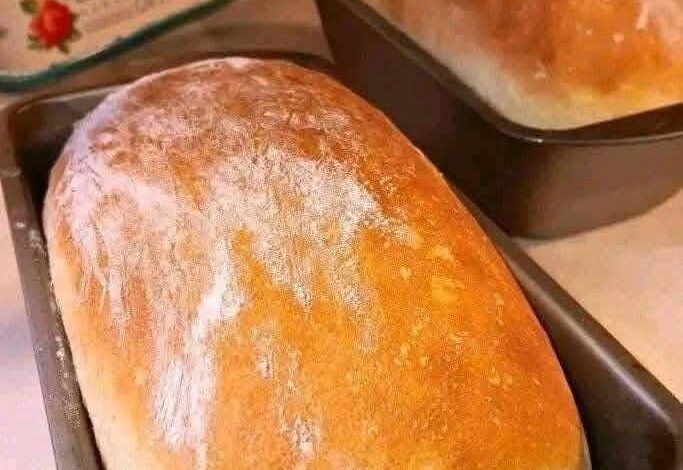
2. Bake 30-35 minutes until deep golden brown
3. Pro test: Internal temperature should reach 190-200°F (88-93°C)
4. Sound test: Bottom should sound hollow when tapped
Step 6 – The Crucial Cool
1. Immediately remove from pan to cooling rack
2. Let cool completely (2+ hours) before slicing
3. Why wait? Slicing hot bread releases steam, making it gummy
Nutritional Profile (Per Slice, 12 slices/loaf)
· Calories: ~130
· Protein: 4g
· Carbohydrates: 27g
· Fiber: 1g
· Fat: 0.5g
· Sodium: 290mg
· Benefits: No cholesterol, low fat, no preservatives, customizable fiber with whole wheat blends
Health & Practical Benefits
1. Digestive Friendly: Long fermentation breaks down phytic acid, improving nutrient absorption
2. Cost Effective: Costs approximately $0.50 per loaf versus $4-6 store-bought
3. Customizable Control: No hidden sugars, excessive sodium, or preservatives
4. Therapeutic Process: The rhythm of bread-making reduces stress through predictable, tangible creation
5. Versatility: Perfect for sandwiches, toast, French toast, bread pudding, or simple buttered slices
For the Bread Lovers: Pro Tips & Variations
The Enthusiast’s Toolkit:
· Texture Seekers: Replace ½ cup flour with whole wheat or rye
· Crust Connoisseurs: Place pan of water in oven bottom for crackling crust
· Flavor Explorers: Add rosemary, garlic powder, or sun-dried tomatoes during mixing
· Schedule Masters: Refrigerate after first rise (up to 3 days) for sourdough-like tang
Troubleshooting for Perfection:
· Too dense? Likely over-measured flour or under-proofed
· Gummy crumb? Sliced while warm or under-baked
· Flat loaf? Old yeast or overly hot proofing environment
· Pale crust? Brush with milk or melted butter last 5 minutes
The Community Phenomenon
This recipe’s viral nature stems from shared experiences—the “I can’t stop making it” effect. Office kitchens become bread exchanges, neighbors receive warm loaves, and social media feeds fill with proud crumb shots. The recipe’s accessibility creates bakers from previous skeptics, building communities around the shared joy of creation.
Conclusion
This no-knead sandwich bread represents more than sustenance—it’s edible empowerment. In approximately 15 active minutes spread across hours, you transform pennies of ingredients into something priceless: the confidence of creation, the warmth of sharing, and the simple pleasure of perfect bread. As your kitchen fills with that unmistakable baking aroma, you join generations of bakers who understood that sometimes, the most profound results come from the gentlest approaches. The crust crackles, the crumb yields, and with each slice, you taste not just flour and water, but the beautiful truth that wonderful things often require less effort than we imagine—they simply need time, trust, and a little warmth to rise.
For the perpetual bakers and first-time flour-dusters alike: This loaf is your canvas. May your rises be lofty, your crusts golden, and your kitchen forever fragrant with the proof that simplicity, when given proper time, rises to magnificent heights. 🥖✨