The Art of Garlic Preservation: A Year-Round Culinary Secret
Introduction
Garlic (Allium sativum) is more than a kitchen staple; it is a historical treasure, a flavor powerhouse, and a natural remedy. Its pungent aroma and sharp taste have defined cuisines and pharmacopoeias for millennia. However, fresh garlic bulbs can sprout, dry out, or mold within weeks. This recipe reveals a time-honored preservation method, cherished by seasoned cooks, that locks in freshness, flavor, and nutritional benefits for over a year. It transforms garlic into an ever-ready, peel-free convenience, ensuring you never run out of this essential ingredient.
Historical & Cultural Significance
Garlic’s history spans over 5,000 years. It was revered by ancient Egyptians (given to laborers for strength), prized by Greek athletes, and used in Roman cuisine and medicine. Across Asia and Europe, it was a cornerstone of both cooking and folk healing—warding off illness and evil spirits alike. This preservation technique likely originated in the resourceful kitchens of agrarian cultures, where preserving the summer harvest was essential for winter survival. It represents the beautiful intersection of practicality and culinary wisdom.
Benefits of Preserved Garlic
· Year-Round Availability & Reduced Waste: No more spoiled bulbs.
· Convenience: Ready-to-use, pre-peeled cloves.
· Flavor Retention: Preserves garlic’s characteristic punch without the bitterness that can come from over-aged fresh garlic.
· Digestive Aid: The preservation process can mildly pre-ferment the garlic, potentially making it easier to digest for some.
· Versatile Base: The resulting garlic-infused brine can also be used to add a savory, umami kick to dressings and marinades.
Formation & Science of the Method
This is a preservation through acidification and salting. The vinegar (acetic acid) lowers the pH, creating an environment hostile to spoilage bacteria. Salt acts as a preservative by drawing out moisture via osmosis, further inhibiting microbial growth. The warm water soak loosens the papery skins and may reduce some of the compounds responsible for garlic’s harsh raw bite. The lemon slice adds an additional layer of acidity and a subtle citrus note.
Complete Recipe: Year-Long Preserved Garlic
Ingredients & Equipment
· Ingredients:
· 500 grams (about 1.1 lbs) fresh, firm garlic bulbs, separated into cloves.
· 2 tablespoons (approx. 30g) coarse sea salt or kosher salt.
· 3-4 tablespoons apple cider vinegar or white wine vinegar.
· 1 fresh, thick lemon slice.
· Filtered or boiled-and-cooled water, as needed.
· Equipment:
· 1 large, clean glass jar (1-liter / quart size) with airtight lid.
· Large bowl.
· Clean kitchen towel.
Step-by-Step Instructions & Methods
Method 1: Preparation & Peeling
1. Soak: Place the unpeeled garlic cloves in a large bowl. Cover with warm (not hot) water. Let soak for 1 hour.
2. Drain & Dry: Drain the water and spread the cloves on a clean kitchen towel. Pat them dry thoroughly. The skins will now be swollen and loose.
3. Peel: Simply pinch the base of each clove—the skin should slip off effortlessly. Discard any cloves with blemishes or green sprouts.
Method 2: Jarring & Preservation
1. Sterilize: Wash your glass jar and lid in hot, soapy water, rinse well, and let them air-dry completely.
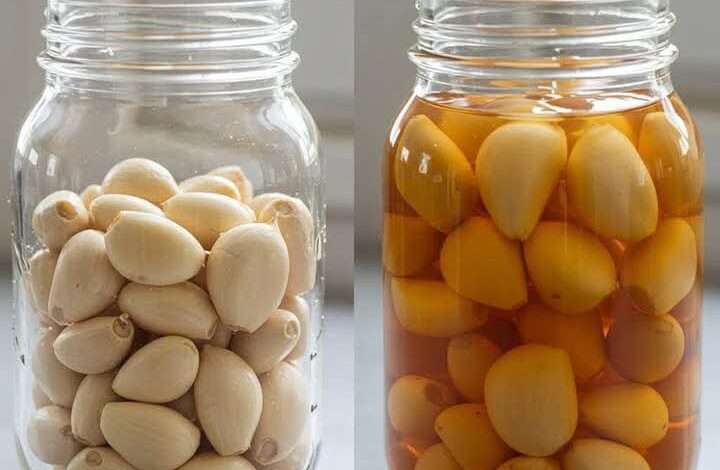
2. Layer: Place the peeled garlic cloves into the jar. Sprinkle the coarse salt evenly over the garlic.
3. Acidify: Add the vinegar to the jar.
4. Cover: Pour in enough cool, pre-boiled or filtered water to completely submerge the garlic cloves, leaving about 2 cm (1 inch) of headspace at the top.
5. Final Touch: Place the fresh lemon slice on top of the submerged garlic.
6. Seal & Shake: Secure the lid tightly. Shake the jar vigorously for 30 seconds to dissolve and distribute the salt.
Method 3: Storage & Usage
1. Cure: Store the sealed jar in a cool, dark pantry or cupboard for 48 hours.
2. Long-Term Storage: After curing, transfer the jar to the refrigerator. This cold storage will slow all enzymatic activity, ensuring crisp texture and long-term preservation.
3. Usage: Always use a clean, dry fork or spoon to remove cloves as needed. The garlic is now ready to be chopped, sliced, or crushed for any recipe. The brine can be used in vinaigrettes or sauces.
Nutritional Profile (Per 10g clove, estimated)
· Calories: ~13 kcal
· Key Compounds:
· Allicin: The primary bioactive compound, responsible for most health benefits and aroma (activated when crushed).
· Flavonoids & Antioxidants: Combat oxidative stress.
· Vitamins & Minerals: Vitamin C, Vitamin B6, Manganese, Selenium.
· Note: Preservation may cause a slight reduction in raw vitamin C content but stabilizes the beneficial sulfur compounds.
For the Garlic Lovers
This method is a game-changer for anyone who cooks regularly. It’s perfect for:
· Meal Preppers: Streamline your weekly cooking.
· Gardners: Preserve a large harvest from your garden.
· Foodies & Chefs: Guarantee high-quality, flavorful garlic is always on hand.
· Health-Conscious Individuals: Ensure you always have your natural immune-booster ready.
Conclusion
This ancient yet simple preservation technique is a testament to culinary wisdom passed down through generations. It solves the practical problem of waste while honoring garlic’s magnificent role in our kitchens and cultures. By investing a small amount of time, you secure a year’s supply of fresh-tasting garlic, unlocking convenience and consistent flavor for every soup, sauce, stir-fry, and roast. Embrace this secret, and let the timeless power of preserved garlic elevate your cooking and simplify your life.