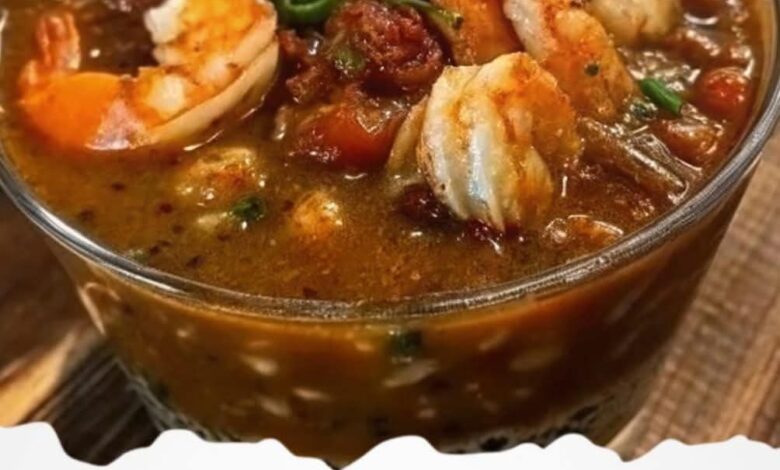
Of course. Here is a comprehensive recipe for Louisiana Seafood Gumbo, structured to include all the elements you requested.
Introduction
Louisiana Seafood Gumbo is more than a dish; it is a hearty, soul-warming symphony of flavors and a cornerstone of Cajun and Creole cuisine. This thick, aromatic stew is celebrated for its complex roux, the “holy trinity” of vegetables, and an abundant mix of seafood and sausage. Serving it over rice transforms it into a complete, celebratory meal that feeds a crowd and embodies the spirit of Southern hospitality.
Historical & Cultural Formation
Gumbo’s history is a profound reflection of Louisiana’s cultural melting pot. Its name is derived from the West African word for okra (ki ngombo), and the dish itself is a fusion of West African, French, Spanish, and Native American culinary traditions. The French provided the roux technique, the Spanish contributed spices, West Africans introduced okra (often used as a thickener), and Native Americans introduced filé (ground sassafras leaves). The version here, with a dark roux and seafood, is quintessential to the coastal bayous. It was traditionally made with whatever was abundant—crabs from the shore, shrimp from the nets, and sausage from the pantry.
Ingredients
· For the Roux:
· 1 cup vegetable oil
· 1 cup all-purpose flour
· For the Holy Trinity & Aromatics:
· 1 large onion, chopped
· 1 green bell pepper, chopped
· 2 celery stalks, chopped
· 4 cloves garlic, minced
· Proteins:
· 1 pound andouille sausage, sliced into rounds
· 1 pound shrimp (medium or large), peeled and deveined
· 1 pound lump crab meat (picked over for shells)
· Liquids & Seasonings:
· 4 cups seafood stock or chicken broth
· 1 (14.5 oz) can diced tomatoes
· 2-3 bay leaves
· 1 tablespoon Cajun seasoning (adjust to taste)
· Salt and freshly ground black pepper to taste
· For Serving:
· Cooked long-grain white rice
· Chopped green onions, for garnish
· Hot sauce (such as Crystal or Tabasco)
Methods & Instructions
1. The Art of the Roux:
In a large, heavy-bottomed pot or Dutch oven, heat the vegetable oil over medium heat. Gradually whisk in the flour until smooth. This is the most critical step. Reduce the heat to medium-low. Cook, stirring constantly with a wooden spoon or whisk, for 20 to 30 minutes. The roux will transform from pale blond to a deep, peanut butter brown, and finally to a dark chocolate-brown color. Do not rush this; a burnt roux cannot be saved. The constant stirring prevents burning and ensures even cooking.
2. Building the Flavor Base:
As soon as the roux reaches its dark mahogany color, immediately add the chopped onion, bell pepper, and celery (the “holy trinity”). Stir vigorously. The roux will be very hot, and the vegetables will sizzle and soften quickly, stopping the roux from cooking further. Cook for 5-7 minutes until the vegetables begin to soften. Add the minced garlic and cook for 1 more minute until fragrant.
3. Simmering the Broth:
Pour in the seafood stock and diced tomatoes with their juices. Add the sliced andouille sausage, bay leaves, and Cajun seasoning. Stir well to incorporate the roux into the liquid. Bring to a boil, then reduce the heat to low. Cover the pot and let it simmer gently for at least 45 minutes to 1 hour. This slow simmer allows the flavors to marry and the sausage to infuse the broth.
4. Adding the Seafood:
After the long simmer, taste the broth and adjust seasoning with salt and pepper. Gently fold in the crab meat and shrimp. Cook for just 5-7 more minutes, or until the shrimp turn pink and opaque. Do not overcheat at this stage, or the seafood will become tough.
5. Serving the Gumbo:
Remove the pot from heat and discard the bay leaves. Ladle the hot gumbo over a scoop of fluffy white rice in a deep bowl. Garnish generously with chopped green onions.
Nutrition & Benefits
This gumbo is a nutritionally dense meal. It provides a high-quality protein blend from shrimp, crab, and sausage, essential for muscle repair. The “holy trinity” of vegetables offers vitamins A and C, fiber, and antioxidants. The roux, while calorie-dense, provides energy and helps thicken the dish satisfyingly without excessive cream. Using a flavorful stock base keeps added sodium in check (especially if using low-sodium broth). It’s a hearty, balanced dish that fuels the body.
For the Gumbo Lovers (Tips & Traditions)
· The Roux is Sacred: A dark roux is non-negotiable for depth of flavor. Have your chopped “holy trinity” ready before you start—adding it instantly stops the cooking.
· Customize Your Catch: Add shucked oysters in the last 2 minutes, or use crawfish tails in season.
· Thickening Agents: While this recipe uses a roux, purists may also add okra (sliced and sautéed) in step 2, or offer filé powder at the table for guests to stir in individually. (Note: Never boil gumbo after adding filé, as it can become stringy).
· The Perfect Accompaniment: A cold, crisp lager or a glass of iced sweet tea balances the spice and richness. A side of potato salad is a beloved local pairing.
Conclusion
Louisiana Seafood Gumbo is a legendary dish that tells a story in every spoonful. The journey from a simple oil-and-flour roux to a complex, soul-satisfying stew is a rewarding culinary adventure. While it requires patience and attention, the result—a rich, deeply flavored pot filled with the bounty of the Gulf—is a testament to the power of tradition and shared meals. It’s a celebration of history, culture, and irresistible flavor, guaranteed to create new memories around your table. Laissez les bon temps rouler! (Let the good times roll!)