Depression-Era Creamed Peas on Toast
Introduction
During the Great Depression of the 1930s, families across America relied on simple, affordable ingredients to make filling meals. Creamed Peas on Toast became a dependable staple — inexpensive, easy to prepare, and surprisingly satisfying.
Though modest in appearance, this dish offered warmth and nourishment during one of the most difficult economic periods in history. Today, it remains a comforting reminder that simplicity can be deeply fulfilling.
Description
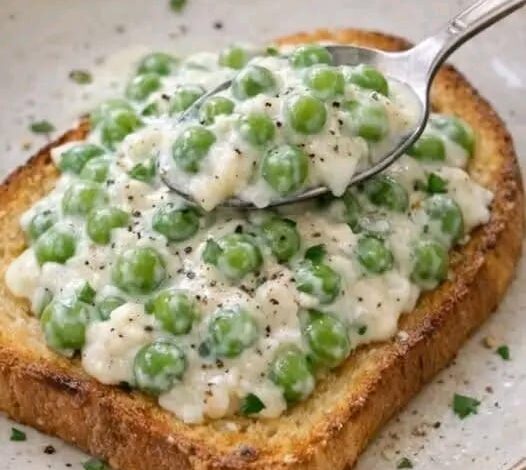
Creamed Peas on Toast is a creamy white sauce filled with tender green peas, served generously over slices of toasted bread. The contrast between the crisp toast and velvety sauce creates a comforting texture, while the mild flavors make it approachable and soothing.
It is proof that a few pantry staples can transform into a hearty, satisfying meal.
Origin and Cultural Significance
This dish rose to popularity in the United States during the Great Depression (1929–1939). Fresh produce and meat were often scarce or expensive, so families relied heavily on shelf-stable items such as flour, canned peas, butter, and bread.
Creamed Peas on Toast represents:
Resourcefulness in hard times
Frugality and stretching ingredients
Family meals built on simplicity
The resilience of home cooks
For many older generations, this dish carries deep nostalgia and memories of grandparents’ kitchens.
Ingredients (Serves 4)
4 slices bread (white sandwich bread traditionally used)
2 cups canned or frozen green peas (drained if canned)
2 tablespoons butter
2 tablespoons all-purpose flour
2 cups milk
½ teaspoon salt (or to taste)
¼ teaspoon black pepper
Optional pinch of sugar (if peas are not naturally sweet)
Instructions
Toast the bread:
Lightly toast the bread slices until golden brown. Set aside.
Prepare the roux:
In a medium saucepan over medium heat, melt the butter. Stir in the flour and cook for 1–2 minutes, stirring constantly, until smooth and slightly bubbly (do not brown).
Add the milk:
Slowly whisk in the milk to prevent lumps. Continue stirring until the mixture thickens into a smooth, creamy sauce (about 3–5 minutes).
Add peas and seasoning:
Stir in the peas, salt, and pepper. Simmer gently for 3–5 minutes until heated through.
Serve:
Spoon the creamed peas generously over each slice of toast. Serve immediately while warm.
Optional Additions
Though traditionally simple, modern variations may include:
A sprinkle of shredded cheddar cheese
Crumbled cooked bacon
A dash of nutmeg
Chopped parsley for freshness
A poached egg on top
Diced cooked ham
Garlic powder or onion powder for extra depth
Tips for Success
Stir constantly while adding milk to avoid lumps.
Cook the flour fully to remove raw taste, but do not let it brown.
Use whole milk for richer texture.
If sauce becomes too thick, add a splash of warm milk.
Toast bread just before serving to keep it crisp under the sauce.
Nutritional Information (Approximate per serving)
Calories: 280–320
Protein: 10g
Carbohydrates: 40g
Fat: 10–12g
Fiber: 5g
Calcium: 20% DV
Iron: 10% DV
Values vary depending on bread type and optional additions.
Conclusion
Creamed Peas on Toast may appear modest, but it carries a powerful history. It nourished families during financial hardship and proved that comfort does not require extravagance. Its creamy texture and warm simplicity continue to win over those who give it a try.
Recommendation
This dish is ideal for:
Budget-friendly meal planning
Quick weeknight dinners
Comfort food cravings
Teaching children about historical cooking
Light vegetarian meals
Pair it with a simple side salad or fresh fruit for balance.
Embracing Healthful Indulgence
While rooted in necessity, this recipe can easily fit into a balanced lifestyle. Using whole-grain bread increases fiber, and low-fat milk can reduce overall fat content. Adding extra vegetables boosts nutritional value without sacrificing comfort.
Creamed Peas on Toast reminds us that indulgence doesn’t always mean richness — sometimes, it means warmth, memory, and simplicity. In embracing these historic recipes, we honor both our heritage and the enduring power of wholesome home cooking.
If you’d like, I can also prepare this in a blog-ready SEO format or convert it into a printable recipe card layout.