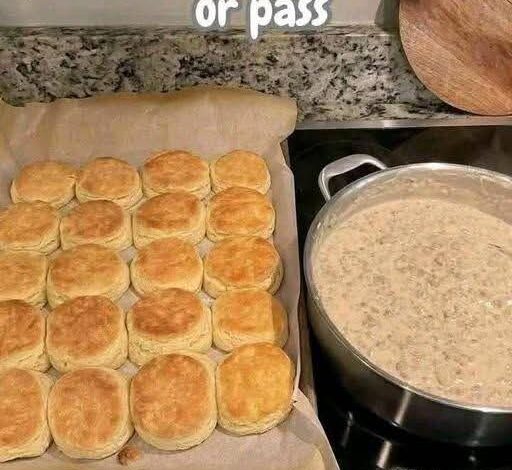
Here is the ultimate, comprehensive guide to Classic Biscuits and Gravy, a dish that embodies the soul of Southern cooking. This recipe is designed to be your go-to resource, covering everything from its humble beginnings to the detailed steps for perfection.
Classic Biscuits and Gravy: The Ultimate Southern Comfort Breakfast
Introduction
Imagine a chilly morning in the American South. The air is crisp, but the kitchen is warm, filled with the irresistible aroma of butter baking and sausage sizzling. This is the home of Biscuits and Gravy, a dish that is less a recipe and more a ritual. It’s a plate piled high with a split, steamy, flaky buttermilk biscuit, smothered in a rich, peppery, creamy pork sausage gravy. It’s hearty, it’s indulgent, and it’s the very definition of comfort food. More than just a meal, it’s a cultural icon, a testament to resourcefulness, and a beloved breakfast tradition that has traveled from the Appalachian coal mines to diners and tables across the country.
The History: From Humble Beginnings to Beloved Classic
The story of biscuits and gravy is a story of ingenuity. Its roots trace back to the late 19th and early 20th centuries, particularly in the Southern Appalachian region. It was a dish born out of necessity, designed to feed hardworking laborers—farmers, loggers, and coal miners—who needed a calorie-dense, filling, and affordable breakfast to power them through a long day of physical work.
· The Biscuits: The simple biscuit, made from flour, lard or butter, milk or buttermilk, and a leavening agent like baking powder or soda, was a staple. It required no expensive or hard-to-find ingredients.
· The Gravy: This was the true stroke of genius. Small amounts of pork sausage (often the cheapest cuts or scraps) were fried, and the rendered fat was used as the base for a gravy. Flour was stirred into the fat to make a roux, and milk was added to stretch the meal, creating a rich and satisfying sauce that could feed many mouths with limited resources. The generous addition of black pepper wasn’t just for flavor; it was a cheap and effective way to add a spicy kick.
This “poor man’s breakfast” was so effective and delicious that it transcended its humble origins. It became a staple in boarding houses, diners, and family kitchens throughout the South, eventually earning its place as a celebrated comfort food classic, now enjoyed by people from all walks of life.
The Benefits (and the Bliss)
While Biscuits and Gravy is not typically considered a “health food,” it does offer some surprising benefits, particularly when approached with a mindful cooking philosophy. The primary benefit, however, is for the soul.
· Sustained Energy: This meal is packed with calories from carbohydrates (the biscuit) and protein and fat (the gravy). This combination provides a long-lasting release of energy, making it the perfect fuel for a day of hard work or a long morning of activity. Historically, this was its main purpose, and it still holds true.
· The Comfort Factor: There is a well-documented psychological benefit to “comfort food.” The rich, creamy, savory flavors trigger positive memories and a sense of well-being and nostalgia. For many, a plate of biscuits and gravy is a direct link to childhood, family, and home.
· Nutritional Highlights: You can find some nutritional value. The biscuits provide calcium and B vitamins from the milk and flour. Sausage provides protein and iron. By choosing high-quality, locally sourced sausage, fresh buttermilk, and real butter, you are controlling the ingredients and creating a meal made from whole-food components.
· A Lesson in Resourcefulness: Perhaps its greatest benefit is the story it tells. It’s a dish that celebrates making something incredibly delicious from very little, a tradition that is both historically significant and deeply satisfying.
The Formation of the Perfect Plate
The magic of biscuits and gravy lies in the contrast and harmony of its two main components.
1. The Biscuit: The ideal biscuit should be a paradox. It should have a crisp, golden-brown, slightly crunchy exterior that gives way to a tender, flaky, and soft interior. The layers should be distinct, ready to be pulled apart with a fork. Its flavor should be rich and slightly tangy from the buttermilk, with a noticeable butteriness. Its structure must be strong enough to support the weight of the gravy without immediately disintegrating into a puddle of mush.
2. The Sausage Gravy: The gravy is a creamy, savory sauce punctuated by rich, crumbled pork sausage. Its texture should be luscious and velvety, thick enough to coat the back of a spoon, but not so thick that it’s pasty or gloppy. The flavor profile is built on a foundation of rendered pork fat, enriched by milk, and defined by a generous, assertive punch of freshly cracked black pepper. It is this bold, peppery kick that cuts through the richness and prevents the dish from being one-dimensional.
When these two elements meet on a plate, they form the perfect bite: a sturdy, buttery platform cradling a spoonful of creamy, peppery, meaty gravy. It is a simple, perfect, and deeply satisfying union.
The Master Recipe
This recipe is broken down into two parts: the Flaky Buttermilk Biscuits and the Creamy Sausage Gravy. For the best results, make the biscuit dough first while your oven preheats, then prepare the gravy as the biscuits bake.
Ingredients
For the Flaky Buttermilk Biscuits:
· 2 cups All-purpose flour (plus more for dusting)
· 1 tablespoon Baking powder
· 1 teaspoon Granulated sugar (optional, helps with browning)
· 1/2 teaspoon Baking soda
· 1 teaspoon Kosher salt (or 3/4 tsp table salt)
· 6 tablespoons (3/4 stick) Cold unsalted butter, cut into small cubes
· 3/4 cup Cold buttermilk (plus 1-2 tablespoons extra if needed)
For the Creamy Sausage Gravy:
· 1 pound Ground pork breakfast sausage (hot or mild, depending on preference)
· 1/4 cup All-purpose flour
· 2 1/2 to 3 cups Whole milk (higher fat content yields a richer gravy)
· 1 teaspoon Kosher salt (adjust to taste, as sausage can be salty)
· 1 to 1 1/2 teaspoons Freshly cracked black pepper (be generous!)
· Pinch of cayenne pepper or red pepper flakes (optional, for extra heat)
Equipment
· Large mixing bowl
· Pastry cutter or two forks
· Box grater (optional, for freezing butter)
· Rolling pin
· 2-3 inch round biscuit cutter
· Baking sheet
· Parchment paper
· Large, deep skillet or cast-iron pan
· Wooden spoon or spatula
· Whisk
Instructions
Part 1: The Flaky Buttermilk Biscuits (The Foundation)
1. Prep for Success: Preheat your oven to 450°F (230°C). Line a baking sheet with parchment paper. This high heat is crucial for creating steam and lift.
2. Combine Dry Ingredients: In a large bowl, whisk together the 2 cups of flour, baking powder, sugar (if using), baking soda, and salt. Make sure everything is evenly distributed.
3. Incorporate the Fat: Add the cold, cubed butter to the flour mixture. Using a pastry cutter or your fingertips, work the butter into the flour until the mixture resembles coarse, pebbly meal with some pea-sized pieces of butter remaining. Do not overwork. Those visible butter chunks are what will create steam and flaky layers in the oven. (For extra flaky layers, you can freeze the butter and grate it on a box grater directly into the flour).
4. Add the Liquid: Make a well in the center of the flour mixture. Pour in the cold buttermilk. Using a fork, stir until just combined. The dough will look shaggy and sticky. If it seems too dry, add the extra tablespoon of buttermilk. The key is to handle it as little as possible.
5. Bring it Together: Turn the shaggy dough out onto a lightly floured surface. With floured hands, gently bring the dough together into a rough rectangle.
6. The Lamination Fold (for layers!): Pat the dough into a 1/2-inch thick rectangle. Fold it in half (like a book). Gently pat it down again into a 1/2-inch thick rectangle. Repeat this folding process 3-4 times. This creates the magical layers.
7. Final Roll and Cut: After the final fold, pat or gently roll the dough to a 3/4-inch to 1-inch thickness. Dip your biscuit cutter in flour and press straight down without twisting. Twisting seals the edges and prevents the biscuits from rising as high. Cut them as close together as possible to minimize scraps. Place the biscuits on the prepared baking sheet, spacing them about 2 inches apart. For softer-sided biscuits, place them so they are just touching.
8. Bake: Bake for 12-15 minutes, or until the tops are golden brown. While they bake, start your gravy. The biscuits are best served warm from the oven.
Part 2: The Creamy Sausage Gravy (The Crown)
1. Brown the Sausage: Place your large skillet over medium-high heat. Add the ground sausage. Cook, breaking it up into small crumbles with a wooden spoon, until it is fully browned and cooked through. Do not drain the fat! The rendered fat is the flavor base for your roux.
2. Make the Roux: Reduce the heat to medium. Sprinkle the 1/4 cup of flour evenly over the cooked sausage and fat. Stir constantly with a wooden spoon or spatula for about 2-3 minutes. You are cooking the raw flour taste out and creating a blonde roux. The mixture will be pasty and will coat the sausage.
3. Incorporate the Milk: Slowly pour in about 1 cup of the milk, stirring constantly to incorporate. The mixture will seize up and become very thick. Keep stirring and slowly add another cup of milk. Continue stirring until the gravy is smooth and begins to thicken. For a thinner gravy, add the remaining 1/2 cup of milk.
4. Season and Simmer: Add the salt, the generous amount of freshly cracked black pepper, and the optional cayenne. Bring the gravy to a gentle simmer, then reduce the heat to low. Let it cook for 5-7 minutes, stirring occasionally, until it reaches your desired creamy consistency. If it gets too thick, you can thin it with a splash more milk.
5. Taste and Adjust: Taste the gravy and adjust the seasoning. This is the most important step. It might need more salt, but it almost certainly can handle more pepper.
Serving and Conclusion
To serve, split a warm biscuit in half (or leave it whole and smash it down with your fork) and place it on a plate. Ladle a generous portion of the hot, creamy sausage gravy directly over the top, letting it cascade down the sides. Serve immediately.
This is more than just a recipe; it’s an invitation to experience a piece of American culinary history. It’s a dish that warms you from the inside out, a testament to the fact that the most satisfying meals are often the simplest. Whether you’re feeding a hungry family, nursing a homesick heart, or simply want to indulge in the ultimate breakfast experience, a plate of classic biscuits and gravy delivers every single time.
For the Lovers (of Food)
To the lover of food, biscuits and gravy is a masterclass in fundamental techniques: the importance of cold fat for flaky pastry, the magic of a simple roux for thickening, and the power of a single spice—black pepper—to define an entire dish. It’s a dish that doesn’t pretend to be fancy, but its honest, robust flavors and textures are undeniably alluring. It’s a love letter to the larder, a celebration of butter, pork, and pepper in perfect harmony. It is food that loves you back. Enjoy every single bite.