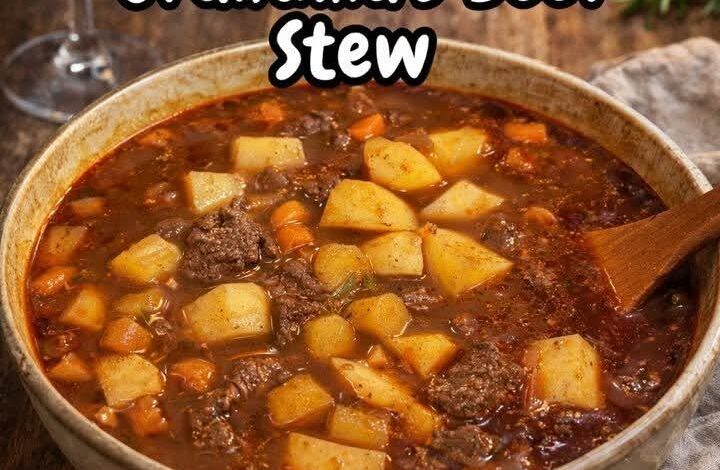
Here is a comprehensive recipe feature for “Grandma’s Classic Beef Stew,” structured exactly as you requested.
Grandma’s Classic Beef Stew: A Hug in a Bowl
Introduction
There are some dishes that are more than just food; they are memories, they are comfort, and they are love, slowly simmered into existence. Grandma’s Beef Stew is the epitome of this idea. It’s the aroma that would fill the house on a chilly Sunday afternoon, beckoning the family to the table. This isn’t a complicated, fussy recipe. It’s a humble, patient dish where simple ingredients—tough beef, humble vegetables, and a savory broth—are transformed by time and gentle heat into something truly magical. The beef becomes so tender it falls apart at the touch of a fork, the potatoes soak up the rich, herby gravy, and the carrots add sweet, earthy notes. This recipe is a culinary heirloom, passed down through generations, and now, it’s yours to create and share.
Ingredients
· 2 lbs Beef Chuck, cut into 1.5-inch to 2-inch chunks
· 2 tbsp Olive Oil, divided
· 1 large Yellow Onion, chopped
· 3 cloves Garlic, minced
· 1/4 cup All-Purpose Flour
· 4 cups Beef Broth, preferably low-sodium
· 2 tbsp Tomato Paste
· 1 tsp Paprika
· 1 tsp Dried Thyme
· 1 Bay Leaf
· 3 large Russet or Yukon Gold Potatoes, peeled and cut into 1.5-inch chunks
· 3 large Carrots, peeled and sliced into 1-inch rounds
· 1 cup Frozen Peas (optional, but traditional)
· Salt and Freshly Ground Black Pepper, to taste
· Fresh Parsley, chopped, for garnish
Instructions / Method
1. Prepare the Beef: Pat the beef chunks completely dry with paper towels. This is crucial for a good sear. Season them generously on all sides with salt and pepper. In a small dish, toss the beef with the 1/4 cup of flour until lightly coated.
2. Sear the Meat: Heat 1 tablespoon of olive oil in a large, heavy-bottomed pot or Dutch oven over medium-high heat. Once the oil is shimmering, add the beef in a single layer, being careful not to overcrowd the pot (work in batches if necessary). Brown the meat on all sides for about 2-3 minutes per side, until a deep brown crust forms. Use a slotted spoon to transfer the browned beef to a plate and set aside.
3. Sauté the Aromatics: Reduce the heat to medium. Add the remaining 1 tablespoon of olive oil to the pot. Add the chopped onion and cook, stirring occasionally, for 5-7 minutes, until softened and translucent. Add the minced garlic and cook for another minute until fragrant.
4. Build the Flavor Base: Stir in the tomato paste and cook for 1 minute, letting it darken slightly. Slowly pour in about 1 cup of the beef broth, using a wooden spoon to scrape up all the browned bits (fond) from the bottom of the pot—this is where the flavor lives!
5. The Long Simmer: Return the browned beef and any accumulated juices on the plate to the pot. Add the remaining 3 cups of beef broth, the paprika, dried thyme, and the bay leaf. Stir everything together. Bring the stew to a gentle boil, then immediately reduce the heat to low. Cover and let it simmer gently for 1.5 hours. The liquid should just barely be bubbling.
6. Add the Vegetables: After 1.5 hours, add the potato chunks and carrot slices to the pot. Stir to combine. Return the stew to a gentle simmer, cover again, and continue to cook for another 45 minutes to 1 hour, or until the beef is fork-tender and the vegetables are soft.
7. Finish and Serve: In the last 5 minutes of cooking, stir in the frozen peas (if using) and let them warm through. Remove the bay leaf. Taste the stew and adjust the seasoning with more salt and pepper if needed. The gravy should have thickened nicely from the flour coating on the beef. If you prefer it thicker, you can mash a few of the potato chunks against the side of the pot and stir them in.
8. Serve: Ladle the stew into deep bowls, garnish with fresh chopped parsley, and serve hot with crusty bread for dipping.
History
The history of beef stew is as old as cooking itself, a quintessential “peasant dish” born from the necessity to make tough, inexpensive cuts of meat palatable. For centuries, across cultures from the French Boeuf Bourguignon to the Irish Stew, the method was the same: a single pot, a fire, cheap meat, root vegetables, and water, left to simmer for hours. This allowed the tough connective tissue in the meat (collagen) to break down into rich, unctuous gelatin, creating a hearty and nourishing meal for the whole family.
Grandma’s version of this stew is a classic American interpretation, heavily influenced by European immigrants. It strips away the wine of the French version and the lamb of the Irish, relying instead on the pure, savory comfort of beef broth and simple seasonings like thyme and paprika. It represents a time when a single pot could feed a family for days, and the leftovers were often even better than the first serving. This recipe is a direct link to that frugal, flavorful, and deeply comforting culinary tradition.
Benefits (Nutritional)
This isn’t just comfort food; it’s a surprisingly well-balanced meal.
· High-Quality Protein: Beef chuck is an excellent source of protein, essential for muscle building and repair. The long, slow cooking process makes this protein very easy to digest.
· Rich in Vitamins and Minerals: This stew is a powerhouse of nutrients. Carrots are loaded with beta-carotene (which the body converts to Vitamin A) for eye health. Potatoes provide a good source of Vitamin C, potassium, and fiber. Onions and garlic offer prebiotic fibers and compounds that support immune health.
· Minerals from Beef: Beef is a significant source of highly absorbable iron (crucial for energy), zinc (for immune function), and B vitamins (for metabolism).
· Hydrating and Satisfying: The broth-based nature of the stew contributes to daily fluid intake, while the combination of protein, fiber, and healthy fats from the olive oil ensures you feel full and satisfied for hours.
Formation (How it All Comes Together)
The magic of this stew lies in the chemical and physical transformations that happen in the pot.
1. The Maillard Reaction: Searing the beef isn’t about “locking in the juices,” as myth suggests. It’s about the Maillard reaction—a chemical reaction between amino acids and reducing sugars that creates the deep, complex, savory flavors and the beautiful brown crust on the meat. This is the foundation of the stew’s flavor.
2. Collagen to Gelatin: Beef chuck is rich in connective tissue and collagen. During the long, moist simmer, the tough collagen breaks down and melts into rich, silky gelatin. This is what makes the beef incredibly tender and gives the stew its luxurious, mouth-coating texture without needing to add cream or excessive fat.
3. Starch Thickening: The light coating of flour on the meat serves a dual purpose. First, it helps the meat brown more evenly. Second, as it simmers, the flour particles release starch, which acts as a natural thickener for the broth, creating a perfect, hearty gravy.
For the Lovers Of…
· Classic Comfort Food: If your happy place involves pot roast, chicken soup, or mac and cheese, this stew is your soulmate.
· Sunday Suppers: This is a dish for those who cherish the ritual of a slow-cooked meal that brings the family together around the table.
· One-Pot Wonders: For lovers of minimal cleanup and maximum flavor, where a single vessel creates something extraordinary.
· Deep, Savory Flavor: If you appreciate umami-rich dishes where flavors are layered and developed over time, rather than quick, one-note meals.
Conclusion
Grandma’s Beef Stew is more than a recipe; it’s an experience. It’s the embodiment of patience and simplicity, proving that the best things in life are worth waiting for. As the stew simmers, it fills your home with an irresistible warmth and a promise of the meal to come. With every tender bite of beef, every sweet spoonful of carrot and potato, and every last drop of savory gravy sopped up with crusty bread, you’re not just eating dinner—you’re partaking in a timeless tradition of love and comfort. It’s a dish that nourishes the body and soothes the soul, and it’s sure to become a beloved classic in your own kitchen.
Nutrition (Approximate per serving, based on 6 servings)
· Calories: 480-550
· Protein: 35-40g
· Fat: 20-25g
· Saturated Fat: 7-9g
· Carbohydrates: 35-40g
· Fiber: 5-7g
· Sugar: 8-10g
· Sodium: 800-1000mg (varies greatly based on broth and added salt)
· Iron: 30-35% of Daily Value
· Potassium: 25-30% of Daily Value
(Note: These are estimates and will vary based on specific ingredient brands and portion sizes.)
For the Lovers Of… (Part 2)
· Make-Ahead Meals: Stew lovers know that this dish is even better the next day. Make it for the lovers of meal prepping and glorious leftovers.
· Hearty Winter Warmers: For those who crave a meal that fights off the winter chill from the inside out.
· Simple, Honest Ingredients: For anyone who believes you don’t need fancy, hard-to-find ingredients to create a show-stopping meal. Just good food, cooked well.