Here is a comprehensive guide to Baked Pork Empanadas, structured exactly as you requested.
The Golden Empanada: A Pocket of Perfectly Seasoned Comfort
The empanada is a culinary treasure found in various forms across Latin America, the Caribbean, and even parts of Europe. It is, at its heart, a portable feast—a half-moon of golden, flaky pastry cradling a savory, aromatic filling. While you can find countless variations, the baked pork empanada holds a special place for its perfect balance of textures and flavors: the tender, juicy meat mingling with soft vegetables, all wrapped in a buttery, crisp crust. This recipe will guide you through creating these delicious pastry pockets from scratch, filling your kitchen with an irresistible aroma and your table with a dish that’s perfect for any occasion, from a casual snack to a festive gathering.
Ingredients
This recipe is broken down into two main components: the flavorful filling and the tender, flaky dough.
For the Meat Filling:
· 1 lb ground pork (you can also substitute with ground beef, chicken, or a plant-based meat alternative)
· 2 medium carrots, peeled and finely diced
· 1 medium potato, peeled and finely diced (similar size to the carrots)
· 1/4 cup frozen green peas
· 1 medium onion, finely chopped
· 3-4 cloves garlic, minced
· 2 tablespoons cooking oil
· 2 tablespoons oyster sauce
· 1 tablespoon soy sauce
· Salt and freshly ground black pepper, to taste
For the Empanada Dough (Pastry):
· 3 cups all-purpose flour (APF)
· 1/4 cup granulated sugar
· 1/2 teaspoon salt
· 1/2 teaspoon baking powder
· 2 sticks (1 cup) unsalted butter, very cold and cut into small cubes
· 8 tablespoons very cold water (you may need a tablespoon more or less)
For Assembly & Finishing:
· 1 egg, beaten with 1 tablespoon of water (for egg wash)
History
The name “empanada” comes from the Spanish verb empanar, meaning “to wrap or coat in bread.” While the concept of filled pastries dates back to ancient times in areas like Persia and Greece, the empanada as we know it was introduced to the Iberian Peninsula by the Moors. Spanish and Portuguese explorers and colonists then carried this culinary idea across the globe, where it evolved and adapted to local ingredients and tastes. In Latin America, the fillings changed to incorporate native foods like potatoes, corn, and various meats, creating a rich tapestry of regional empanada styles, from the baked Chilean variety to the fried Argentine versions.
Benefits
Enjoying homemade baked empanadas offers several benefits:
· Nutritional Control: By making them at home, you control the quality of ingredients, the amount of salt, and the fat content, making them a healthier alternative to many fried or store-bought versions.
· Customizable: This recipe is a fantastic base. You can easily swap the protein or vegetables to suit your dietary needs or use up leftovers.
· Portable and Versatile: Empanadas are a complete, balanced meal in a convenient, hand-held package, perfect for lunches, picnics, or parties.
· A Fun Culinary Project: Making dough from scratch and assembling the empanadas can be a rewarding and enjoyable activity to share with family or friends.
Methods (Step-by-Step Instructions)
Part 1: Making the Meat Filling
1. Prepare the Vegetables: Ensure your carrots and potato are diced into very small, uniform pieces (about 1/4-inch). This ensures they cook through properly inside the empanada.
2. Sauté Aromatics: Heat the oil in a large skillet or pan over medium heat. Add the chopped onion and cook until softened and translucent, about 3-4 minutes. Add the minced garlic and cook for another minute until fragrant.
3. Brown the Pork: Add the ground pork to the pan. Break it up with a spoon and cook until it is no longer pink, about 5-7 minutes.
4. Add Vegetables & Seasonings: Stir in the diced carrots and potatoes. Cook for 2-3 minutes, allowing them to coat in the flavors. Add the oyster sauce and soy sauce, and mix well.
5. Simmer: Reduce the heat to low, cover the pan, and let the mixture simmer for about 10 minutes, or until the potatoes and carrots are tender. Stir occasionally to prevent sticking. If the mixture seems dry, you can add a tablespoon or two of water.
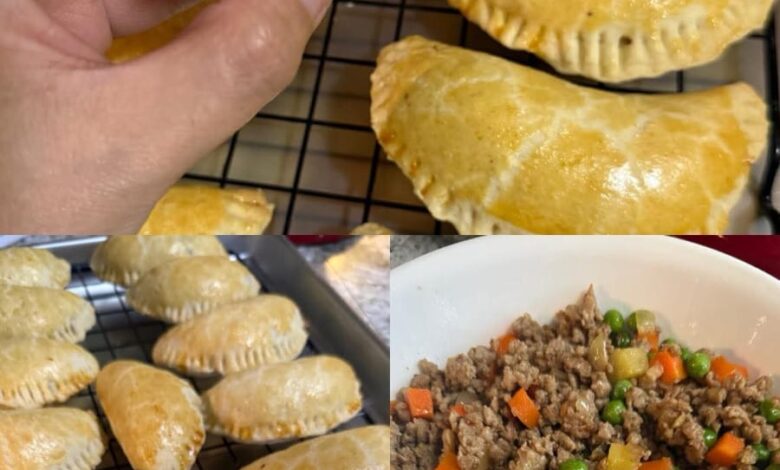
6. Finish & Cool: Stir in the frozen green peas and cook for another 2 minutes. Season with salt and pepper to taste. Remember that the oyster and soy sauces are already salty. Remove from heat and let the filling cool completely before assembling the empanadas. (This is a crucial step; a hot filling will melt the butter in your dough and make it greasy and difficult to work with).
Part 2: Making the Dough
1. Combine Dry Ingredients: In a large bowl, whisk together the all-purpose flour, sugar, salt, and baking powder.
2. Cut in the Butter: Add the cold, cubed butter to the flour mixture. Using a pastry blender, two forks, or your fingertips, quickly work the butter into the flour until the mixture resembles coarse meal with some pea-sized butter pieces remaining. These butter bits are what create the flaky layers.
3. Add Cold Water: Sprinkle the very cold water over the flour mixture, one tablespoon at a time, mixing gently with a fork or your hands after each addition. Add just enough water until the dough comes together and you can squeeze it and it holds its shape. It should not be sticky.
4. Form & Chill: Turn the dough out onto a lightly floured surface and gently gather it into a ball. Divide it into two discs (this makes it easier to roll later), wrap each in plastic wrap, and refrigerate for at least 1 hour. Chilling is essential to relax the gluten and re-harden the butter.
Part 3: Assembling and Baking
1. Preheat: Preheat your oven to 350°F (175°C). Line two baking sheets with parchment paper.
2. Roll the Dough: On a lightly floured surface, roll out one disc of dough to about 1/8-inch thickness. Use a round cutter (a large cookie cutter, a small bowl, or a 4-inch pastry ring) to cut out circles. Gather the scraps, re-roll, and cut more circles.
3. Fill the Empanadas: Place a heaping tablespoon of the cooled filling in the center of each dough circle. Be careful not to overfill.
4. Seal: Brush the edges of the circle lightly with water or a little of the beaten egg wash. Fold the dough over the filling to create a half-moon shape. Press the edges firmly to seal. For a classic finish, crimp the edges with a fork or by folding the dough over itself in a twisted pattern.
5. Chill Again (Optional but Recommended): Place the assembled empanadas on the prepared baking sheets and refrigerate for 15-20 minutes. This helps the butter in the dough firm up again, leading to flakier pastries.
6. Apply Egg Wash: Just before baking, brush the tops of the empanadas with the egg wash. This will give them a beautiful, shiny, golden-brown crust.
7. Bake: Bake for 25-30 minutes, or until the crust is golden brown and crisp.
8. Cool: Let the empanadas cool on the baking sheet for a few minutes before transferring them to a wire rack to cool slightly. Serve warm.
Formation (The Science of the Fold)
The characteristic shape of an empanada isn’t just for looks. The half-moon formation is a practical and efficient way to encase the filling.
1. The Fold: By placing the filling off-center and folding the dough over, you create an even seal that prevents the filling from leaking out during baking.
2. The Seal: A good seal is critical. Crimping with a fork not only creates a decorative pattern but also presses the two dough layers together firmly, ensuring they stay shut.
3. The Vent: While these are baked, the small opening at the crimped edge (or a small slit cut into the top before baking) acts as a vent, allowing steam to escape. This prevents the empanada from bursting open in the oven due to built-up pressure from the moist filling.
Lovers (Ways to Enjoy)
Empanadas are beloved by many, and they are incredibly versatile. Here are a few ways “lovers” enjoy them:
· The Purist: Loves them straight from the oven, warm and unadorned, to savor the pure flavor of the pastry and filling.
· The Dipper: Can’t imagine an empanada without a dipping sauce. Popular choices include chimichurri, salsa verde, a creamy avocado dip, or a simple mix of sour cream and hot sauce.
· The Meal-Maker: Enjoys two or three empanadas as a main course, served alongside a simple side salad or a bowl of soup.
· The Party Host: Appreciates them as the ultimate finger food, making a big batch for guests to grab and mingle.
Nutrition (Approximate Values)
Please note: This is an estimate and will vary based on specific ingredients and portion sizes. Values are per empanada, assuming the recipe yields about 12-14 empanadas.
· Calories: 350-400 kcal
· Fat: 22-26g (largely from the butter in the dough and the pork)
· Carbohydrates: 28-32g
· Protein: 10-12g
Conclusion
Making baked pork empanadas at home is a labor of love that yields incredibly satisfying results. From the moment the buttery dough comes together to the final, glorious sight of a tray of golden pastries fresh from the oven, the process is as rewarding as the delicious outcome. These little pockets are more than just food; they are a celebration of flavor, texture, and culinary tradition. So, gather your ingredients, clear your counter, and get ready to create a batch of these irresistible, hand-held pies. They are guaranteed to disappear fast.
Lovers (A Final Thought)
Ultimately, the true lovers of this recipe are the people you share it with. It’s the family gathered around the kitchen table, helping to crimp the edges. It’s the friends at a game night, reaching for another warm pastry. The baked pork empanada is a dish that brings people together, a simple, beautiful creation that, when shared, becomes a memory. And that is the most wonderful benefit of all.