Here is a comprehensive guide to creating a succulent Slow Cooker Brisket, covering everything from its rich history to the final, delicious bite.
Introduction
There are few dishes as satisfying and deeply comforting as a perfectly cooked brisket. This cut of beef, known for its rich flavor, requires time and gentle coaxing to transform it from tough to tender. The slow cooker is the ultimate tool for this job, acting as a set-it-and-forget-it device that performs culinary magic while you go about your day. The result is a brisket so juicy and tender it practically melts in your mouth, bathed in a rich, savory gravy that is the soul of the dish. This recipe is more than just a meal; it’s an experience—the kind of food that gathers people around the table, fills the home with an irresistible aroma, and creates lasting memories .
A Brief History of Brisket
The story of brisket is a tale of two culinary traditions that eventually converged in America. The cut itself comes from the breast or pectoral muscles of the cow, a hard-working area that supports a significant amount of the animal’s weight. This makes the meat tough and full of connective tissue, requiring long, slow, moist cooking to break it down .
For this reason, brisket was historically one of the cheaper cuts of beef. It became a staple in Jewish cuisine, particularly among Ashkenazi Jews in Eastern Europe. Because kosher dietary laws restrict meat to the forequarters of the animal, brisket was not only affordable but also permissible. It was traditionally braised for hours to create a tender and flavorful holiday centerpiece for Shabbat, Passover, and Rosh Hashanah .
When Jewish immigrants came to the United States in the late 19th and early 20th centuries, they brought their cherished recipes with them. Around the same time, German and Czech settlers in Texas were also looking for ways to make the most of this inexpensive cut, leading to the development of the famous Texas-style smoked brisket. Thus, the humble brisket evolved from a frugal necessity into an iconic dish in both Jewish-American homes and Texas barbecue pits .
Ingredient Deep Dive: Formation and Function
Every ingredient in this recipe plays a crucial role in building the final dish’s incredible flavor and texture. Here’s a look at the “formation” of the key components.
· Beef Brisket (4 lbs / 1.8 kg), preferably flat cut: The star of the show. The flat cut is leaner and more uniform in thickness, making it ideal for slicing. It contains a lot of connective tissue, which breaks down into gelatin during the long, slow cooking process, creating an unbelievably tender and moist result .
· Kosher Salt (4 tsp): Salt is not just for seasoning; it helps the meat retain moisture and enhances its deep, beefy flavor .
· Neutral Oil (2 Tbsp): Used for searing, oil helps achieve the Maillard reaction—the browning that creates hundreds of new flavor compounds and gives the meat a beautiful, flavorful crust .
· Aromatics – Yellow Onions (2) and Garlic (4 cloves): These form the savory foundation. As they cook, they become incredibly soft and sweet, melting into the sauce and adding layers of complexity .
· The Braising Liquid: A combination of beef broth (2 cups), Dijon mustard (1/4 cup), Worcestershire sauce (1/4 cup), soy sauce (2 Tbsp), and fish sauce (2 Tbsp). This isn’t just for moisture; it’s a concentrated flavor bomb. The broth enhances the beefiness, while the mustard, Worcestershire, soy, and fish sauce contribute acidity, tang, sweetness, and a powerful hit of umami (savory flavor) .
· Fresh Thyme (1/2 bunch): This hearty herb stands up well to long cooking, infusing the dish with its earthy, slightly minty and peppery notes .
· Cornstarch (3 Tbsp): This is used to create a slurry that thickens the cooking liquid into a luscious, silky gravy without the risk of over-reducing and making it too salty .
Step-by-Step Instructions and Methods
This method is designed to build flavor at every stage for the most rewarding result.
1. Prepare the Brisket: Pat the brisket dry with paper towels. If necessary, cut the brisket in half crosswise so it fits comfortably in your slow cooker. Season both halves generously all over with the kosher salt .
2. Sear for Flavor: Heat a large cast-iron or stainless-steel skillet over medium-high heat and add the oil. Once the oil is shimmering, carefully place one piece of brisket in the pan. Sear for about 2-3 minutes per side, until a deep golden-brown crust forms. Repeat with the second piece. This step is non-negotiable for maximum flavor .
3. Build the Base: In the bottom of your slow cooker, whisk together the beef broth, Dijon mustard, Worcestershire sauce, soy sauce, and fish sauce until well combined .
4. Layer in the Slow Cooker: Scatter half of the sliced onions and half of the smashed garlic cloves into the slow cooker. Place the first seared brisket half on top. Add the remaining onions and garlic, then place the second brisket half on top. Tuck the fresh thyme sprigs around the sides .
5. The Long, Slow Cook: Cover the slow cooker and cook. For a tender, sliceable brisket, cook on Low for 8-10 hours or on High for 5-6 hours. The brisket is ready when it is fork-tender and can be pulled apart with little effort .
6. Rest and Separate: Carefully transfer the cooked brisket halves to a cutting board and tent loosely with foil to rest. Remove and discard the thyme sprigs from the cooking liquid. Use a slotted spoon to transfer the now meltingly soft onions and garlic to a bowl; cover to keep warm .
7. Make the Gravy: Pour the remaining cooking liquid from the slow cooker into a medium saucepan and bring it to a boil over medium-high heat. In a small bowl, whisk together the cornstarch with 1/2 cup of the hot cooking liquid until completely smooth. Pour this slurry back into the saucepan, whisking constantly. Continue to boil, stirring occasionally, until the gravy thickens slightly, about 10-12 minutes .
8. Slice and Serve: To ensure the most tender bite, it’s vital to slice the brisket against the grain. Look for the direction of the muscle fibers and slice perpendicular to them. Arrange the sliced meat on a platter with the onions and garlic, and serve drenched in the rich, savory gravy .
Serving Suggestions and Pairings
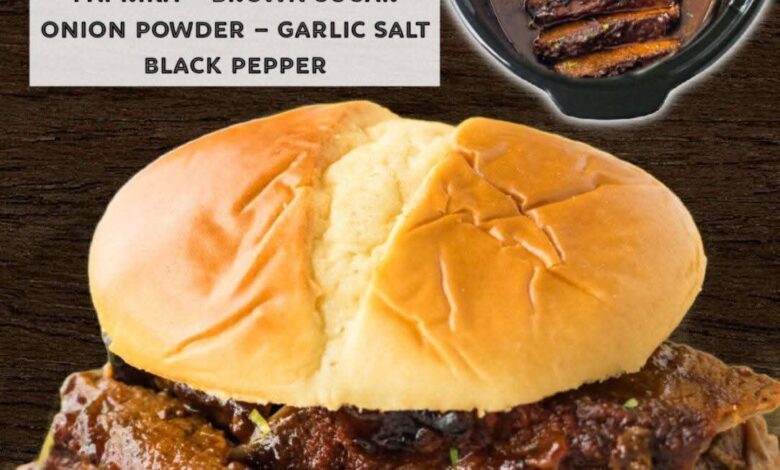
This rich, flavorful brisket is a versatile centerpiece that pairs beautifully with a variety of sides. For a classic comfort food meal, serve it with mashed potatoes or creamy polenta to soak up every drop of the gravy. It’s also a natural fit for special occasions like Passover or Easter dinner . For a more casual meal, pile the tender meat high on brioche buns with coleslaw for incredible brisket sandwiches or sliders . Leftovers are a gift—they can be used in tacos, stirred into a hearty stew like cholent, or simply enjoyed on their own
Nutritional Information and Benefits
While brisket is a rich and indulgent dish, it also offers significant nutritional benefits, primarily as an excellent source of protein. A typical serving is also packed with essential vitamins and minerals like Vitamin B12, iron, and zinc, which are crucial for energy, immune function, and overall health . As with any rich food, moderation is key. Here is an approximate nutritional breakdown for one serving (based on a recipe serving 8) :
Nutrient Approximate Amount
Calories 500-550 kcal
Protein 45-55 g
Total Fat 25-35 g
Carbohydrates 15-25 g
Sodium 700-1100 mg
Note: These values are estimates and can vary based on the specific cut of meat and ingredients used.
Conclusion: Why This Dish Has So Many Lovers
The slow cooker brisket is loved by many because it represents the best of home cooking. It’s the alchemy of transforming a humble, tough cut of meat into something extraordinarily tender and flavorful through patience and care. It’s the kind of dish that says “I love you” without a word, filling the house with a mouthwatering aroma that promises a special meal. Whether it’s enjoyed by a family on a quiet Sunday, served as the centerpiece of a major holiday gathering, or devoured as a sandwich at a casual get-together, this brisket has a universal appeal. It’s comfort food in its purest form—juicy, savory, and designed to be shared with the people you like the most .