Euphorbia hirta L. (Herbe à mamelles / Asthma weed)
📝 Introduction
Euphorbia hirta L., commonly known as “Herbe à mamelles,” “Asthma weed,” or “Herbe de lait,” is a tropical medicinal plant traditionally used in many parts of the world. Valued for generations in herbal medicine, it is especially known for supporting respiratory health, digestive comfort, and general wellness. This guide presents a traditional herbal infusion recipe and explores its cultural background and benefits.
🌱 Description
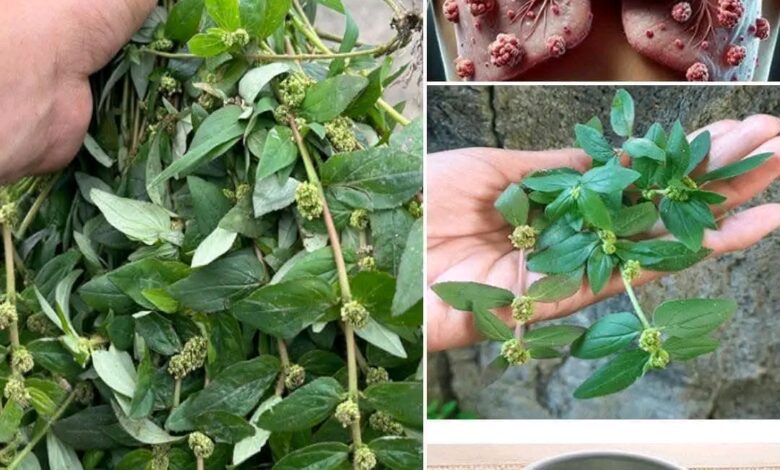
Euphorbia hirta is a small, hairy, spreading herb that grows close to the ground. It has:
Reddish or purplish stems
Small oval leaves with serrated edges
Tiny yellowish flowers clustered at the leaf joints
A milky latex sap when the stem is broken
It thrives in warm tropical climates and is often found growing wild along roadsides and in open fields.
🌍 Origin and Cultural Significance
Euphorbia hirta is native to tropical regions and is widely distributed across Africa, Asia, and South America.
In traditional medicine systems such as Ayurveda and various African herbal traditions, the plant has been used for:
Asthma and bronchial conditions
Coughs and colds
Digestive disturbances
Wound care
Its English nickname “Asthma weed” reflects its long-standing use in managing respiratory discomfort. In many rural communities, it remains an accessible and affordable natural remedy.
🍵 Traditional Herbal Infusion Recipe
🛒 Ingredients (1–2 servings)
1 tablespoon dried Euphorbia hirta leaves (or a small handful of fresh leaves)
1½ cups water
Optional: 1 teaspoon honey
Optional: A slice of fresh ginger
👩🍳 Instructions
Rinse the fresh leaves thoroughly if using fresh plant material.
Bring 1½ cups of water to a gentle boil.
Add the dried or fresh leaves.
Reduce heat and simmer for 10–15 minutes.
Remove from heat and let steep for an additional 5 minutes.
Strain into a cup.
Add honey or ginger if desired.
Drink warm.
Traditionally consumed once or twice daily.
✨ Optional Additions
Lemon juice for improved flavor
Mint leaves for added freshness
Cloves for warming properties
Turmeric for additional anti-inflammatory support
✅ Tips for Success
Always ensure correct plant identification before use.
Use properly dried, clean leaves free from contamination.
Start with small amounts to assess tolerance.
Consult a healthcare professional before use, especially for pregnant women, children, or individuals on medication.
🥗 Nutritional Information (Approximate per cup)
As an herbal infusion, it contains minimal calories. It may provide:
Trace antioxidants
Plant-based phytonutrients
Flavonoids and tannins (naturally occurring compounds)
Note: Exact nutritional values vary depending on preparation and plant concentration.
💚 Embracing Healthful Indulgence
Herbal teas like Euphorbia hirta infusion represent a gentle way to reconnect with traditional plant-based wellness. Rather than indulgence through heavy foods, this is an indulgence in natural healing and self-care — a warm cup that supports breathing comfort and digestive balance.
🌟 Recommendation
If you are exploring herbal remedies, begin with moderate use and combine it with a balanced lifestyle. Pair the tea with adequate hydration, nutritious meals, and proper medical care when needed. This herb is best seen as a complementary support, not a replacement for professional treatment.
🏁 Conclusion
Euphorbia hirta L., known as Herbe à mamelles or Asthma weed, holds an important place in tropical traditional medicine. Its long history of use across multiple continents highlights its cultural and therapeutic value. When prepared responsibly and used wisely, it offers a simple yet meaningful way to embrace the healing traditions of nature.