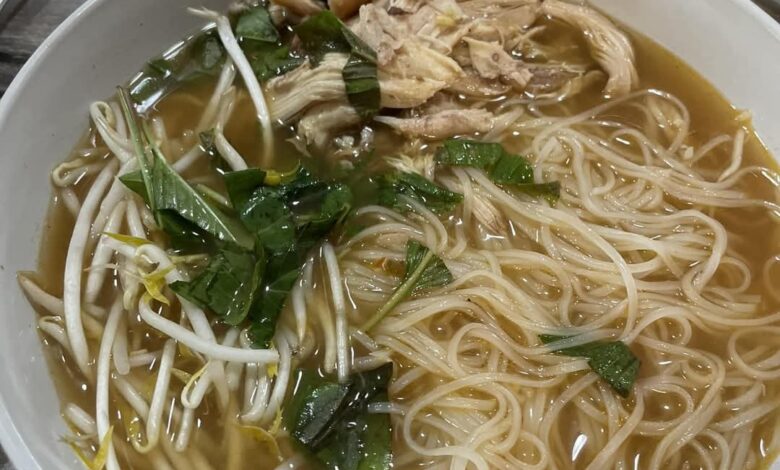
Here is a comprehensive guide to making authentic Vietnamese Pho Soup from scratch, designed to be your go-to resource. Given your success, this recipe aims to replicate that “better than restaurant” quality with detailed explanations.
The Ultimate Guide to Authentic Vietnamese Pho Soup
Introduction
Pho (pronounced “fuh”) is more than just a soup; it’s the soul of Vietnamese cuisine. It is a harmonious bowl of clarity and depth, where a subtly spiced, clear beef broth meets tender rice noodles and thinly sliced rare beef. The magic lies in the broth, which transforms simple bones and humble aromatics into a complex, savory, and comforting elixir through hours of gentle simmering. This recipe will guide you through every step to create a broth with incredible depth, clarity, and flavor that will rival, and likely surpass, your favorite restaurant.
The History of Pho
Pho was born in the early 20th century in northern Vietnam, specifically around Nam Dinh and Hanoi. Its creation is a beautiful example of culinary fusion. It is believed to have evolved from the French dish “pot-au-feu,” with the French influence introducing the practice of eating red meat and the demand for beef bones. The Vietnamese took this concept and infused it with their own native spices and starches.
· The Name: The name “Pho” is thought to derive from the French “feu” (fire), as in “pot-au-feu.”
· The Evolution: Initially, Pho was a simple street food, sold by mobile vendors with a gánh (a shoulder pole with two steaming cabinets). As it traveled south after the 1954 Geneva Accord, it absorbed the tastes of the south, becoming sweeter and incorporating more herbs and garnishes. It evolved from its simple northern form (Pho Bac) to the more elaborate and sweeter southern version (Pho Nam) that is popular in the West today.
The Benefits (Beyond Being Delicious)
1. Rich in Collagen: The long, slow simmering of beef knuckles and leg bones extracts gelatin and collagen, which are excellent for joint health, skin elasticity, and gut health.
2. Packed with Nutrients: The broth is infused with minerals from the bones (calcium, magnesium, phosphorus) and vitamins from the aromatic spices and charred onions/ginger.
3. Hydrating and Comforting: A warm bowl of broth is incredibly hydrating and soothing, especially during cold and flu season.
4. Customizable and Nourishing: It’s a complete meal in a bowl, offering a balance of protein, carbohydrates, and, if you load up on the garnishes, plenty of fresh vitamins and fiber.
5. Aromatic and Clearing: Spices like star anise, cinnamon, and ginger are known for their warming properties and can help clear sinuses.
The Formation of Flavor: The 5 Pillars of Pho
Great Pho is built on a careful balance. Understanding these pillars will help you taste as you go.
1. The Savory Foundation (Umami): Achieved primarily by charring the onion and ginger and using high-quality beef bones (marrow and knuckle bones). The marrow provides richness, while knuckles add collagen for body.
2. The Aromatic Soul: A precise blend of whole spices—star anise, cinnamon, cardamom, coriander seed, fennel seed, and cloves—toasted to release their essential oils before simmering.
3. The Sweet Counterpoint: Not from sugar, but from the natural sweetness of charred onions, rock sugar, and the inherent sweetness of the bones after a long simmer.
4. The Salty Umami Punch: This comes from the fish sauce added at the end. It shouldn’t make the broth taste fishy, but rather deepen the savory notes and add complexity.
5. The Fresh Finish: The bowl is completed with a pile of fresh herbs and aromatics (bean sprouts, Thai basil, sawtooth herb, lime, chilies) that provide brightness, crunch, and a final layer of flavor.
The Big Recipe: Authentic Pho Soup
YIELD: 6-8 generous servings
PREP TIME: 45 minutes
COOK TIME: 4-6 hours (mostly hands-off)
TOTAL TIME: 5-7 hours
Ingredients
For the Broth (The Heart of Pho):
· Bones: 4-5 lbs (2 kg) beef marrow bones (like femur or tibia), sawed into 3-4 inch pieces
· Bonus Bones: 2-3 lbs (1 kg) beef knuckle bones (for extra collagen and clarity)
· Meat for Slicing: 1 lb (450g) beef sirloin, eye of round, or tenderloin, partially frozen for easy thin slicing
· Water: 5-6 quarts (approx. 5-6 liters) of cold water, plus more for blanching
· Aromatics (Charred):
· 1 large onion (peeled, halved)
· 4-inch piece of ginger (unpeeled, halved lengthwise)
· Aromatics (Spices):
· 5 star anise
· 1 cinnamon stick (preferably Saigon/Cassia)
· 1 black cardamom pod (optional, but highly recommended for a smoky depth)
· 1 tbsp coriander seeds
· 1 tbsp fennel seeds
· 5 whole cloves
· Seasoning:
· 2 tbsp kosher salt
· 1/4 cup fish sauce (use a good quality brand like Red Boat or Three Crabs)
· 1 oz (30g) yellow rock sugar (or 1.5 tbsp granulated sugar)
· For the Bowl & Garnishes (The Soul of Pho):
· 1 lb (450g) dried or fresh flat “banh pho” rice noodles
· Herbs & Veg: Bean sprouts, Thai basil, fresh cilantro, sawtooth herb (ngò gai), thinly sliced red or green chilies (like Thai bird’s eye)
· Aromatics: Lime wedges, thinly sliced white or red onion, chopped scallions
· Sauces (on the side): Hoisin sauce, Sriracha chili sauce
Instructions & Methods
Step 1: Prepare the Bones and Meat (The Foundation)
· Blanch the Bones: Place the beef bones in a large stockpot (at least 12-quart) and cover with cold water. Bring to a rolling boil and cook for 5-10 minutes. This initial boil releases the impurities (scum) that would otherwise make your broth cloudy and gamey.
· Clean the Bones: Drain the bones into a large colander and rinse them thoroughly under hot running water, scrubbing away any dark scum that has adhered to them. Rinse the pot as well to remove any residue. This step is non-negotiable for a clear, clean-tasting broth.
· Return to Pot: Place the cleaned bones back into the pristine pot.
Step 2: Char the Onion and Ginger (The First Layer of Aroma)
· While the bones are blanching, place the halved onion and ginger pieces directly on a gas burner flame (using tongs) or under a very hot broiler.
· Char them until they are blackened and blistered on all sides, about 5-7 minutes. This caramelizes their natural sugars and adds a deep, smoky-sweet flavor that is essential to pho. Rinse the charred bits briefly under cool water to remove any completely burnt ash, then set aside.
Step 3: The Long Simmer (Building Depth)
· Fill the pot with the cleaned bones with 5-6 quarts of cold water. The water should cover the bones by about 2 inches.
· Add the charred onion and ginger.
· Bring the pot to a boil, then immediately reduce the heat to the lowest possible simmer. You want to see tiny bubbles and the surface barely trembling—never a rolling boil. A rolling boil will emulsify the fat and collagen, resulting in a cloudy broth.
· Let it simmer, uncovered, for a minimum of 3 hours. Skim any fat or foam that rises to the surface during the first hour. This is key for clarity. For the deepest flavor, aim for 4-5 hours.
Step 4: Toast and Add the Spices (The Second Layer of Aroma)
· About 45-60 minutes before you plan to finish the broth, toast the spices (star anise, cinnamon, cardamom, coriander, fennel, cloves) in a dry pan over medium heat for 1-2 minutes until fragrant. Be careful not to burn them.
· Place the toasted spices in a reusable spice bag or a piece of cheesecloth tied with kitchen twine. This makes removal easy. Add the spice sachet to the pot for the final hour of simmering. This prevents the spices from becoming overpowering or bitter.
Step 5: Season the Broth (The Final Touch)
· After the long simmer, use tongs to carefully remove and discard the bones, onion, ginger, and spice sachet.
· Pass the broth through a fine-mesh strainer lined with cheesecloth into a clean pot. You should have a deep amber, crystal-clear liquid.
· Season the broth: Add the salt, fish sauce, and rock sugar. Start with these amounts, stir to dissolve, then taste. The broth should be savory, slightly sweet, and aromatic. It should taste bold now, as the noodles and garnishes will dilute it slightly.
· Keep the broth at a bare simmer while you prepare the noodles.
Step 6: Prepare the Noodles and Beef (Assembly)
· Noodles: Cook the rice noodles according to package directions. Usually, this involves soaking them in hot water until pliable and white, then boiling briefly. Drain well and rinse with cold water to stop the cooking and remove excess starch.
· Beef: Using a very sharp knife, slice the partially frozen beef as thinly as possible, against the grain. The slices should be almost paper-thin so they cook instantly in the hot broth.
Step 7: The Art of Assembly
1. Place a portion of hot noodles in a pre-warmed bowl.
2. Top with a few slices of the raw beef.
3. Scatter with a few slices of white onion and a sprinkle of chopped scallions and cilantro.
4. Bring the simmering broth to a rolling boil. Ladle the boiling-hot broth directly over the beef and noodles. The heat from the broth will immediately cook the razor-thin slices of beef to a perfect medium-rare.
5. Serve immediately, accompanied by a large platter of the fresh garnishes: bean sprouts, Thai basil, sawtooth herb, lime wedges, and sliced chilies. Each person customizes their own bowl.
Conclusion
Making authentic Pho from scratch is a labor of love, a multi-hour journey that fills your home with intoxicating aromas and rewards you with a deeply satisfying meal. It’s a testament to the idea that the simplest ingredients, treated with patience and care, can create something truly transcendent. This isn’t just a recipe; it’s an experience. You now have the knowledge to build that perfect bowl, one that carries the history, the benefits, and the soul of Vietnam in every single spoonful.
For the Lovers of Pho
To those who love Pho, you understand it’s more than just food. It’s a rainy-day comfort, a celebratory meal, a cure for the common cold, and a late-night solace. The love for Pho is a love for its balance—the interplay of hot broth and cool herbs, soft noodles and crunchy bean sprouts, rich meat and bright lime. It’s a communal dish, often shared with family and friends, where everyone builds their own perfect bowl. For the lover, the first sip of that aromatic broth is like coming home. You have now joined the ranks of those who can create this love from scratch. Enjoy every single bowl.