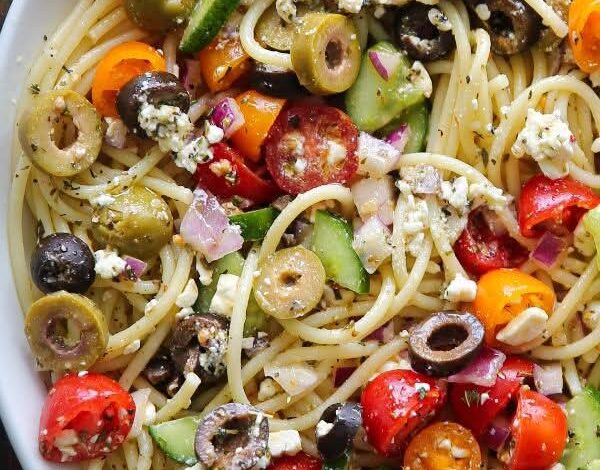
Here is a comprehensive guide to Greek Spaghetti Salad, expanded into a detailed article covering all the aspects you’ve requested.
The Big Fat Greek Spaghetti Salad: A Mediterranean Feast in a Bowl
Introduction
Imagine the sun-drenched landscapes of the Greek Isles, the salty Aegean air, and the vibrant, fresh flavors of a traditional horiatiki (village salad). Now, imagine that experience intertwined with the comforting, satisfying bite of al dente pasta. This is the essence of Greek Spaghetti Salad. It’s more than just a side dish; it’s a celebration of texture and taste, a harmonious blend of briny olives, creamy feta, crisp vegetables, and a zesty red wine vinaigrette, all clinging to tender spaghetti. Perfect for potlucks, summer barbecues, or a simple weeknight meal, this salad is a testament to the fact that the best dishes are often the simplest, allowing each high-quality ingredient to shine.
Ingredients
This recipe relies on fresh, vibrant components. The quality of a few key items, like the feta and olives, will make a significant difference.
For the Salad:
· 12 oz spaghetti (or other long pasta like linguine or fettuccine)
· 1 pint (approx. 2 cups) cherry tomatoes, halved
· 1 large English cucumber, diced (no need to peel)
· 1/2 large red bell pepper, diced
· 1/4 of a large red onion, finely chopped
· 1/2 cup pitted green olives (such as Kalamata’s green cousin, or regular cocktail olives), sliced
· 1/2 cup pitted black olives (such as Kalamata), sliced
· 1/2 cup (or more, to taste) high-quality feta cheese, crumbled
· 2 tablespoons fresh oregano or thyme leaves, chopped (optional, but highly recommended)
For the Red Wine Vinaigrette:
· 1/4 cup extra virgin olive oil (the good stuff!)
· 2 tablespoons red wine vinegar
· 1 teaspoon Dijon mustard
· 1 large garlic clove, minced or grated
· 1/2 teaspoon dried oregano
· Kosher salt and freshly ground black pepper, to taste
Instructions / Methods (Formation)
This section covers the practical steps to bring your salad together. “Formation” refers to the process of building the dish.
1. Cook the Pasta: Bring a large pot of salted water to a rolling boil. Add the spaghetti and cook according to package directions until al dente (tender but firm to the bite). This is crucial so the pasta holds its own against the dressing and other ingredients.
2. Cool the Pasta: Drain the spaghetti in a colander. Do not rinse with water, as this washes away the starch that helps the dressing cling. Instead, immediately toss it with a tiny drizzle of olive oil to prevent sticking. Spread it out on a large baking sheet to cool to room temperature. This stops the cooking process and ensures it doesn’t become mushy.
3. Prepare the Vegetables: While the pasta cools, wash and prep all your vegetables. Halve the cherry tomatoes, dice the cucumber and bell pepper, and finely chop the red onion.
4. Make the Dressing: In a small bowl or a jar with a tight-fitting lid, combine the olive oil, red wine vinegar, Dijon mustard, minced garlic, dried oregano, and a generous pinch of salt and pepper. Whisk vigorously or shake the jar until the dressing is well emulsified (thickened and combined). Taste and adjust seasoning.
5. Assemble the Salad (Formation): In a gigantic serving bowl, combine the cooled spaghetti, cherry tomatoes, cucumber, red bell pepper, red onion, and both types of sliced olives.
6. Add Dressing and Cheese: Pour the majority of the dressing over the salad. Toss everything together gently but thoroughly, using tongs or two large spoons, until all the ingredients are evenly coated. Add the crumbled feta cheese and the fresh herbs (if using).
7. Final Toss and Serve: Gently toss again to distribute the feta without breaking it into dust. Reserve a little bit of feta and a drizzle of dressing to garnish the top just before serving for a beautiful presentation.
History: A Modern Mediterranean Fusion
While a classic Greek salad (horiatiki) has ancient roots, consisting simply of tomatoes, cucumber, onion, feta, and olives—with no lettuce—the Greek Spaghetti Salad is a more modern invention. It’s a prime example of “fusion” cuisine, born from the Greek diaspora, particularly in the United States and Australia.
As Greek immigrants settled in new lands, they adapted their traditional recipes to include local ingredients and preferences. The addition of pasta, a staple in many Western diets, transformed the rustic village salad into a more substantial, hearty dish perfect for sharing at large family gatherings, church festivals, and community potlucks. It represents the evolution of a culinary tradition, blending the old country’s bright flavors with the new world’s love for a convenient, all-in-one meal.
Benefits: Why This Salad is Good for You
This isn’t just a delicious dish; it’s packed with nutritional benefits.
· Heart-Healthy Fats: The extra virgin olive oil and olives are rich in monounsaturated fats and antioxidants, which are cornerstones of the heart-protective Mediterranean diet.
· Bone Health: Feta cheese provides a good source of calcium and protein, essential for strong bones and muscles.
· Rich in Vitamins: The colorful vegetables are a powerhouse of vitamins and minerals. Tomatoes are high in Vitamin C and the antioxidant lycopene. Bell peppers are loaded with Vitamin C, and cucumbers provide hydration and Vitamin K.
· Digestive Health: Using whole-wheat spaghetti can add fiber to this dish. Even with regular pasta, the fresh vegetables contribute to your daily fiber intake, aiding in digestion.
· Satisfying & Balanced: The combination of complex carbohydrates from the pasta, protein from the feta, and healthy fats creates a balanced meal that provides sustained energy and keeps you feeling full and satisfied.
Nutrition (Approximate per serving, based on 6 servings)
Note: This is an estimate and can vary based on specific ingredients and portion sizes.
· Calories: 380-420
· Fat: 18-22g (Saturated Fat: 5-6g)
· Carbohydrates: 45-50g
· Fiber: 3-4g
· Sugar: 5-7g
· Protein: 10-12g
· Sodium: 500-700mg (can be reduced by using low-sodium olives and less added salt)
Conclusion: A Dish for All Seasons
Greek Spaghetti Salad is a timeless classic for good reason. It’s incredibly versatile: serve it as a light main course on a warm summer evening, a vibrant side dish alongside grilled lamb or chicken, or a reliable contribution to any shared meal. It can be made ahead of time (in fact, the flavors meld beautifully after a few hours in the fridge), and it’s easily customizable to your taste or what you have on hand. It’s a dish that brings a taste of the Mediterranean to any table, promising a burst of freshness in every single bite.
Why It’s a Lover’s Dish (For the Lovers of Food)
This salad is for the lovers—the lovers of food, of life, and of simple, genuine pleasures.
· For the Lover of Bold Flavors: It’s a dish for those who crave the salty tang of feta, the briny pop of olives, and the sharp bite of red onion, all mellowed by a smooth olive oil.
· For the Lover of Texture: It’s a textural symphony. The soft pasta, the juicy burst of a tomato, the cool crunch of cucumber, and the creamy crumble of feta create a party in your mouth.
· For the Lover of Community: This is a dish made for sharing. It’s the star of the potluck, the companion to a backyard barbecue, the centerpiece of a simple dinner with friends. It’s food that brings people together.
· For the Lover of the Mediterranean: It’s a culinary escape. One bite transports you to a seaside taverna, embodying the Greek spirit of “filoxenia”—the love of strangers and guests. This salad isn’t just eaten; it’s experienced, savored, and loved.