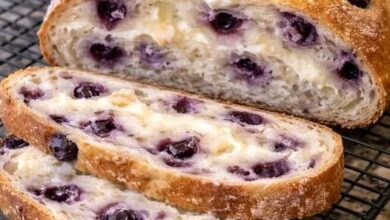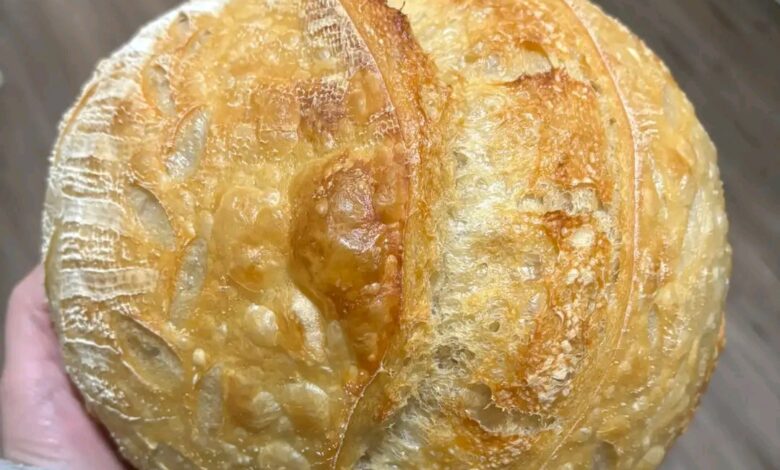
Sourdough Bread (Beginner-Friendly Artisan Loaf)
Introduction
Sourdough bread is a naturally leavened bread made using a fermented starter instead of commercial yeast. Your method shows a strong understanding of the process—especially for someone new. With a few small refinements, you’re already on track to producing consistently excellent loaves.
Description
This loaf is a classic artisan sourdough with a crisp crust and soft interior. Your baking method (keeping it covered the entire time) results in a thinner, softer crust and a more tender chew—perfect if you prefer less crunch.
Ingredients & Quantities
150 g active sourdough starter
300 g water (room temperature)
500 g bread flour (such as King Arthur Bread Flour)
10 g salt
Instructions
1. Mixing
Combine starter, water, and flour until a shaggy dough forms.
Let rest (autolyse) for 1 hour.
2. Add Salt & Develop Gluten
Add salt and mix gently.
Perform 4 sets of stretch and folds every 30 minutes.
3. Bulk Fermentation (BF)
Let dough rise at ~80°F (27°C) for 4–5 hours.
Dough should increase in size (about 50–75%), feel airy, and jiggle slightly.
4. Shaping
Gently shape into a round or oval loaf.
Avoid degassing too much to preserve air bubbles.
5. Cold Proof
Place in fridge for 12–36 hours (you did 36 hours, which is fine).
This enhances flavor and structure.
6. Baking
Preheat oven to 450°F (230°C).
Bake covered for 50 minutes.
(Optional: uncover for 5–10 minutes if you ever want a darker crust.)
Origin
Sourdough bread dates back over 5,000 years to ancient civilizations such as those in Egypt. It was the primary method of leavening bread before commercial yeast became widely available.
Cultural Significance
Sourdough is deeply tied to traditional baking cultures around the world. It symbolizes patience, craftsmanship, and natural fermentation. In modern times, it has also become popular for its digestibility and artisanal appeal.
Optional Additions
Whole wheat flour (replace 10–20% of white flour)
Seeds (sesame, sunflower, flax)
Herbs (rosemary, thyme)
Olives or dried fruit
Honey or malt for slight sweetness
Tips for Success
What You Did Well 👍
Good hydration (~65%) – beginner-friendly
Proper stretch and folds
Long cold proof (great for flavor)
Controlled fermentation temperature
Possible Adjustments 🔧
Bulk fermentation check: Time isn’t everything—watch the dough. If it didn’t rise enough, crumb may be dense.
Starter strength: Make sure it doubles within 4–6 hours after feeding.
Baking covered the whole time: This explains your softer crust (which you prefer, so that’s fine!).
Crumb evaluation:
Large irregular holes = good fermentation
Tight dense crumb = underproofed
Flat/spread out loaf = overproofed
Small Improvements to Try
Let dough rise slightly more during BF if crumb is tight
Try 10–15 minutes uncovered at the end if you ever want contrast
Score more deeply for better oven spring
Nutritional Information (Approx. per slice)
Calories: 120–150
Carbohydrates: 25–30 g
Protein: 4–5 g
Fat: <1 g
Fiber: 1–2 g
(Varies depending on slice size and additions)
Embracing Healthful Indulgence
Sourdough is often easier to digest than regular bread due to natural fermentation. It may support gut health and has a lower glycemic impact compared to many commercial breads—making it a more balanced indulgence.
Conclusion
Yes—your loaf is very likely a good loaf, especially for a beginner. Your process is solid, and your preferences (soft crust, mild chew) are clearly reflected in your method.
The only real question is crumb and rise:
If it’s airy and slightly open → you nailed it
If dense → extend bulk fermentation slightly
Recommendation
Keep your exact recipe, but focus on:
Watching the dough instead of the clock during bulk fermentation
Taking notes each bake (huge for improvement)
Making small adjustments one at a time
If you want, you can show me a photo or describe the crumb/shape, and I can give you very precise feedback on what to tweak next.