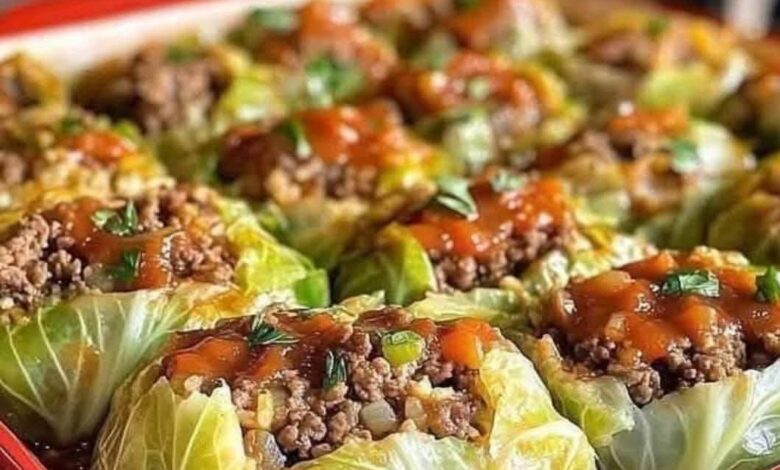
Here is a comprehensive, detailed guide to making classic Stuffed Cabbage Rolls. Think of this not just as a recipe, but as a culinary journey through a beloved comfort food classic.
A Hearty Introduction to Stuffed Cabbage Rolls
Welcome to the world of comfort food at its finest. Stuffed Cabbage Rolls—known as Golubtsy in Russia, Gołąbki in Poland, Sarmale in Romania, and by many other names across Eastern Europe and beyond—are more than just a meal; they are a tradition. They represent the genius of humble home cooking: taking simple, inexpensive ingredients and transforming them into something far greater than the sum of their parts.
Tender cabbage leaves are blanched until pliable, then wrapped around a savory filling of seasoned meat and rice. These little parcels are then nestled in a pot and slow-simmered in a rich tomato broth until everything is meltingly tender and the flavors have melded into a harmonious, soul-warming symphony. It’s a dish that fills your home with an incredible aroma and your belly with pure satisfaction. Whether you remember your grandmother making them or are trying them for the first time, these Stuffed Cabbage Rolls are a guaranteed way to bring a little warmth to your table.
Ingredients
Here is everything you’ll need to create this comforting dish.
For the Cabbage and Filling:
· 1 large head green cabbage
· 1 lb (450 g) ground beef (using a mix of ground beef and ground pork, about half and half, adds incredible flavor and moisture)
· 1/2 cup uncooked white rice (long-grain or short-grain)
· 1 medium yellow or white onion, finely chopped
· 2 garlic cloves, minced
· 1 large egg, lightly beaten
· 1 tsp salt
· 1/2 tsp black pepper
· 1 tsp sweet or smoked paprika (optional, but recommended for depth)
For the Sauce & Assembly:
· 2 cups tomato sauce (or one 15-oz can crushed tomatoes for a chunkier texture)
· 1 cup beef broth (or vegetable broth for a lighter sauce)
· 2 tbsp olive oil, divided
· Fresh parsley, chopped, for garnish
Step-by-Step Instructions & Methods
This process is broken down into simple steps. Take your time, and you’ll be rewarded with a perfect dish.
Part 1: Preparing the Cabbage (The Blanching Method)
This is the most important step for making the leaves pliable and easy to roll.
1. Core the Cabbage: Using a sharp paring knife, carefully cut around the core at the base of the cabbage to remove it in a cone-shaped piece. This will help the leaves loosen.
2. Blanch the Whole Head: Bring a large pot of water to a rolling boil (the pot should be big enough to hold the entire cabbage). Carefully lower the whole cored cabbage into the boiling water.
3. Peel as you go: As the cabbage boils, the outer leaves will soften. After about 2-3 minutes, use tongs to gently peel off the first 2-3 leaves. They should be bright green, translucent at the edges, and flexible. Place them in a colander to cool and drain.
4. Repeat: Return the remaining cabbage head to the pot and continue boiling for another minute or two. Repeat the process of peeling off the softened leaves. Continue until you have removed about 10-12 good-sized leaves. You may need fewer or more depending on the size of your cabbage and rolls.
5. Trim the Leaves: Once the leaves are cool enough to handle, use a small knife to trim away the thick, tough part of the central stem, creating a flat surface. This makes the leaves much easier to roll without tearing. Don’t cut it out completely, just shave it down until it’s as thin as the rest of the leaf.
Part 2: Making the Filling
1. Combine Ingredients: In a large bowl, combine the ground meat(s), uncooked rice, finely chopped onion, minced garlic, beaten egg, salt, pepper, and paprika.
2. Mix Gently: Use your hands to gently mix everything together until just combined. Be careful not to overmix, as this can make the filling tough. The mixture should be quite sticky.
Part 3: Assembling the Rolls (The Forming Method)
1. Prepare Your Workspace: Lay a cabbage leaf flat on your cutting board or work surface, with the inside of the leaf facing up (the cupped side up). Place about 1/4 to 1/3 cup of the meat mixture (depending on the size of the leaf) near the base of the leaf, where the stem was.
2. Fold and Roll:
· Fold the bottom part of the leaf (the stem end) up and over the filling, tucking it in snugly.
· Fold in the left and right sides of the leaf towards the center, over the filling.
· Roll the parcel away from you, towards the tip of the leaf, until you have a neat, tight cylinder. The filling will expand as it cooks, so don’t roll it so tightly that it might burst, but make sure it’s secure.
Part 4: Cooking to Perfection (The Braising Method)
1. Preheat Oven: Preheat your oven to 350°F (175°C).
2. Prepare the Pot: In a large Dutch oven or heavy-bottomed pot with a lid, heat 1 tablespoon of olive oil over medium heat. Spread any leftover torn or small cabbage leaves across the bottom of the pot. This creates a “bed” for the rolls, preventing them from sticking and burning.
3. Arrange the Rolls: Carefully place the stuffed cabbage rolls over the bed of leaves, seam-side down. Pack them in snugly in a single layer. If you have more rolls, you can create a second layer.
4. Make the Sauce: In a separate bowl or measuring cup, whisk together the tomato sauce, beef broth, and the remaining 1 tablespoon of olive oil.
5. Pour and Simmer: Pour the sauce evenly over all the cabbage rolls. It should come about halfway up the sides of the rolls. If it doesn’t, you can add a little more broth or water.
6. Braise: Bring the pot to a gentle simmer on the stovetop. Once simmering, cover the pot with the lid and transfer it to the preheated oven.
7. Cook Low and Slow: Bake for 1.5 to 2 hours, or until the cabbage is very tender and the meat is cooked through. The longer, slower cooking time is what makes them truly sublime.
8. Rest and Serve: Carefully remove the pot from the oven and let it rest, covered, for about 15 minutes. This allows the juices to redistribute. Garnish generously with fresh chopped parsley before serving.
A Taste of History
The history of stuffed cabbage rolls is a testament to cultural exchange and culinary adaptation. While the exact origin is debated, the concept of wrapping food in leaves is ancient. The dish as we know it today likely traveled along trade routes from the Middle East, where grape leaves (dolmas) were stuffed with rice and spices. As this idea migrated north and west into Eastern and Central Europe, cooks adapted it using the most abundant local ingredient: cabbage.
In these colder climates, cabbage was a staple that could be stored for months. The addition of meat, often a small amount stretched with rice or grains, made it a hearty and economical meal for families. Each culture put its own spin on it—using different meats, spices like allspice or dill, and sauces ranging from tomato to sour cream. It became a cornerstone of peasant cooking and, over centuries, evolved into the beloved comfort food classic that graces tables from Poland to Persia.
Benefits of This Dish
Beyond its incredible taste, this recipe offers several wonderful benefits:
· Nutritious & Balanced: It’s a complete meal in one pot. You have your vegetables (cabbage), your protein (meat), and your carbohydrates (rice), all simmered together.
· Economical: It uses affordable, humble ingredients, making it a fantastic way to feed a family without breaking the bank. A little meat goes a long way when combined with rice and cabbage.
· Crowd-Pleaser: It’s a universally loved dish that feels special and comforting. It’s perfect for family dinners, holidays, or potlucks.
· Great for Leftovers: Like many braised dishes, the flavors deepen and improve overnight. They are even more delicious the next day.
· Freezer-Friendly: This dish freezes beautifully, making it an excellent candidate for batch cooking.
The Formation of Flavor: Why It Works
The magic of stuffed cabbage rolls lies in the cooking method. The long, gentle braising in the oven is the key. This slow, moist heat performs several crucial tasks:
1. Tenderizes: It breaks down the tough fibers in the cabbage leaves, transforming them into a silky, buttery-soft wrapper that melts in your mouth.
2. Melds Flavors: It allows the savory flavors of the meat, the sweetness of the onion and cabbage, and the tangy richness of the tomato sauce to slowly meld and marry into a single, cohesive flavor profile.
3. Cooks the Rice Perfectly: The rice inside the rolls cooks gently in the meat juices and surrounding sauce, absorbing all that wonderful flavor as it becomes perfectly tender.
4. Creates a Sauce: The starches from the rice and the natural juices from the meat thicken the tomato broth slightly as it simmers, creating a luscious, flavorful sauce that coats every roll.
Who Loves Stuffed Cabbage Rolls?
The answer is simple: almost everyone! This dish has a special place in the hearts of:
· Grandparents and Elders: For whom it evokes powerful memories of childhood, family gatherings, and traditional home cooking passed down through generations.
· Comfort Food Seekers: Anyone looking for a warm, hearty, and deeply satisfying meal on a cold day will find a friend in these rolls.
· Fans of Eastern European Cuisine: It’s a foundational dish in the culinary traditions of Poland, Russia, Ukraine, Romania, and many other countries, and is cherished as a taste of heritage.
· Home Cooks: The process, while a bit time-consuming, is a labor of love that brings a sense of accomplishment and the joy of feeding loved ones something truly special.
Nutritional Information (Approximate per serving)
Please note that this is an estimate and will vary based on the specific ingredients and portion sizes.
· Serving Size: 2-3 rolls (depending on size)
· Calories: 380-450 kcal
· Protein: 22-28 g
· Fat: 18-22 g
· Carbohydrates: 30-35 g
· Fiber: 5-7 g
· Sugar: 10-12 g (naturally occurring from cabbage and tomatoes)
· Sodium: 800-1000 mg (can be reduced by using low-sodium broth and tomato sauce)
Final Thoughts & Conclusion
Making Stuffed Cabbage Rolls is more than just following a recipe; it’s an act of care. It’s a dish that asks for a little time and patience, but rewards you tenfold with its incredible depth of flavor and the pure, unadulterated comfort it provides. From the initial blanching of the cabbage to the final, fragrant unveiling from the oven, every step is infused with the promise of a wonderful meal.
We hope this comprehensive guide inspires you to create this classic dish in your own kitchen. It’s a wonderful way to connect with culinary history and, most importantly, to share a moment of warmth and deliciousness with the people you love.
Thank you so much for your interest! If you enjoyed this recipe and would like to see more detailed guides like this, please let me know. Happy cooking