Baghrir: The Enchanting Moroccan “Thousand-Hole” Pancake
Introduction
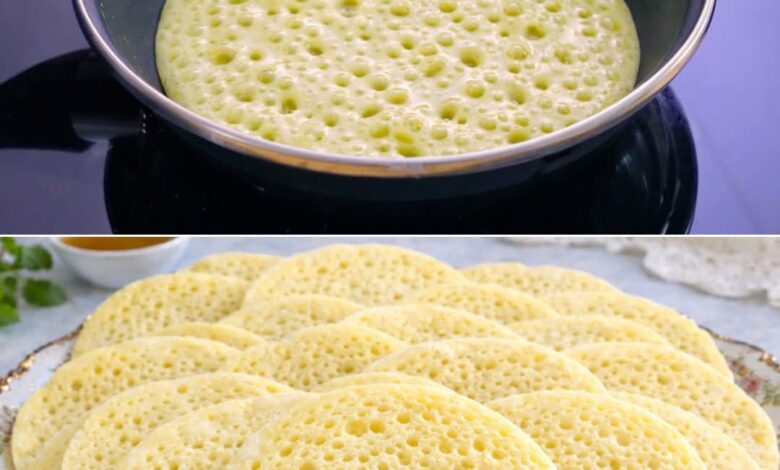
Baghrir, often called the “Moroccan thousand-hole pancake” or “Moroccan crumpet,” is a culinary masterpiece of North Africa. Unlike traditional pancakes, Baghrir is uniquely spongy, light, and characterized by its iconic honeycomb surface, which perfectly soaks up sweet, warm toppings. This semolina-based delight is a staple for breakfast, afternoon snacks, and festive occasions, particularly during the holy month of Ramadan, where it is cherished as a breaking-of-the-fast dish. Its simple ingredients transform into something magical through a delicate fermentation process, resulting in a treat that is as beautiful as it is delicious.
A Brief History
Baghrir’s origins are deeply rooted in the Berber (Amazigh) culinary traditions of North Africa, specifically in Morocco and Algeria. The name “Baghrir” itself is believed to be derived from the Berber word “Bghir,” meaning “soft” or “spongy.” Historically, it was a humble food made from readily available staples—semolina and flour. Its preparation method, relying on natural fermentation without yeast, showcases ancient baking wisdom. Over centuries, it has become a symbol of hospitality and comfort, passed down through generations of grandmothers and mothers, securing its place as a beloved national treasure.
Benefits & Why Lovers of Food Adore It
Baghrir captivates food lovers for numerous reasons:
· Textural Wonder: The thrill of watching hundreds of tiny bubbles form on a single side as it cooks is uniquely satisfying.
· Versatile Canvas: It pairs sublimely with both classic and creative toppings.
· Naturally Leavened: Often made without commercial yeast, it relies on fermentation, making it digestible and appealing to those exploring traditional food methods.
· Perfect for Sharing: It is inherently a social food, meant to be stacked high on a plate and shared with family and friends over pots of mint tea.
· Comfort Food: Its warm, sweet, and soft nature provides a profound sense of comfort and nostalgia.
The Recipe: Classic Moroccan Baghrir
Ingredients
For the Batter:
· 1 cup (170g) fine semolina
· ½ cup (60g) all-purpose flour
· 2 cups (480ml) lukewarm water
· 1 tsp (5g) salt
· 1 tbsp (12g) sugar
· 1 tbsp (9g) active dry yeast (or 20g fresh yeast) [Note: Some traditional recipes use baking powder or a natural sourdough starter instead.]
· 1 tsp baking powder
For the Classic Topping (Amlou/Smen Butter & Honey):
· ½ cup (120ml) honey (or date syrup “Smen,” a fermented butter with a distinctive flavor, for authenticity)
· ½ cup (115g) unsalted butter
· Optional for serving: Toasted almonds or sesame seeds
Nutritional Information (Per Pancake, approx.)
· Calories: ~120 kcal
· Carbohydrates: 20g
· Protein: 3g
· Fat: 3.5g
· Fiber: 1g
· Note: Values vary significantly with toppings.
Methods & Instructions
Step 1: Making the Batter
1. In a large blender, combine the semolina, flour, salt, sugar, and baking powder.
2. Add the lukewarm water and blend on high speed for a full 2-3 minutes until you achieve a perfectly smooth, liquid batter. This aeration is crucial for the hole formation.
3. Transfer the batter to a large bowl. Sprinkle the yeast over the surface and whisk gently to incorporate.
4. Cover the bowl with a clean kitchen towel and let it rest in a warm place for 30-45 minutes. You will see the batter become slightly frothy and bubbly.
Step 2: Cooking the Baghrir (The Key Technique)
1. Do not stir the batter after resting. The settled texture is normal.
2. Heat a non-stick skillet or griddle over medium heat. It’s ready when a few drops of water sizzle and evaporate.
3. Pour a ladleful of batter onto the center of the hot skillet. Do not spread it; the batter will flow into a perfect circle by itself.
4. Cook only on one side. You will witness the magic: hundreds of tiny holes will form across the entire surface, while the top remains moist. The pancake is done when the surface is completely matte (no wet shine) and the edges lift easily (about 3-4 minutes).
5. Remove and place on a clean towel. Never flip a Baghrir! Repeat with the remaining batter, letting the skillet cool slightly if it gets too hot.
Step 3: Preparing the Topping & Serving
1. While the Baghrir are cooking, gently melt the butter and honey together in a small saucepan until combined.
2. Serve the Baghrir immediately and warm. Stack them on a plate.
3. Generously spoon the warm honey-butter mixture over the stack, allowing it to seep into all the glorious holes.
4. Sprinkle with toasted almonds or sesame seeds if desired.
Formation of the Iconic Holes: The Science
The “thousand-hole” formation is a beautiful piece of culinary science. The combination of fine semolina (which creates a porous structure), the high-hydration batter, and the chemical leaveners (yeast and baking powder) is key. As the batter hits the hot skillet, the bottom sets immediately. The heat causes the gases from fermentation and baking powder to expand rapidly, pushing through the wet, uncooked top layer and creating the characteristic bubbles and holes. Cooking only one side preserves these delicate tunnels.
Conclusion
Baghrir is more than just a pancake; it is an edible piece of Moroccan heritage. It engages all the senses—from the mesmerizing visual of its honeycomb formation to the delightful sound of warm honey dripping through its pores, and finally, the tender, melt-in-your-mouth texture. It represents the beauty of simplicity transformed into something extraordinary through patience and tradition.
For the Ultimate Lovers: Variations & Tips
True Baghrir enthusiasts love to experiment:
· Savory Twist: Skip the sweet toppings and serve with a spicy tomato chutney or a soft cheese.
· Modern Drizzles: Try maple syrup, chocolate sauce, or a orange blossom water-infused honey.
· Nutty Bliss: Top with “Amlou,” a divine Moroccan dip made from argan oil, almonds, and honey.
· Perfect Batch Secret: Ensure your skillet is at the right consistent temperature—too hot, and the holes won’t form; too cool, and the pancake will be rubbery.
· The Stack: Always serve them stacked under a cloth to keep them soft and warm until serving.
Whether you are enjoying it at dawn during Ramadan, as a weekend treat, or as a way to travel through taste, Baghrir offers a uniquely joyful and delicious experience that connects you to the heart of Moroccan hospitality. بلاتي! (B’ssahtek! – Bon appétit!)