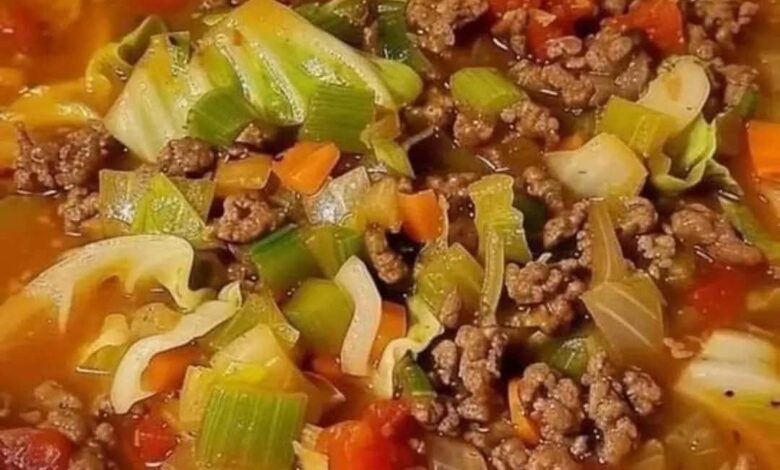
Here’s a detailed guide to Cabbage Soup, covering everything from its rustic origins to how to make a delicious, nutrient-packed pot.
🥬 Cabbage Soup: A Deep Dive into a Humble Classic
This soup is a timeless, budget-friendly dish celebrated across Eastern European and Asian cuisines for its simplicity, hearty nature, and nutritional value. Its core appeal lies in transforming a robust, affordable head of cabbage into a comforting, vitamin-rich meal. Its versatility has also made it famous (and infamous) as the centerpiece of the restrictive “cabbage soup diet”. However, a well-made version is a delicious celebration of vegetables in a flavorful broth, perfect for a healthy reset or a cozy family dinner.
📜 A Brief History & Cultural Roots
While a definitive origin is hard to pin down, cabbage soup is deeply ingrained in the culinary traditions of cooler climates where cabbage thrives.
· European Heartland: It’s a cornerstone of Central and Eastern European cooking. In Poland, “Kapuśniak” often includes pork, potatoes, and sometimes sauerkraut. In Russia and Ukraine, “Shchi” can be made with fresh or fermented cabbage (sauerkraut) and served with a dollop of smetana (sour cream).
· Global Adaptations: From the brothy Italian “Minestra di Cavolo” to simple American homestead versions, the recipe adapts locally. Its prominent role in the 1980s “Cabbage Soup Diet” gave it a modern, if controversial, reputation for weight loss.
· Enduring Appeal: The soup’s history is one of resourcefulness and nourishment. It was a way to preserve the harvest, stretch meals, and feed a family with inexpensive, readily available ingredients.
✅ Health Benefits & Nutritional Profile
Cabbage is a cruciferous vegetable powerhouse, and this soup is a fantastic way to enjoy its benefits. Here’s a nutritional snapshot for a standard 1-cup (245g) serving of a vegetable-based version:
· Calories: ~90-135
· Carbohydrates: ~15-20g (with 3-7g of dietary fiber)
· Protein: ~4g
· Fat: ~2g
Key Health Benefits:
· Rich in Nutrients: An excellent source of Vitamin C (supporting immunity), Vitamin K (for bone health), and potassium (aiding blood pressure regulation).
· High in Fiber: Promotes digestive health, increases satiety, and can help manage cholesterol levels.
· Anti-Inflammatory: Contains compounds like sulforaphane and antioxidants that help reduce inflammation in the body.
· Low-Calorie Density: It’s filling without being high in calories, making it a satisfying choice for weight management as part of a balanced diet.
Note: The restrictive “cabbage soup diet” is not recommended by nutritionists for sustainable weight loss, as it leads primarily to water weight loss and is nutritionally incomplete.
🛒 Essential Ingredients & Key Variations
A basic soup has a short ingredient list, but each component builds flavor. Here are three popular approaches found in the search results:
1. The Classic & Hearty (with Beans & Potatoes)
This version adds substance with beans and potatoes for a complete meal.
· Base: Onion, carrots, celery (mirepoix), garlic.
· Star: 1 small head green cabbage.
· Heartiness: Potatoes, white beans (navy, cannellini).
· Broth: Diced fire-roasted tomatoes, vegetable broth.
· Seasoning: Dried thyme, white wine vinegar, salt, pepper.
2. The Light & Aromatic (Mediterranean-Spiced)
Features warm spices and a bright finish.
· Base: Onion, carrots, celery, garlic.
· Star: 1 head green cabbage.
· Broth: Diced tomatoes, vegetable broth.
· Seasoning: Turmeric, cumin, coriander, Aleppo pepper, fresh ginger.
· Finish: Lemon zest/juice, parsley, green onion.
3. The Simple & Diet-Friendly (Low-Calorie)
A straightforward, broth-forward version often associated with diet plans.
· Base: Onion, garlic, carrots.
· Star: 1 head green cabbage.
· Broth: Diced tomatoes, chicken or vegetable broth.
· Seasoning: Dried basil, salt, pepper.
· Finish: Optional Parmesan cheese.
Best Cabbage for Soup: Green cabbage (also called white cabbage) or Savoy cabbage are ideal. They hold their texture well during simmering. Avoid red/purple cabbage (it bleeds color) and delicate Napa cabbage (it becomes too soft).
👩🍳 Step-by-Step Cooking Method (Classic Version)
This method follows the general technique used by most recipes.
1. Prep the Vegetables (15 mins)
Chop all vegetables into uniform, bite-sized pieces for even cooking: dice 1 onion, slice 2-4 carrots and 2-4 celery stalks, mince 3-4 garlic cloves, core and chop 1 small head of cabbage (about 9 cups), and dice 2 potatoes if using.
2. Sauté the Aromatics (8-10 mins)
Heat 2 tbsp olive oil in a large Dutch oven or soup pot over medium heat. Add the onion, carrots, and celery with a pinch of salt. Cook, stirring occasionally, until softened and fragrant.
3. Build Flavor with Garlic & Spices (1 min)
Add the minced garlic, 1 tsp dried thyme (or your chosen spices like cumin/paprika). Stir constantly for about 1 minute until very fragrant.
4. Deglaze & Add Remaining Ingredients
Pour in 2 tbsp of white wine vinegar or lemon juice to deglaze the pot, scraping up any browned bits. Immediately add the chopped cabbage, 2 (14.5 oz) cans of diced tomatoes (with juices), 4 cups of vegetable broth, and drained beans/potatoes if using.
5. Simmer to Perfection (20-40 mins)
Bring to a boil, then reduce heat to a simmer. Cover and cook for 20-40 minutes, until the cabbage and potatoes are very tender. The longer it simmers, the more the flavors meld.
6. Finish & Season
Remove from heat. Stir in a final splash of lemon juice or vinegar and fresh herbs like parsley. Season generously with salt and black pepper to taste.
🔥 Alternative Cooking Methods
· Slow Cooker: Sauté aromatics first for best flavor, then add all ingredients to the pot. Cook on LOW for 6-8 hours or HIGH for 3-4 hours.
· Instant Pot: Use the Sauté function for step 2 & 3. Add remaining ingredients, seal, and cook on High Pressure for 5-7 minutes. Allow a natural release for 10 minutes.
🍽️ Serving, Storing, and Customizing
Serving Suggestions
Ladle the soup into bowls. Garnish with fresh parsley, dill, or a sprinkle of Parmesan. Serve with crusty bread, a side salad, or a classic grilled cheese sandwich.
Storage & Reheating
· Refrigerator: Cool completely and store in an airtight container for 3-5 days.
· Freezer: Freeze in portions for up to 3 months. Thaw overnight in the fridge before reheating.
· Reheat: Gently on the stovetop or in the microwave until hot.
Popular Variations & Add-Ins
This soup is incredibly adaptable.
· Proteins: Add cooked ground beef, Italian sausage, shredded chicken, or chickpeas/white beans.
· Vegetables: Toss in bell peppers, zucchini, kale, spinach, or green beans.
· Flavor Twists: Add a Parmesan rind while simmering, a dash of smoked paprika, or a pinch of red pepper flakes for heat.
✨ Conclusion & Why It’s Beloved
Cabbage soup is more than just a recipe; it’s a global comfort food that represents thrift, health, and simplicity. Its versatility allows it to be a light detox meal or a hearty stew. Home cooks and food lovers cherish it for its deep, savory-sweet flavor that belies its simple ingredients, its nourishing qualities, and its incredible budget-friendliness. Whether you’re following a family tradition or trying it for the first time, a pot of homemade cabbage soup is a rewarding and delicious experience.
I hope this comprehensive guide inspires you to make a pot. If you have a specific flavor profile in mind (like a meaty version or a spicy kick), let me know, and I can provide more tailored tips