Here is a comprehensive guide to Homemade German Chocolate Cake, complete with a rich history, a detailed recipe, nutritional information, and more.
Introduction
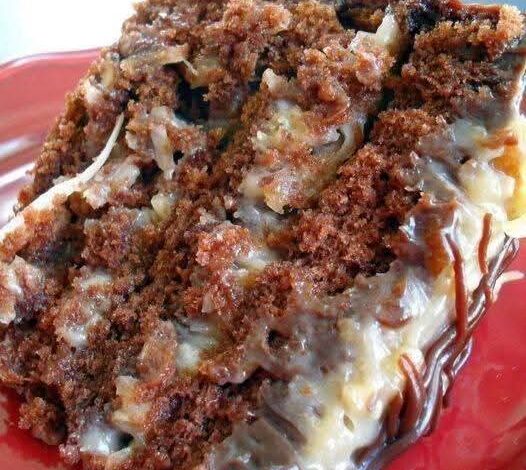
The dessert known as German Chocolate Cake holds a special place in the world of baking, but its name is a delightful misnomer. This decadent cake is not a German confection but a proud American creation. It is a classic layered chocolate cake renowned for its signature feature: a rich, caramel-like coconut-pecan frosting that fills the layers and often tops the cake . The cake itself is incredibly moist, with a deep chocolate flavor that provides the perfect canvas for the sweet, nutty, and textured frosting. Together, they create a symphony of flavors and textures that has made this cake a favorite for birthdays, holidays, and family gatherings for generations.
This recipe will guide you through creating this spectacular cake from scratch, ensuring a result that is far superior to any mix or store-bought version.
The History of German Chocolate Cake
The story of German Chocolate Cake begins not in Germany, but in Boston in 1852. An English-American baker named Samuel German created a dark baking chocolate bar with a higher sugar content than traditional semi-sweet chocolate for the Baker’s Chocolate Company. The bar was named “Baker’s German’s Sweet Chocolate” in his honor .
The cake as we know it today was born over a century later. In 1957, a Dallas, Texas, homemaker named Mrs. George Clay sent a recipe for “German’s Chocolate Cake” to The Dallas Morning News as their “Recipe of the Day” . The recipe, which cleverly used the namesake chocolate, became an instant hit. General Foods, which owned the Baker’s Chocolate brand at the time, seized the opportunity and distributed the recipe to newspapers across the country. This marketing move was so successful that sales of Baker’s Chocolate reportedly jumped by as much as 73% .
Over time, the possessive ” ‘s ” was dropped from the name, leading to the common misconception that the cake originated in Germany. So, while it’s not a traditional German dessert, it is a quintessential example of American culinary history and innovation .
Step-by-Step Methods for the Perfect Cake
This recipe is broken down into three main components: the chocolate cake, the coconut-pecan frosting, and a chocolate frosting for the sides. Follow these steps for a beautiful and delicious result.
Preparation
· Yield: One 8-inch or 9-inch double-layer cake
· Prep time: 1 hour
· Bake time: 30-35 minutes
· Cooling/Assembly time: 2 hours
· Total time: Approximately 3.5 hours
Ingredients
For the Chocolate Cake:
· 2 cups (400g) granulated sugar
· 1 ¾ cups (220g) all-purpose flour
· ¾ cup (65g) unsweetened cocoa powder (not Dutch-processed)
· 1 ½ teaspoons baking powder
· 1 ½ teaspoons baking soda
· 1 teaspoon salt
· 2 large eggs, at room temperature
· 1 cup (240ml) buttermilk, at room temperature
· ½ cup (120ml) vegetable or canola oil
· 2 teaspoons vanilla extract
· 1 cup (240ml) boiling water
For the Coconut-Pecan Filling/Frosting:
· ½ cup (115g) unsalted butter
· ½ cup (100g) granulated sugar
· ½ cup (100g) lightly packed light brown sugar
· 3 large egg yolks
· ¾ cup (175ml) evaporated milk
· 1 teaspoon vanilla extract
· 1 ⅓ cups (115g) sweetened shredded coconut
· 1 cup (115g) chopped pecans
For the Chocolate Frosting (for sides):
· ½ cup (115g) unsalted butter
· ⅔ cup (55g) unsweetened cocoa powder
· 3 cups (360g) powdered sugar
· ⅓ cup (80ml) evaporated milk
· 1 teaspoon vanilla extract
Instructions
1. Making the Chocolate Cake Layers
1. Preheat and Prepare: Preheat your oven to 350°F (175°C). Grease and flour two 8-inch or 9-inch round cake pans. For best results, line the bottoms with a round of parchment paper and grease the paper as well .
2. Combine Dry Ingredients: In a large mixing bowl, whisk together the sugar, flour, cocoa powder, baking powder, baking soda, and salt until well combined.
3. Combine Wet Ingredients: In a separate medium bowl or large liquid measuring cup, lightly beat the eggs. Then whisk in the buttermilk, oil, and vanilla extract until smooth.
4. Mix Batter: Pour the wet ingredients into the dry ingredients and mix with an electric mixer (or by hand) on medium speed for about 2 minutes, until the batter is smooth and combined.
5. Add Boiling Water: Carefully stir in the boiling water. The batter will be very thin and liquidy—this is normal. Don’t be alarmed.
6. Bake: Pour the batter evenly into the prepared pans. Bake for 25-35 minutes, or until a wooden toothpick inserted into the center comes out clean or with a few moist crumbs attached. The 9-inch pans will bake faster than 8-inch pans .
7. Cool: Let the cakes cool in their pans on a wire rack for about 10-15 minutes. Then, run a knife around the edge of the pans to loosen the cakes and invert them onto the rack. Carefully peel off the parchment paper. Allow the layers to cool completely to room temperature before frosting .
2. Making the Coconut-Pecan Frosting
1. Combine Ingredients: In a medium saucepan, combine the butter, granulated sugar, brown sugar, egg yolks, and evaporated milk .
2. Cook the Frosting: Place the saucepan over medium heat. Stir the mixture constantly with a whisk or wooden spoon. Cook until the butter is melted, the sugars are dissolved, and the mixture begins to thicken. This can take about 10-12 minutes. You’ll know it’s ready when it lightly coats the back of a spoon and has a custard-like consistency . Be careful not to stop stirring, as the egg yolks can easily curdle.
3. Add Flavor and Mix-ins: Remove the pan from the heat. Immediately stir in the vanilla extract, shredded coconut, and chopped pecans.
4. Cool Completely: Transfer the frosting to a bowl and allow it to cool completely to room temperature. As it cools, it will continue to thicken, which is essential for creating a stable filling. You can speed this up by placing it in the refrigerator, but stir it occasionally .
3. Making the Chocolate Frosting
1. Melt Butter: In a medium saucepan over low heat, or in a microwave-safe bowl, melt the ½ cup of butter.
2. Combine Cocoa: Whisk the ⅔ cup of cocoa powder into the melted butter until smooth.
3. Finish Frosting: Beat in the powdered sugar and ⅓ cup of evaporated milk alternately, starting with the sugar. If the frosting is too thick, add a tiny bit more milk (a teaspoon at a time). If it’s too thin, add a little more powdered sugar. Finally, stir in the vanilla extract .
4. Assembling the Cake
1. Level the Cakes (Optional): If your cake layers have domed tops, use a serrated knife to gently slice off the dome so they are flat. This will make your cake easier to stack.
2. First Layer: Place one cake layer on your serving plate or cake stand. Tuck strips of parchment paper under the edges of the cake to keep your plate clean while you frost.
3. Add Fillings: Spread a thin, even layer of the chocolate frosting over the top of this first layer. Then, spoon about half of the cooled coconut-pecan frosting on top of the chocolate layer and spread it evenly, leaving a small (about ½ inch) border around the edge .
4. Stack and Crumb Coat: Place the second cake layer on top. Apply a very thin layer of the chocolate frosting all over the entire cake. This is called a “crumb coat.” Its purpose is to seal in any loose crumbs. Refrigerate the cake for about 15-20 minutes to set this layer .
5. Final Frosting: Once the crumb coat is firm, use the remaining chocolate frosting to frost the sides of the cake. You can make it smooth or create decorative swirls.
6. Top It Off: Spoon the remaining coconut-pecan frosting onto the very top of the cake. You can spread it to the edges or leave it in a decorative mound, allowing some to drip slightly over the sides for a classic look.
7. Serve: Let the cake sit at room temperature for about an hour before serving to allow the fillings to soften. Store any leftovers in an airtight container in the refrigerator.
The Formation of Flavors
The magic of German Chocolate Cake lies in the careful formation of its distinct layers and textures. The cake batter’s unique method, which incorporates boiling water, helps “bloom” the cocoa powder, deepening its chocolate flavor and ensuring an exceptionally moist and tender crumb .
Meanwhile, the coconut-pecan frosting is a classic example of a cooked coconut custard. Gently heating the egg yolks, sugars, butter, and evaporated milk together allows the starches and proteins to thicken into a luxurious, caramel-like sauce without scrambling the eggs. Stirring in the coconut and pecans at the end adds a chewy texture and nutty crunch that perfectly complements the soft cake .
Benefits and Healthier Adaptations
While German Chocolate Cake is undoubtedly an indulgence, it’s not without its modest benefits, and there are ways to make it slightly more health-conscious.
· Potential Benefits: The dessert provides a quick source of energy from carbohydrates. Pecans are a good source of healthy fats, fiber, and antioxidants, which can support heart health. Coconut also contributes dietary fiber and healthy fats .
· Nutritional Considerations: It’s important to enjoy this cake in moderation. A typical serving is high in calories, saturated fat, and added sugars . Commercial versions can also contain many preservatives and artificial ingredients .
· Healthier Adaptations:
· Cake: You can substitute half of the all-purpose flour with whole wheat pastry flour to increase fiber. Replacing some of the oil with unsweetened applesauce can also reduce the fat content .
· Frosting: To cut down on the intense sweetness, you can slightly reduce the sugar in the coconut-pecan frosting. Using high-quality dark chocolate for the chocolate frosting instead of cocoa powder can provide a richer flavor with less sugar .
Detailed Nutrition Information
The nutritional content can vary based on the specific recipe and serving size. The following is an estimate for one slice of a homemade German Chocolate Cake (based on a cake serving 12-16 people), compiled from various sources .
Nutrient Approximate Amount per Serving
Calories 340-430 kcal
Total Fat 13-20g
Saturated Fat 5-8g
Cholesterol 18-25mg
Sodium 90-240mg
Total Carbohydrates 46-58g
Dietary Fiber 1-4g
Total Sugars 34-47g
Protein 3-5g
(Note: These values are estimates and can vary. A slice from a bakery or mix may have a different nutritional profile.)
Conclusion: A Cake for Celebrations and Cake Lovers
German Chocolate Cake is more than just a dessert; it’s a testament to a happy accident of American culinary history. It’s a cake that demands attention with its towering layers and distinct, irresistible combination of chocolate, coconut, and pecans. The slightly sweet, tender crumb of the cake against the rich, chewy, and nutty frosting creates a complex and satisfying experience in every single bite.
The effort of making it from scratch is well rewarded. The aroma of chocolate cake baking and the custard simmering on the stove will fill your kitchen with warmth, and the final product is a stunning centerpiece for any occasion. It’s the perfect choice for a birthday, an anniversary, or any time you want to show someone just how much they mean to you. For the coconut lover, the pecan enthusiast, or the chocolate aficionado, this cake is a timeless classic that continues to win hearts.