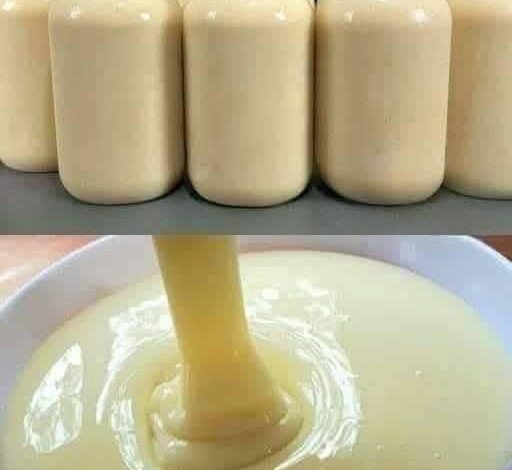
Homemade Sweetened Condensed Milk: A Comprehensive Guide
Introduction
Sweetened condensed milk is a beloved pantry staple, known for its thick, creamy texture and rich, caramel-like sweetness. While readily available in stores, crafting it at home allows for customization, quality control, and a deep satisfaction that comes from creating a fundamental ingredient from scratch. This recipe transforms simple milk and sugar into a luxurious, shelf-stable product that can elevate desserts, beverages, and even savory dishes.
History
The invention of sweetened condensed milk is credited to American inventor Gail Borden in the mid-19th century, who was inspired to create a safe, non-perishable milk product after witnessing the spoilage issues on ships and in urban areas. His patent in 1856 revolutionized food preservation and nutrition, becoming a crucial ration during the American Civil War. Today, it remains a cornerstone in global cuisines, from Latin American dulce de leche and Vietnamese iced coffee to classic American key lime pie.
Benefits of Making It Homemade
· Control Over Ingredients: No additives, stabilizers, or preservatives.
· Customizable Sweetness: Adjust sugar levels to your preference.
· Dietary Flexibility: Easily make dairy-free versions (using coconut milk) or use alternative sugars.
· Superior Flavor: Fresh, deep caramelized notes that surpass many canned versions.
· Cost-Effective: Often cheaper than premium organic brands.
· Satisfaction: The joy of creating a foundational ingredient yourself.
Ingredients & Equipment
Ingredients:
· 4 cups (946 ml) whole milk (for richest flavor; 2% can be used)
· 1 ¼ cups (250g) granulated white sugar (adjust to taste; can use cane sugar)
· 4 tablespoons (56g) unsalted butter (adds richness and sheen)
· 1 teaspoon pure vanilla extract (or seeds from 1 vanilla bean for premium flavor)
· Optional Pinch of Salt (enhances flavor)
Equipment:
· Heavy-bottomed, large saucepan or Dutch oven
· Wooden spoon or heatproof spatula
· Whisk
· Fine-mesh strainer (optional, for ultra-smooth texture)
· Sterilized glass jar with lid for storage
Nutritional Information (Per 2 Tbsp Serving – Approx.)
· Calories: ~130 kcal
· Total Fat: 3.5g
· Saturated Fat: 2g
· Carbohydrates: 22g
· Sugars: 22g
· Protein: 2.5g
· Calcium: 8% DV
· Note: This is a high-energy, sweet ingredient best used in moderation.
Step-by-Step Instructions & Methods
Method 1: The Standard Stovetop Reduction
This is the classic and most common method, requiring patience and gentle heat.
Instructions:
1. Combine & Dissolve: In your heavy-bottomed saucepan, combine the milk and sugar. Heat over medium-low heat, whisking constantly, until the sugar is completely dissolved.
2. Simmer & Reduce: Bring the mixture to a very gentle simmer (do not boil vigorously). Reduce heat to low.
3. The Long Cook: Cook for 45-90 minutes, stirring frequently (especially as it thickens) to prevent scorching on the bottom. The mixture will slowly reduce by about half. It is ready when it coats the back of a spoon and leaves a clear line when you run your finger through it. It will thicken significantly upon cooling.
4. Finish & Store: Remove from heat. Stir in the butter and vanilla extract until fully incorporated. For a perfectly smooth texture, strain through a fine-mesh sieve. Pour into a sterilized jar, cool completely, and refrigerate. It will keep for up to 2 weeks.
Method 2: The “Quick” Milk Powder Method
An excellent shortcut when you need condensed milk fast and don’t require the deep caramelized flavor of the long reduction.
Ingredients:
· 1 cup (120g) non-fat dry milk powder
· ⅔ cup (133g) granulated sugar
· ⅓ cup (79ml) boiling water
· 3 tablespoons (42g) unsalted butter, very soft
· 1 teaspoon vanilla extract
Instructions:
1. Blend: In a blender, combine the milk powder and sugar. Pulse to combine.
2. Emulsify: With the blender running on low, carefully add the boiling water and soft butter. Blend until smooth and homogenous.
3. Finish: Add the vanilla and blend once more. Use immediately or store in the refrigerator. The texture will be slightly less viscous than the traditional method.
Formation & Science
The transformation occurs through evaporation and caramelization. Prolonged, gentle heating evaporates about 60% of the water content from the milk. The sugar, in this concentrated state, inhibits microbial growth, acting as a natural preservative. The Maillard reaction (between milk proteins and sugars) and light caramelization of the sugar itself create the characteristic golden color and complex, toasty flavor.
For the Lovers of Condensed Milk: Culinary Applications
Homemade sweetened condensed milk is a portal to countless delights:
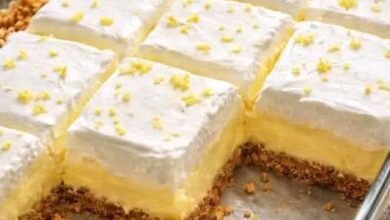
· Desserts: The base for key lime pie, fudge, magic cookie bars, flan, and ice cream.
· Beverages: Swirled into coffee, tea, or hot chocolate for instant creaminess.
· Spreads & Sauces: Gently cook it further to make dulce de leche. Drizzle over pancakes, fruit, or churros.
· Global Treats: Use in Vietnamese iced coffee (cà phê sữa đá), Brazilian brigadeiros, or Thai iced tea.
Conclusion
Making sweetened condensed milk at home is more than a recipe—it’s a rewarding culinary project that connects you to a history of food preservation and provides a superior, pure ingredient for your kitchen. Whether you choose the slow, meditative stovetop method or the quick blender version, the result is a jar of liquid gold that promises to enrich your homemade creations. Its versatility and irreplaceable flavor profile ensure it will remain a cherished ingredient for bakers and dessert lovers for generations to come. So, grab a saucepan and experience the simple magic of milk and sugar transformed.