Introduction
Prime rib is the crown jewel of celebratory meals. Revered for its tenderness, deep beefy flavor, and impressive presentation, this classic roast transforms any gathering into an occasion. Whether served at holidays, family feasts, or elegant dinners, prime rib balances luxury with comfort, making it a timeless favorite.
Description
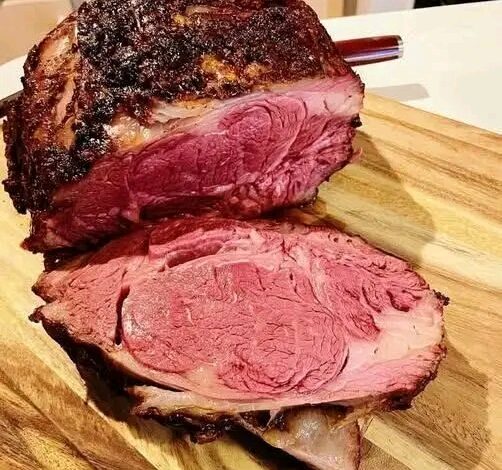
This prime rib recipe features a generously marbled beef rib roast, seasoned simply to let the natural flavor shine. A high-heat start creates a savory crust, followed by gentle roasting to ensure a juicy, melt-in-your-mouth interior. The result is a perfectly cooked roast with bold flavor, rich aroma, and restaurant-quality appeal.
Ingredients Quantity
Prime rib (bone-in ribeye roast): 2.5–3 kg (5–6 lb)
Kosher salt: 2½ tbsp
Freshly ground black pepper: 2 tbsp
Garlic cloves, minced: 6 cloves
Fresh rosemary, finely chopped: 2 tbsp
Fresh thyme leaves: 1½ tbsp
Olive oil or softened butter: 3 tbsp
Optional beef broth (for pan juices): 1 cup
Instructions
1. Bring to Room Temperature
Remove the prime rib from the refrigerator at least 2 hours before cooking.
2. Preheat the Oven
Preheat oven to 230°C (450°F).
3. Season the Roast
Pat the meat dry. Rub evenly with olive oil or butter, then coat with salt, pepper, garlic, rosemary, and thyme.
4. Initial High-Heat Roast
Place the roast (fat side up) on a rack in a roasting pan. Roast at 230°C (450°F) for 20 minutes to develop a crust.
5. Lower and Slow Cook
Reduce temperature to 165°C (325°F) and continue roasting until internal temperature reaches:
Rare: 50°C (120°F)
Medium-rare: 54°C (130°F)
Medium: 60°C (140°F)
6. Rest the Meat
Remove from oven, tent loosely with foil, and rest for 20–30 minutes before slicing.
Origin and Cultural Significance
Prime rib traces its roots to traditional English roasts, later becoming a symbol of abundance and celebration in American cuisine. Often served during Christmas, Easter, and special family events, it represents generosity, hospitality, and culinary craftsmanship.
—
Optional Additions
Horseradish cream sauce
Red wine or au jus gravy
Roasted garlic cloves
Herb butter (parsley, chives, lemon zest)
Yorkshire pudding (traditional pairing)
Tips for Success
Choose a well-marbled cut for maximum juiciness.
Always use a meat thermometer for accuracy.
Resting is non-negotiable—it locks in juices.
Slice against the grain for the most tender bites.
Bone-in roasts provide extra flavor and insulation during cooking.
Nutritional Information (Approximate per serving)
Calories: 650–700 kcal
Protein: 45–50 g
Fat: 50 g
Saturated Fat: 20 g
Iron: 15% DV
Zinc: 40% DV
(Values vary depending on cut size and trimming.)
Embracing Healthful Indulgence
While prime rib is undeniably rich, enjoying it mindfully allows indulgence without excess. Pair it with roasted vegetables, fresh salads, or lighter sides to balance the meal. Quality protein, essential minerals, and deep satisfaction make it a worthwhile occasional treat.
Conclusion
Prime rib is more than just a roast—it’s a culinary experience that brings people together. With minimal seasoning and proper technique, this dish rewards you with bold flavor, tenderness, and unforgettable presentation.
Recommendation
Serve prime rib for moments that matter—holidays, milestones, or when you want to truly impress. Pair it with simple sides, a robust red wine, and good company for a meal that lingers in memory long after the last bite.
If you’d like, I can also provide a plated presentation description, social media caption, or chef-style menu version of this recipe.