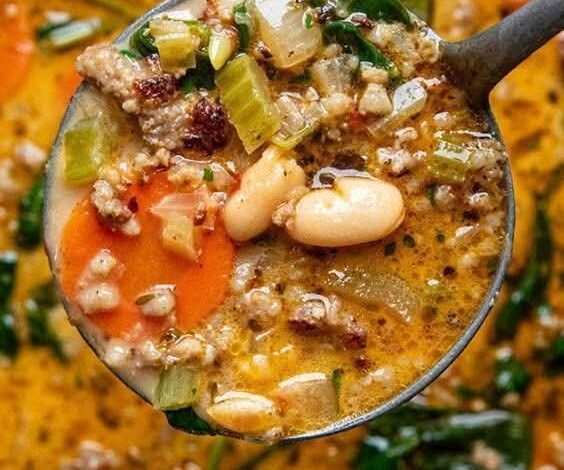
Here is a comprehensive guide to creating a hearty and historic Tuscan White Bean Soup, often referred to as “Ribollita.”
Introduction: A Taste of Tuscan Peasant History
This recipe is for a classic Tuscan White Bean Soup, a dish that embodies the rustic, resourceful, and deeply satisfying cuisine of the Italian region of Tuscany. While a simple white bean soup is a staple, this recipe is inspired by Ribollita, which translates to “reboiled.” This legendary soup was born from peasant thrift: it was traditionally made by reheating (reboiling) leftover vegetable soup (minestrone) from the previous day, with stale bread added to thicken it into a hearty, almost porridge-like meal.
Our version captures that soulful, rich flavor, using simple ingredients like cannellini beans, vegetables, and aromatics. It’s a nourishing, one-pot meal that tastes even better the next day, making it the perfect embodiment of the Tuscan philosophy of making something incredibly delicious from very little.
Ingredients
· 2 tablespoons olive oil, plus more for drizzling
· 1 medium yellow or white onion, diced
· 2 carrots, peeled and sliced into rounds or half-moons
· 2 celery stalks, chopped
· 3 garlic cloves, minced
· 1 lb ground meat (optional, e.g., Italian sausage or ground beef; omit for a vegetarian/vegan version)
· 1 teaspoon dried thyme
· 1 teaspoon dried rosemary
· 1 can (14 oz) diced tomatoes, undrained
· 4 cups vegetable broth (for vegetarian) or chicken broth
· 2 cans (15 oz each) cannellini beans (white kidney beans), drained and rinsed
· 3 cups fresh spinach or kale, stems removed and chopped
· Salt and freshly ground black pepper, to taste
· Fresh parsley, chopped, for garnish
· Optional for authentic Ribollita: 2 cups of cubed stale crusty bread (like sourdough or Tuscan bread)
Methods / Instructions
Follow these steps to create your soup:
1. Sauté the Aromatics: Heat the 2 tablespoons of olive oil in a large pot or Dutch oven over medium heat. Add the diced onion, carrots, and celery (this trio is called soffritto in Italian cooking). Sauté for 5-6 minutes, stirring occasionally, until the vegetables have softened and the onion is translucent.
2. Brown the Meat (Optional): Add the minced garlic and the ground meat (if using) to the pot. Cook, breaking the meat up with a spoon, until it is fully browned. If you are not using meat, simply add the garlic and sauté for another minute until fragrant.
3. Bloom the Herbs: Stir in the dried thyme and rosemary and cook for about 30 seconds, which helps to release their flavors.
4. Add Tomatoes and Broth: Pour in the can of diced tomatoes (with their juices) and the 4 cups of broth. Stir everything together, scraping the bottom of the pot to deglaze and lift up any flavorful browned bits.
5. Simmer the Base: Bring the soup to a boil, then reduce the heat to low, cover, and let it simmer for at least 15-20 minutes to allow the flavors to meld.
6. Add Beans and Greens: Stir in the drained and rinsed cannellini beans and the chopped spinach or kale.
7. For Ribollita-Style (Optional): If you have stale bread, stir it in now. This will thicken the soup considerably.
8. Final Simmer: Continue to simmer for another 5-10 minutes, until the greens are wilted and the beans are heated through.
9. Season and Serve: Remove from heat. Season generously with salt and pepper to your taste. Ladle the soup into bowls, garnish with fresh parsley, and finish with a final drizzle of high-quality extra virgin olive oil.
History
The history of this soup is the history of Tuscan cuisine itself: cucina povera (peasant cooking). The core ingredients—beans, kale, stale bread, and inexpensive vegetables—were what rural families had on hand. Bread was baked infrequently, so it would become hard. Nothing was wasted. The soup we know as Ribollita was a specific way of using up leftovers. A large pot of minestrone would be made and eaten for dinner. The next day, the leftovers would be reheated (“ribollita”) with chunks of stale bread, creating a thicker, more substantial meal. This process of reboiling not only prevented waste but also deepened the flavors, a testament to the ingenuity of Tuscan cooks.
Benefits
This soup is not just delicious; it’s a powerhouse of nutrition:
· Rich in Fiber: The cannellini beans and vegetables are excellent sources of dietary fiber, which aids digestion, promotes satiety (feeling full), and helps regulate blood sugar.
· Plant-Based Protein: Beans provide a fantastic source of protein, making this soup a satisfying meal, especially when the meat is omitted.
· Packed with Vitamins and Antioxidants: The carrots provide Vitamin A for eye health, while the dark leafy greens (spinach or kale) are loaded with Vitamins C, K, and iron. The tomatoes and olive oil add powerful antioxidants like lycopene.
· Hydrating and Satisfying: The broth base helps with hydration, and the combination of fiber and complex carbohydrates provides long-lasting energy.
Formation (Texture & Flavor Profile)
The “formation” of this soup is key to its character.
· Texture: The ideal texture is thick and rustic. The beans should be tender but not mushy, and the vegetables should be soft but still hold their shape. If you add bread in the Ribollita style, the soup transforms into a dense, stew-like consistency where the broth is mostly absorbed.
· Flavor: The flavor is built in layers. It starts with the sweet, savory base of the sautéed soffritto. The herbs add an earthy, pine-like aroma. The garlic and optional meat contribute savoriness (umami). The beans offer a creamy, nutty flavor that melds with the broth, while the greens add a slightly bitter, fresh counterpoint. A final drizzle of raw olive oil adds a peppery, fruity finish that elevates the entire dish.
Lovers (Who Will Enjoy This)
This soup is universally loved, but will be especially adored by:
· Lovers of Italian Cuisine: Anyone who appreciates the authentic, simple flavors of Italy.
· Vegetarians and Vegans: It is easily made vegan by omitting the meat and using vegetable broth, and it is naturally satisfying.
· Soups and Stews Enthusiasts: Those who love a hearty, chunky, and comforting bowl of soup on a cold day.
· Health-Conscious Eaters: People looking for a nutrient-dense, fiber-rich meal.
· Home Cooks on a Budget: The ingredients are inexpensive and mostly pantry staples, making it a perfect frugal family meal.
Nutrition (Approximate, per serving, without bread or meat)
· Calories: 250-300
· Protein: 12-15g
· Fat: 8-10g (mostly from healthy olive oil)
· Carbohydrates: 35-40g
· Fiber: 10-12g
· Sodium: Varies greatly based on broth and added salt; using low-sodium broth is recommended.
Conclusion
This Tuscan White Bean Soup is more than just a recipe; it’s a bowl of history, comfort, and nourishment. It proves that the most humble ingredients, treated with care and respect, can create a dish of extraordinary depth and flavor. Whether you enjoy it as a light bean soup or a thick, reboiled Ribollita, it’s a meal that warms the body and soothes the soul. Buon appetito