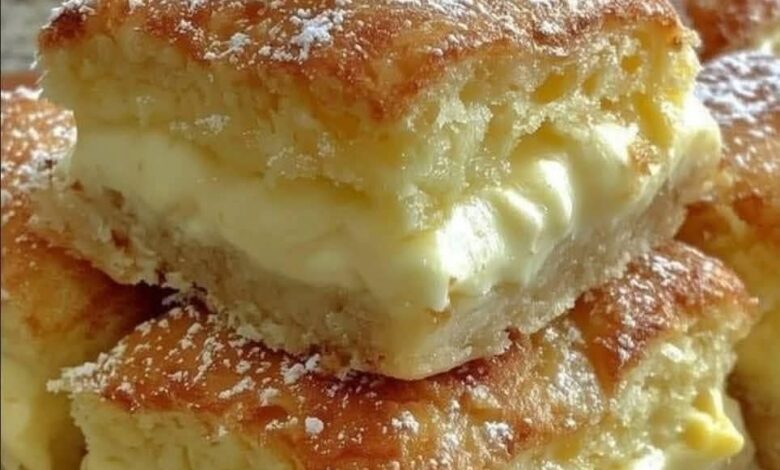
I’ve gathered a comprehensive guide to the Magic Custard Cake for you. This dessert is famous for magically forming three distinct layers—a soft cake top, a creamy custard center, and a dense base—all from a single batter as it bakes.
Here is a summary of the core recipe and its key characteristics, based on the most consistent information from the search results.
· Core Concept: One thin, liquid batter bakes into a cake with three distinct layers: a light sponge top, a creamy custard center, and a dense, fudge-like base.
· Key Ingredients: The magic relies on a few common ingredients. You’ll need 4 large eggs (separated), 3/4 cup (150g) sugar, 1/2 cup (113g) melted butter, 3/4 cup (115g) all-purpose flour, 2 cups (500ml) lukewarm milk, and 1 tsp vanilla extract.
· Essential Method: The technique is crucial. You must whip the egg whites to stiff peaks and gently fold them into a batter containing the yolks, sugar, butter, flour, and warm milk.
· Baking Secret: Success depends on a low oven temperature (around 325°F/160°C) and a sufficiently long bake time (40-70 minutes) to allow the layers to separate and set without overcooking.
· Serving & Storage: The cake must cool completely and is best chilled for several hours or overnight to fully set the layers. It should be stored in the refrigerator.
📝 Step-by-Step Recipe Instructions
Follow these steps closely for the best chance of magical results.
1. Prepare Pan and Oven: Preheat your oven to 325°F (160°C). Grease and line an 8×8 inch (20x20cm) square baking pan with parchment paper.
2. Prepare Ingredients: Melt the butter and let it cool slightly. Warm the milk until it is just lukewarm (not hot).
3. Whip Egg Whites: In a very clean, dry bowl, use an electric mixer to beat the 4 egg whites until stiff peaks form. Set aside.
4. Make Yolk Mixture: In a large bowl, beat the 4 egg yolks with the sugar until pale, light, and frothy. Beat in the melted butter and vanilla extract until combined. Gently mix in the flour until just incorporated.
5. Add Milk: Gradually and slowly beat the lukewarm milk into the yolk mixture. The batter will be very thin and liquid.
6. Fold in Egg Whites: Gently fold the whipped egg whites into the thin batter, one-third at a time. Use a folding or gentle whisking motion. Do not overmix; some small streaks of white are okay.
7. Bake: Pour the batter into the prepared pan. Bake for 40 to 70 minutes. The cake is done when the top is a deep golden brown and the center has only a slight jiggle (not a liquid slosh) when you gently shake the pan. If the top browns too quickly, cover it loosely with aluminum foil.
8. Cool and Set: Let the cake cool completely in the pan, then refrigerate it for at least 3-4 hours, or ideally overnight, for the layers to fully set.
9. Serve: Dust the top with powdered sugar, cut into squares, and serve.
✨ The Science Behind the “Magic”
The separation into layers isn’t magic, but a simple principle of food science.
· The Top Cake Layer: The whipped egg whites are the lightest part of the batter. During baking, they rise to the top and dry out, forming a light, spongy cake layer.
· The Middle Custard Layer: The main liquid batter—containing egg yolks, sugar, and milk—coalesces in the middle. The low baking temperature allows it to set slowly into a soft, creamy custard.
· The Dense Bottom Layer: The flour and other heavier components of the batter gradually sink through the liquid. The extended baking time at a low temperature lets them settle and form a firmer, denser base.
📜 A Brief History
While its recent viral popularity is linked to food blogs and Pinterest, the Magic Custard Cake has deeper roots. Research suggests it is likely of Romanian origin, where it has been known as “prajitura desteapta” (smart cake) and baked by grandmothers for generations. The recipe traveled through Spanish and other European blogs before captivating a global audience online.
💡 Benefits, Variations, and Tips
Why You’ll Love It:
· Impressive Yet Simple: It looks like a complex, layered dessert but requires only one batter and basic mixing techniques.
· Elegant and Light: It’s less sweet than many cakes, with a sophisticated texture contrast that appeals to adults.
· Highly Versatile: The basic vanilla recipe is a canvas for countless flavor variations.
Popular Recipe Variations:
Once you master the vanilla version,you can try:
· Chocolate Magic Cake: Add cocoa powder to the flour.
· Lemon Magic Cake: Add the zest of 1-2 lemons to the batter.
· Salted Caramel Magic Cake: Drizzle caramel sauce into the batter or over the finished cake.
· Fruit-Infused: Pour the batter over a layer of fresh cherries or berries in the pan.
Key Tips for Success:
· Ingredient Temperature is Key: Use room-temperature eggs and lukewarm milk. Cold ingredients can prevent proper layer formation.
· Trust the Process: The batter will look very thin, lumpy, and wrong before baking. Have faith and pour it into the pan.
· Don’t Use the Toothpick Test: The custard layer will not pass this test. Rely on the visual cues of a golden top and a set-but-slightly-jiggly center.
· Patience with Cooling: The chilling time is non-negotiable for clean layers and perfect texture.
🔬 Nutritional Information (Per Serving)
· Estimated Calories: 140-250 kcal
· Primary Components: Carbohydrates (from sugar and flour), fats (from butter and egg yolks), and protein (from eggs and milk).
· Key Nutrients: Provides calcium from milk and vitamin A from egg yolks and butter.
The Magic Custard Cake is a delightful testament to how simple ingredients and basic science can create something extraordinary. It’s the perfect dessert to amaze guests, satisfy a custard craving, or simply enjoy the fun of watching “magic” happen in your own oven.
If you’d like to try a specific flavor variation, such as chocolate or lemon, I can provide more detailed instructions for that.