No-Knead Perfect Bread Recipe
Don’t bake bread until you’ve seen this recipe!
Introduction
This no-knead bread recipe is beloved for its simplicity and astonishing results: a beautifully golden crust, airy interior, and rich flavor—without kneading, mixers, or complicated steps. Whether you’re a beginner or a seasoned baker looking for an effortless loaf, this method delivers bakery-quality bread from your home kitchen. All you need is a bowl, a spoon, a little patience, and basic pantry ingredients.
Ingredients & Quantities
All-purpose flour: 450 g (about 3 ½ cups)
Sugar: 1 tbsp
Dry yeast (instant or active): 1 tsp
Lukewarm water: 250 ml (1 cup), around 38–40°C (100–104°F)
Salt: 1 tsp
Olive oil (optional): 1 tbsp for added softness
Extra flour: for dusting
Instructions
1. Activate the Yeast (if using active dry):
In a large bowl, combine lukewarm water, sugar, and yeast. Let it sit for 10 minutes until foamy.
(If using instant yeast, you can skip activation and mix everything together.)
2. Mix the Dough:
Add the flour and salt to the bowl. Stir with a wooden spoon until a sticky, shaggy dough forms. No kneading required.
3. First Rise:
Cover the bowl tightly with plastic wrap or a damp cloth.
Let it rise in a warm place for 1–2 hours, or until doubled in size.
4. Shape the Dough:
Dust your hands and a surface with flour. Gently turn out the dough and fold it over itself a few times to form a loose ball. Do not knead.
5. Second Rise:
Transfer onto parchment paper or a floured towel. Let it rest for 30–40 minutes while you preheat the oven.
6. Preheat the Oven:
Place a Dutch oven (or heavy pot with lid) inside your oven and heat to 230°C (450°F) for at least 30 minutes.
7. Bake:
Carefully place the dough into the hot pot (use parchment for safety).
Cover with lid and bake for 30 minutes.
Remove the lid and bake for an additional 10–15 minutes until the crust is deep golden.
8. Cool:
Allow the bread to cool on a rack for at least 30 minutes before slicing.
Origin
No-knead bread gained worldwide popularity after being introduced by Jim Lahey of Sullivan Street Bakery in New York City. His method revolutionized home baking by showing that time—not kneading—develops gluten and structure. This technique democratized artisan breadmaking and remains a staple among home bakers around the world.
Cultural Significance
Bread is one of the oldest prepared foods, representing nourishment, community, and cultural identity across civilizations. The no-knead technique honors that heritage by enabling anyone, regardless of skill, to create a rustic, artisanal loaf reminiscent of traditional European bakery bread. It symbolizes the modern return to slow, simple, mindful cooking.
Description
This bread features:
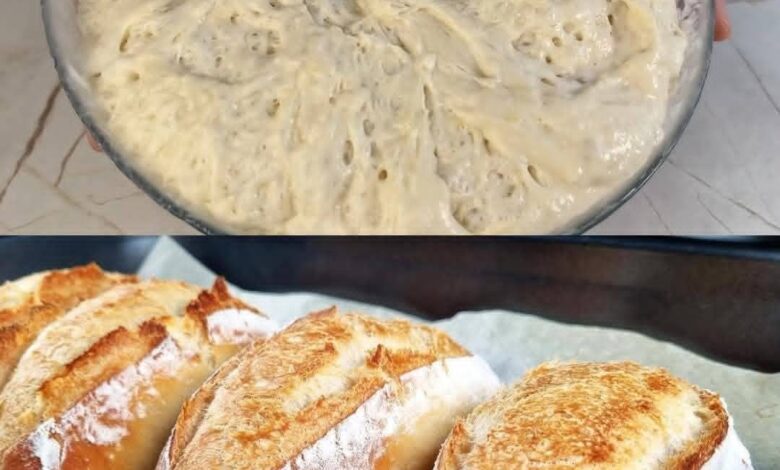
A crackling golden crust
A soft, airy, open crumb
A mild, subtly sweet, perfectly fermented flavor
A rustic, handmade appearance
It pairs effortlessly with soups, cheeses, dips, breakfast spreads, and hearty meals.
Optional Additions
Customize your loaf with any of the following mix-ins:
Herbs: rosemary, thyme, oregano
Seeds: sesame, poppy, sunflower, pumpkin
Cheese: cheddar, parmesan, feta
Sweet additions: raisins, dried cranberries, honey
Savory boosts: olives, roasted garlic, sundried tomatoes
Tips for Success
Don’t rush the rises: long fermentation boosts flavor and texture.
Use a hot pot and oven: this creates steam for a crisp crust.
Dough should be sticky: resist adding too much flour.
Use parchment: makes transferring dough easier and safer.
Let it cool: slicing hot bread compresses the crumb.
Nutritional Information (Approx. per slice, based on 12 slices)
Calories: ~130
Carbohydrates: 26 g
Protein: 4 g
Fat: 1 g
Fiber: 1 g
Sugar: 1 g
Sodium: ~150 mg
(Values vary depending on optional additions.)
Conclusion
This no-knead bread is the perfect combination of simplicity and excellence. With minimal effort, you can create a loaf that rivals artisanal bakery bread—crispy on the outside, tender on the inside, and full of comforting homemade goodness.
Recommendation
Make this your go-to base recipe. Once you master the method, experiment with flavors, shapes, and additions. It’s a fantastic recipe for beginners and a reliable favorite for experienced bakers.
Embracing Healthful Indulgence
Bread doesn’t need to be complicated—or unhealthy—to be deeply satisfying. This recipe celebrates wholesome ingredients and slow, mindful preparation. Enjoy each slice knowing it’s made with intention, nourishment, and the timeless joy of homemade cooking.
If you’d like, I can also turn this into a printable recipe card, a YouTube-style script, or a blog-ready post!