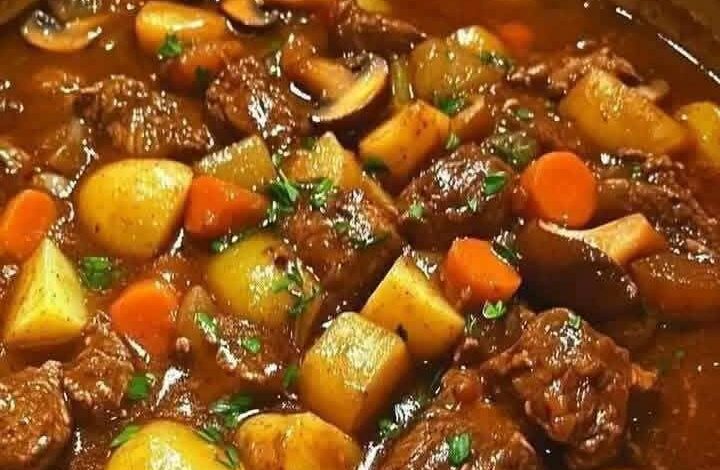
Old-fashioned beef stew is a globally cherished comfort food, with roots in the peasant traditions of Europe and adapted in American kitchens as a staple of Sunday dinners and family gatherings. Its enduring appeal lies in the harmonious transformation of simple, affordable ingredients into a deeply flavorful, soul-warming meal.
👑 Recipe at a Glance
Here are the core details for a classic, stovetop version.
· Serving Size: 4 people
· Total Time: 2 hours 45 minutes
· Active Prep: 15-20 minutes
· Key Flavor Profile: Hearty, savory, and rich
· Main Ingredients: Beef chuck, potatoes, carrots, onion, beef broth, red wine
📋 Key Ingredients & Preparation
The quality of your ingredients directly impacts the final stew.
Core Ingredients:
· Beef (2 lbs): Beef chuck roast is the best choice. Its marbling and connective tissue break down during slow cooking, becoming incredibly tender.
· Vegetables: Potatoes (like Yukon Gold or Russet), carrots, and onions form the vegetable base. Celery and peas are common additions for flavor and texture.
· Liquid Base: A combination of low-sodium beef broth and dry red wine (like a Cabernet or Merlot) provides depth. Water can be used if wine is omitted.
· Flavor Builders: Tomato paste (2-3 tbsp) adds umami and richness. Worcestershire sauce (1 tbsp) enhances savoriness. Bay leaves and fresh herbs like thyme or rosemary are essential aromatic.
Essential Prep Steps:
1. Cut Uniformly: Trim excess fat from the chuck roast and cut into 1.5 to 2-inch cubes. Cut potatoes and carrots into large, similar-sized chunks so they cook evenly without becoming mushy.
2. Dredge the Beef: Toss beef cubes in a mixture of all-purpose flour, salt, and pepper. This coating helps create a fond (browned bits) in the pot and later thickens the stew.
3. Sear in Batches: This is the most crucial step for flavor. Heat oil in a heavy pot or Dutch oven over medium-high heat. Add beef in a single layer without crowding and sear until deeply browned on all sides. Crowding will steam the meat. This may take 2-3 batches.
👩🍳 Step-by-Step Cooking Instructions
Follow this sequence for the best results.
Step 1: Build the Foundation
After removing the seared beef, add chopped onions (and celery if using) to the pot. Cook until softened, about 5 minutes. Add garlic and tomato paste, cooking for another minute until fragrant.
Step 2: Deglaze and Simmer
Pour in the red wine (or a cup of broth) to deglaze the pot, using a wooden spoon to scrape up all the flavorful browned bits. This is where much of the stew’s deep flavor comes from. Return the beef and any juices to the pot. Add enough beef broth to just cover the meat, along with bay leaves and herbs. Bring to a boil, then immediately reduce to the gentlest possible simmer. Cover and cook for 1.5 hours.
Step 3: Add Vegetables
After 1.5 hours, the beef should be fork-tender. Add the carrots and potatoes (and other hardy veggies like parsnips or turnips), submerging them in the liquid. If needed, add a bit more broth or water. Cover and continue to simmer for another 30-45 minutes, until the vegetables are tender.
Step 4: Final Thickening & Adjustments
· If the stew is not thick enough, create a slurry by mixing 1-2 tablespoons of cornstarch with an equal amount of cold water. Stir this into the simmering stew and cook for 3-5 minutes until thickened.
· Stir in quick-cooking vegetables like frozen peas just until warmed through.
· Taste and season generously with salt and black pepper. Remove the bay leaves before serving.
💡 Pro Tips & Common Variations
· For the Best Flavor: Let the finished stew cool and refrigerate overnight. Reheating it the next day allows the flavors to meld together beautifully.
· Alternative Cooking Methods: You can adapt this recipe for a slow cooker (cook on low for 7-8 hours after browning) or an Instant Pot (use the “Stew” or “Manual” setting for about 35 minutes under high pressure).
· For a Gluten-Free Stew: Use cornstarch or a gluten-free flour blend for dredging the beef and for the final slurry.
· For a Healthier Stew: Use leaner cuts like bottom round, trim all visible fat, and increase the proportion of vegetables.
🥗 Nutrition & Serving Suggestions
A serving of homemade beef stew is a balanced meal.
· Nutritional Profile (Approximate per serving):
· Calories: 370-450 kcal
· Protein: 25-39g (Excellent source, supports muscle health)
· Key Vitamins/Minerals: High in Iron, Vitamin A, and Potassium
· How to Serve: Serve stew in deep bowls.
· With Bread: Crusty bread, dinner rolls, or biscuits are perfect for soaking up the gravy.
· Over Starches: Ladle it over a bowl of mashed potatoes, egg noodles, or rice for an ultra-hearty meal.
· With a Salad: A simple green salad with a vinaigrette adds a fresh, crisp contrast.
❓ Your Stew Questions Answered
What is the single most important step for flavor?
Searing the beef properly in batches is non-negotiable. It creates the fond (browned bits) that forms the flavor foundation for the entire stew.
My stew meat is tough. What went wrong?
The beef likely didn’t simmer long enough. Chuck roast requires at least 1.5 to 2 hours of gentle simmering for the connective tissues to break down. Boiling it will make it tough.
Can I make beef stew ahead of time?
Yes, beef stew is an excellent make-ahead meal. It stores in the refrigerator for 3-4 days and often tastes better the next day. It also freezes well for up to 3 months.
What other vegetables can I add?
Feel free to customize. Good additions include parsnips, mushrooms, green beans, or zucchini (add zucchini in the last 15 minutes of cooking).
I hope this comprehensive guide helps you create a perfect, comforting pot of old-fashioned beef stew. If you have a specific dietary preference or cooking appliance you’d like to focus on, I can provide more tailored tips.