Old Fashioned Rice Pudding: A Bowl of Comfort
Introduction
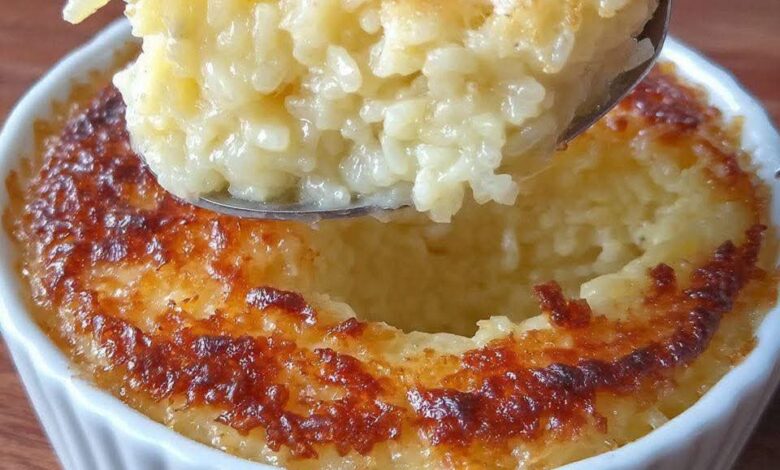
Old Fashioned Rice Pudding is the edible equivalent of a warm embrace. This humble, creamy dessert has graced tables for centuries, transforming simple pantry staples—rice, milk, sugar, and eggs—into a sublime comfort food. It’s a dish of contradictions: both nourishing and indulgent, simple yet deeply flavorful, and found in some variation in nearly every cuisine that cultivates rice. This recipe stays true to its classic roots, employing a gentle baking method that yields a comforting, custard-like pudding with a whisper of cinnamon and vanilla.
A Brief History
Rice pudding’s history is as rich as its texture. Its origins can be traced back to ancient cultures in Asia and the Middle East, where rice was first cultivated. The dish traveled along trade routes, evolving with each region. In medieval Europe, it was a festive dish, often elaborately spiced and expensive. By the 18th and 19th centuries, as rice became more accessible, it morphed into the homey, economical dessert we know today—a ingenious way to stretch ingredients and provide a satisfying end to a meal, especially during leaner times.
Ingredients
For the Pudding:
· 1/2 cup (100g) medium or long-grain white rice (not instant)
· 4 cups (950ml) whole milk, divided
· 1/3 cup (65g) granulated sugar
· 1/4 teaspoon fine sea salt
· 1 large egg, lightly beaten
· 1 teaspoon pure vanilla extract
· 1/4 cup (35g) raisins or currants (optional, but traditional)
For the Topping:
· 1/4 teaspoon ground cinnamon
· 1 tablespoon cold butter, cut into small pieces
Methods & Instructions
Method Overview:
This recipe uses a hybrid stovetop-to-oven method, which ensures perfectly cooked rice and a beautifully set, creamy custard.
Step-by-Step Instructions:
1. Prepare & Preheat: Preheat your oven to 325°F (160°C). Grease a 1.5-quart baking dish (like an 8×8 inch square or a deep round dish).
2. Cook the Rice: In a medium, heavy-bottomed saucepan, combine the uncooked rice, 3 cups of the milk, sugar, and salt. Bring to a simmer over medium heat, stirring frequently to prevent sticking. Once simmering, reduce heat to low and cook, uncovered, for about 25-30 minutes, stirring often, until the rice is tender and the mixture has thickened considerably. It should have a porridge-like consistency.
3. Temper the Egg: In a small bowl, lightly beat the egg. Very slowly, whisk in about 1/2 cup of the hot rice mixture to gently warm the egg (this prevents it from scrambling). Then, slowly whisk this warmed egg mixture back into the saucepan with the remaining rice.
4. Final Stovetop Stir: Cook on low for 2-3 more minutes, stirring constantly, until the mixture thickens a bit further. Remove from heat and stir in the vanilla extract and raisins (if using).
5. Assemble for Baking: Pour the rice mixture into the prepared baking dish. Pour the remaining 1 cup of cold milk over the top—do not stir. Dot the surface with the pieces of cold butter and sprinkle evenly with cinnamon.
6. Bake: Place the dish in the preheated oven. Bake, uncovered, for 45-55 minutes. The pudding is done when the top is lightly golden in spots and a thin, creamy skin has formed. It will still be slightly wobbly in the center but will set further as it cools.
7. Cool & Serve: Let the pudding cool for at least 30 minutes. It is delicious warm, at room temperature, or chilled. The texture becomes firmer and more custard-like when refrigerated.
Formation & Texture
The magic of this method is in its two-layer formation. The cold milk poured on top before baking creates a distinct creamy top layer, while the bottom remains denser and rice-rich. As it bakes, the egg custard sets, binding the rice into a cohesive, creamy whole that is neither soupy nor dry.
Nutritional Profile (Per Serving, approx. 1/8 of recipe)
· Calories: ~220 kcal
· Carbohydrates: 33g
· Protein: 7g
· Fat: 6g (Saturated: 3.5g)
· Calcium: 15% DV
· Vitamin D: 10% DV
· Note: Provides a source of energy, protein for satiety, and calcium for bone health. Using whole milk is key for the traditional creamy texture and fat-soluble vitamins.
Benefits & Why We Love It
· Ultimate Comfort Food: Evokes nostalgia and provides emotional warmth.
· Economical & Resourceful: Makes the most of basic, affordable ingredients.
· Versatile: Can be adapted to be gluten-free, or made with dairy alternatives.
· Nutrient-Dense: Offers a better balance of protein, fat, and carbohydrates than many modern desserts.
· Soothing Texture: Easy to digest, often appealing to all ages.
For the Pudding Lovers: Serving & Pairing Ideas
· Classic: Enjoy it plain, celebrating its pure, comforting flavor.
· With a Splash: A drizzle of cold heavy cream or a dollop of whipped cream is divine.
· Fruit Forward: Serve with a side of stewed berries, a compote, or fresh seasonal fruit.
· For Grown-Ups: A small splash of bourbon, rum, or a dollop of whiskey-infused cream elevates it beautifully.
· Textural Contrast: Sprinkle with toasted nuts (sliced almonds, pecans) for crunch.
Conclusion
Old Fashioned Rice Pudding is more than just a recipe; it’s a culinary heirloom. It represents the timeless art of creating something profoundly satisfying from the simplest of beginnings. In a world of complex desserts, its honest goodness stands apart. Whether you make it to continue a family tradition or to start a new one, each creamy spoonful is a taste of history, home, and heartfelt comfort. It’s a testament to the fact that the most enduring dishes are often those that speak quietly to the soul.