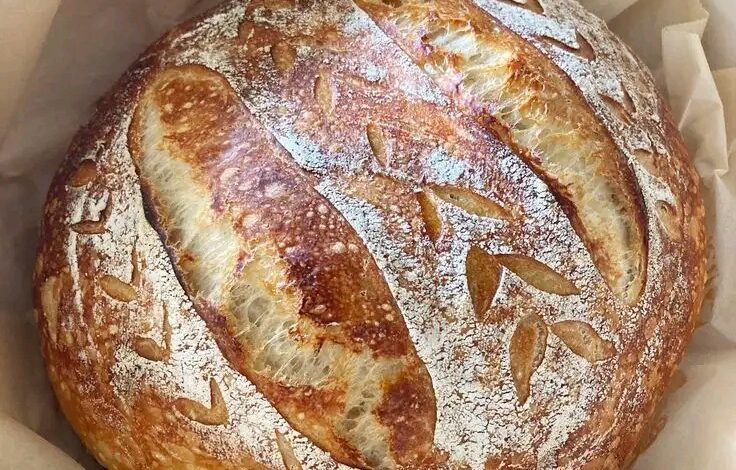
Overnight Sourdough Bread
Introduction
There’s something deeply satisfying about baking sourdough bread from scratch. While traditional sourdough can take days of feeding, folding, and fermenting, this overnight sourdough bread recipe simplifies the process without sacrificing flavor.
Perfect for beginners and busy bakers alike, this method allows the dough to develop rich taste and structure overnight with minimal hands-on time. If you’ve always wanted to bake sourdough but felt intimidated, this approachable recipe is your ideal starting point.
Description
This overnight sourdough loaf has a crisp, golden crust and a soft, airy interior with a gentle tang. The long fermentation enhances both flavor and digestibility, while the simplified technique makes it accessible even for first-time bakers.
Expect a rustic artisan-style bread that’s perfect for sandwiches, toast, soups, or simply enjoyed warm with butter.
Ingredients & Quantity
500g (4 cups) bread flour
350g (1 ½ cups) warm water
100g (½ cup) active sourdough starter (fed and bubbly)
10g (2 teaspoons) salt
Instructions
1. Mix the Dough
In a large bowl, combine the sourdough starter and warm water. Stir until mostly dissolved. Add the flour and salt, mixing until a shaggy dough forms.
2. Rest (Autolyse)
Cover the bowl and let the dough rest for 30–45 minutes.
3. Stretch and Fold
Perform 3–4 sets of stretch and folds over 1–2 hours, spacing them about 30 minutes apart. This builds gluten structure without kneading.
4. Overnight Fermentation
Cover the bowl tightly and let the dough ferment overnight (8–12 hours) at room temperature.
5. Shape the Dough
In the morning, gently shape the dough into a round loaf. Let it rest for 30–60 minutes while you preheat your oven to 450°F (230°C) with a Dutch oven inside.
6. Bake
Transfer the dough onto parchment paper and carefully place it into the hot Dutch oven. Score the top with a sharp blade.
Bake covered for 20 minutes.
Remove lid and bake another 20–25 minutes until golden brown.
7. Cool
Let the bread cool completely on a wire rack before slicing (at least 1 hour).
Origin and Cultural Significance
Sourdough bread dates back over 5,000 years to ancient Egypt, where natural fermentation was first discovered. It later became central to European baking traditions, particularly in France and Italy.
In the United States, sourdough became especially famous during the 19th-century Gold Rush in San Francisco, where miners relied on naturally fermented starters for reliable bread-making. Today, sourdough is celebrated globally not only for its flavor but for its connection to traditional, slow food practices and artisan craftsmanship.
Optional Additions
Seeds (sesame, sunflower, flax)
Fresh herbs like rosemary or thyme
Roasted garlic
Whole wheat flour (replace up to 25% of white flour)
Olives or dried cranberries for variation
Tips for Success
✔ Use an active, bubbly starter — it should double in size within 4–6 hours of feeding.
✔ Don’t rush fermentation; temperature affects timing.
✔ Wet your hands during stretch and folds to prevent sticking.
✔ Always preheat your Dutch oven for best oven spring.
✔ Allow full cooling before slicing to avoid a gummy texture.
Nutritional Information (Approximate per slice)
Calories: 120–150
Carbohydrates: 25g
Protein: 4–5g
Fat: 0.5–1g
Fiber: 1g
Sourdough fermentation may improve mineral absorption and support gut health due to beneficial bacteria developed during fermentation.
Embracing Healthful Indulgence
Unlike commercial white bread, traditional sourdough undergoes natural fermentation, which may make it easier to digest and help regulate blood sugar levels. The slower fermentation process breaks down phytic acid and gluten structures, making nutrients more bioavailable.
Enjoying homemade sourdough is a beautiful balance between comfort food and mindful eating.
Conclusion
This overnight sourdough bread recipe delivers artisan-quality results with less effort and time than traditional methods. It’s simple, reliable, and perfect for beginners eager to explore sourdough baking.
Recommendation
If this is your first sourdough experience, bake this recipe at least twice to truly understand how your dough behaves. Once comfortable, experiment with flavors and hydration levels to create your signature loaf.
There’s nothing quite like pulling a golden, crackling loaf from your own oven — and this recipe makes it wonderfully achievable. 🍞