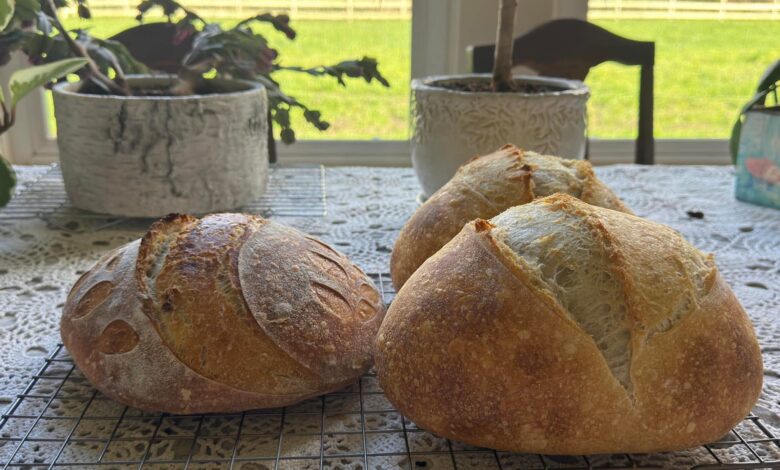
Rustic Sourdough Bread: Understanding Oven Spring and Fermentation
Introduction
Sourdough baking can sometimes feel unpredictable. Even when you carefully follow all the traditional “rules,” you might still end up with surprising results—like a loaf made with cold starter straight from the fridge rising beautifully, while a carefully managed peak-to-peak fed starter loaf turns out flat. This recipe and guide explores how to make a classic sourdough loaf while also explaining why these variations can happen. In sourdough baking, experience often teaches that flexibility and observation matter just as much as strict rules.
Ingredients Quantity
For two medium loaves:
1000 g bread flour
700 g water (70% hydration)
200 g active sourdough starter
20 g salt
Instructions
Mix the Dough
In a large bowl, combine flour and water. Mix until no dry flour remains. Let it rest for 30 minutes (autolyse).
Add Starter and Salt
Add the sourdough starter and salt to the dough. Mix thoroughly until well incorporated.
Bulk Fermentation
Allow the dough to ferment at room temperature for 4–5 hours, performing stretch-and-folds every 30 minutes during the first two hours.
Divide and Shape
Divide the dough into two equal pieces. Pre-shape gently and rest for 20 minutes.
Final Shaping
Shape the dough into boules or batards and place them in proofing baskets.
Optional Cold Retard
Cover and refrigerate the dough for 8–16 hours for deeper flavor.
Preheat Oven
Preheat the oven to 450°F (230°C) with a Dutch oven or baking stone inside.
Bake
Bake covered for 20 minutes.
Remove lid and bake 20–25 minutes more until deeply golden.
Cool Completely
Let the bread cool for at least one hour before slicing.
Description
A well-made sourdough loaf has a crisp, caramelized crust, airy interior crumb, and complex tangy flavor. The signature rise during baking—known as oven spring—creates the beautiful open structure that sourdough bakers love.
Origin and Cultural Significance
Sourdough bread is among the oldest leavened breads in human history, dating back thousands of years. Before commercial yeast existed, bakers relied on naturally fermented starters made from wild yeast and bacteria. Today, sourdough remains a symbol of artisan baking traditions, patience, and the connection between baker, ingredients, and environment.
Why One Loaf Might Be Flat
Several factors can explain why your carefully managed starter loaf was flatter than the one made with cold starter:
1. Over-Fermentation
Peak-to-peak feeding over two days may have produced a very active starter that fermented the dough too quickly, weakening gluten structure.
2. Cold Retard Timing
If the dough already fermented too much before refrigeration, the cold retard can push it into overproofing.
3. Dough Strength Differences
Sometimes a slightly less active starter (like one straight from the fridge) slows fermentation enough to keep the gluten structure stronger.
4. Hydration or Handling Variations
Even small differences in shaping tension or dough hydration can affect oven spring.
5. Environmental Conditions
Temperature and humidity in your kitchen can significantly influence fermentation speed.
Optional Additions
You can customize your sourdough loaf with:
Seeds (sunflower, sesame, flax)
Whole wheat or rye flour
Olives or roasted garlic
Herbs such as rosemary or thyme
Tips for Success
Watch the dough, not the clock. Fermentation speed varies daily.
Use a thermometer to check internal loaf temperature (205–210°F).
Build strong dough structure with proper stretch-and-fold techniques.
Avoid overproofing, especially before cold retard.
Score deeply before baking to allow proper expansion.
Most importantly, remember that sourdough baking improves through experimentation and observation.
Nutritional Information (Approximate per slice)
Calories: ~120
Carbohydrates: ~24 g
Protein: ~4 g
Fat: ~0.5 g
Fiber: ~1–2 g
Natural fermentation may improve mineral absorption and digestibility.
Conclusion
Sourdough baking is full of surprises. A loaf made with a cold starter might outperform one prepared with meticulous feeding schedules simply because the fermentation timing worked better for that specific dough and environment.
Recommendation
Instead of strictly following rules, try keeping a simple baking journal. Record starter condition, fermentation times, and temperatures. Over time, patterns will emerge that match your kitchen environment.
Embracing Healthful Indulgence
Sourdough bread is more than just food—it’s a process that rewards patience, curiosity, and creativity. Each loaf offers an opportunity to learn something new. By embracing the natural rhythms of fermentation rather than rigid rules, bakers can enjoy both the science and the joy of crafting wholesome, flavorful bread at home.