Small-Batch Tin-Baked Sourdough Bench Oven Friendl
Introduction
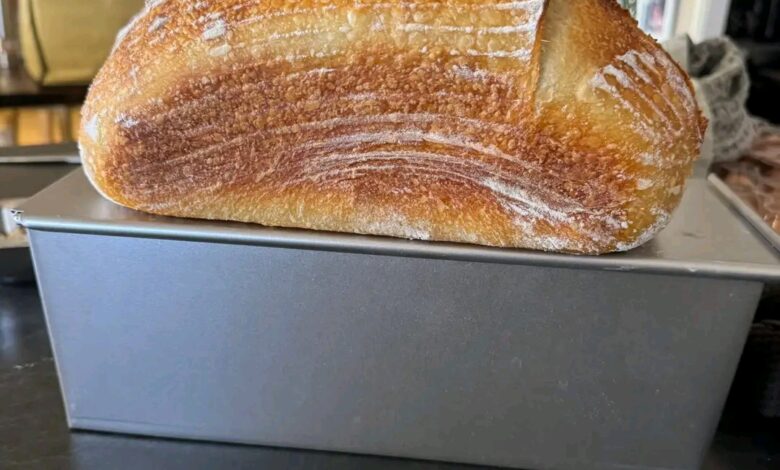
Some of the best loaves come from pure adaptability. On a scorching 40°C day, when firing up the main oven felt impossible and a grease fire shut down the outdoor plan entirely, this loaf proved that sourdough doesn’t need perfection—it needs persistence. Baked cold, in a smaller tin, inside a humble bench-top oven, this bread turned out surprisingly delicious and deeply satisfying.
If you’ve ever felt discouraged by “rules” around sourdough, this loaf is your permission slip to bend them—and still win.
Description
This is a small-batch, tin-baked sourdough loaf with a soft, even crumb and a gently crisp crust. The tin supports the dough beautifully, making it ideal for smaller quantities and alternative ovens. The result is a loaf that slices cleanly, toasts evenly, and works perfectly for breakfast toast or grilled cheese—especially when you least expect it to.
Origin and Cultural Significance
Sourdough has always been a bread of necessity and ingenuity. Historically, it was baked in communal ovens, over fires, in tins, pots, and whatever vessels were available. The idea that sourdough must be baked in a blazing-hot Dutch oven is a modern luxury—not a rule.
Tin-baked loaves have long been common in home kitchens, especially during hot weather or in places without large ovens. This method reflects the original spirit of sourdough: adapt, ferment, bake, nourish.
Ingredients Quantity (Small Loaf)
Bread flour – 300 g
Water – 200 g
Active sourdough starter – 70 g
Salt – 6 g
(Perfect for a small loaf tin and modest oven space.)
Instructions
1. Mix
Combine flour and water until fully hydrated. Rest for 30 minutes if time allows.
Add starter and salt, mixing until evenly incorporated.
2. Bulk Fermentation (3–5 hours)
Let the dough ferment at room temperature until slightly domed and airy.
Perform 2–3 gentle stretch-and-folds during the first 90 minutes.
3. Shape
Lightly shape into a log and place into a greased or parchment-lined loaf tin.
The dough does not need to fill the tin—it will rise to fit.
4. Cold Proof
Cover and refrigerate overnight (8–14 hours).
5. Bake (Cold Tin, Cold Oven—Yes, Really)
Place the cold loaf directly into your bench-top oven
Set temperature to 220°C
Bake for 35–40 minutes
Remove from tin and bake an extra 5–10 minutes for crust, if desired
Let cool before slicing (or at least pretend you’re going to).
Optional Additions
Olive oil (1 tbsp) for extra softness
Whole wheat flour (up to 20%) for flavor
Seeds on top or mixed in
Cheese cubes folded through for grilled-cheese-ready slices
Honey or malt syrup (1 tsp) for subtle sweetness
Tips for Success
A loaf tin provides structure—perfect for smaller doughs
Cold dough + cold oven = gentler oven spring, but excellent crumb
Don’t judge loaf size by tin fill—fermentation matters more
Bench-top ovens often bake faster on top; tent with foil if needed
Heat waves are not the enemy—adaptation is the skill
Nutritional Information (Approx. per slice)
Calories: ~150
Carbohydrates: 28 g
Protein: 5 g
Fat: 0.5 g
Fiber: 2 g
Naturally fermented sourdough supports gut health and offers better mineral absorption than commercial bread.
Conclusion
Against the odds—no preheat, smaller loaf, alternate oven—this bread delivered. It’s proof that sourdough doesn’t demand control; it rewards flexibility. Sometimes letting go of expectations is exactly what leads to the best results.
Recommendation
This loaf shines with:
Butter and Vegemite or honey for breakfast
Sharp cheddar grilled cheese (low and slow)
Toasted slices with avocado and flaky salt
It’s practical, comforting, and quietly impressive.
Embracing Healthful Indulgence
This loaf represents the heart of sourdough: nourishment without fuss, indulgence without excess, and satisfaction born from patience—not perfection. Baking like this isn’t about chasing bakery loaves; it’s about feeding yourself well, even on the hottest, messiest days.
And honestly?
If this loaf came out that good… your starter is absolutely worth keeping alive
If you’d like, I can next:
Turn this into a repeatable “hot-weather sourdough method”
Create a tin-loaf formula for weekly sandwich bread
Or help you design the ultimate grilled cheese lineup for this loaf 🧀