Sourdough Sandwich Loaf (No Stretch & Folds)
Introduction
If you’ve been looking for the perfect homemade sandwich bread with that classic sourdough flavor—but without the complicated techniques—this recipe is for you! This sourdough sandwich loaf is soft, fluffy, and beautifully structured, making it ideal for everyday sandwiches, toast, or even French toast. Best of all, it requires no stretch and folds, making it beginner-friendly and low effort.
Description
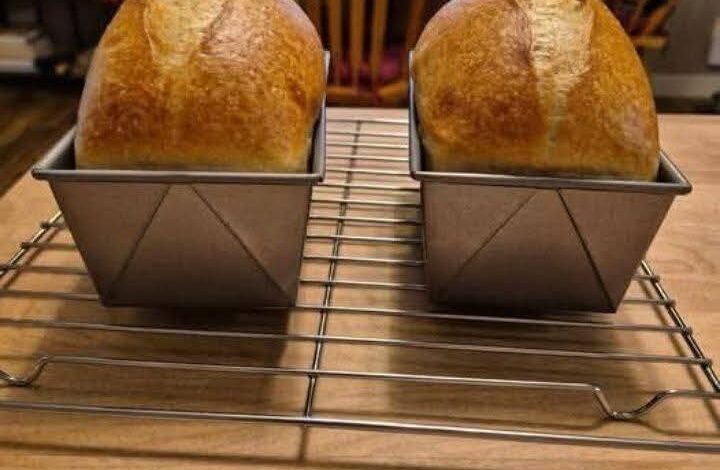
This sourdough sandwich loaf has a tender crumb, light golden crust, and mild tangy flavor. Unlike rustic artisan loaves, this bread is baked in a loaf pan, giving it a uniform shape perfect for slicing. It’s soft enough for sandwiches yet sturdy enough to hold spreads and fillings without falling apart.
Ingredients & Quantity
For 1 standard 9×5-inch loaf:
500g (4 cups) bread flour
100g (½ cup) active sourdough starter (fed and bubbly)
300g (1¼ cups) warm water
30g (2 tbsp) olive oil or melted butter
20g (1½ tbsp) honey or sugar
10g (1¾ tsp) salt
Instructions
1️⃣ Mix the Dough
In a large bowl, combine water, starter, honey (or sugar), and oil. Stir until mostly dissolved.
Add flour and salt. Mix until a shaggy dough forms.
2️⃣ Knead
Knead by hand for 8–10 minutes (or 5–6 minutes in a stand mixer) until smooth and elastic.
3️⃣ First Rise (Bulk Fermentation)
Place dough in a lightly greased bowl. Cover and let rise at room temperature for 6–8 hours, or until doubled in size.
4️⃣ Shape
Lightly flour your surface. Shape dough into a tight loaf and place into a greased 9×5-inch loaf pan.
5️⃣ Second Rise
Cover and let rise for 2–3 hours, until the dough has risen just above the rim of the pan.
6️⃣ Bake
Preheat oven to 375°F (190°C).
Bake for 35–40 minutes, or until golden brown and internal temperature reaches 190–200°F (88–93°C).
7️⃣ Cool
Remove from pan and cool completely on a wire rack before slicing.
Origin and Cultural Significance
Sourdough bread dates back thousands of years to ancient civilizations such as those in Ancient Egypt, where natural fermentation was first discovered. Unlike commercial yeast breads, sourdough relies on wild yeast and lactic acid bacteria naturally present in flour and the environment.
In many cultures, sourdough symbolizes patience, nourishment, and tradition. During times of hardship—such as the California Gold Rush in San Francisco—sourdough became a staple food because starters could be maintained indefinitely. Today, it represents a return to slow, intentional baking and wholesome living.
Optional Additions
🌾 Replace 100g of flour with whole wheat flour for a heartier loaf
🧈 Brush top with melted butter after baking for a softer crust
🌻 Add 2 tbsp seeds (sunflower, sesame, flax) for texture
🧄 Mix in herbs or roasted garlic for savory flavor
🥛 Add 2–3 tbsp milk powder for extra softness
Tips for Success
✔ Use an active, bubbly starter at peak rise
✔ Don’t rush fermentation—temperature affects timing
✔ If your kitchen is cold, place dough in a slightly warm oven (turned off)
✔ Let the bread cool fully before slicing to prevent a gummy texture
✔ Store in an airtight container for up to 4 days or freeze slices
Nutritional Information (Approximate per slice, based on 12 slices)
Calories: 160
Carbohydrates: 28g
Protein: 5g
Fat: 3g
Fiber: 1g
Sugar: 2g
(Nutritional values may vary depending on ingredients used.)
Conclusion
This sourdough sandwich loaf proves that homemade bread doesn’t have to be complicated. With simple ingredients, minimal hands-on time, and no stretch-and-fold technique, you can enjoy a beautifully soft and flavorful loaf perfect for everyday meals.
Recommendation
Pair this loaf with:
Avocado toast and eggs
Classic turkey and cheese sandwiches
Homemade jam and butter
Grilled cheese or paninis
It’s an excellent staple recipe to keep in your weekly baking rotation.
Embracing Healthful Indulgence
Sourdough isn’t just delicious—it offers potential digestive benefits thanks to its natural fermentation process. The slow fermentation can make nutrients more bioavailable and may be easier on digestion compared to commercial yeast breads.
Baking your own sourdough sandwich loaf is more than cooking—it’s embracing mindful nourishment, tradition, and wholesome indulgence. There’s something truly special about slicing into a loaf you made from scratch. 🍞✨