The Ultimate Guide to Creamy Custard French Toast: A Decadent Breakfast Classic

Here is a comprehensive guide to making and understanding Creamy Custard French Toast, complete with a rich recipe, its history, nutritional profile, and cultural significance.
The Ultimate Guide to Creamy Custard French Toast: A Decadent Breakfast Classic
Introduction
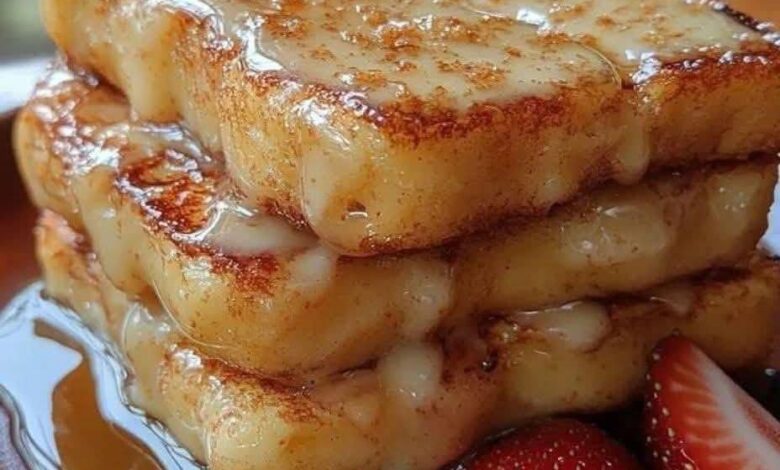
Creamy Custard French Toast is the ultimate expression of a classic breakfast dish, transforming simple ingredients into a luxurious and comforting meal. Unlike standard French toast, which can sometimes be eggy or dry, this version focuses on creating a rich, velvety custard that soaks deep into thick slices of bread. The result is a beautiful contrast: a exterior that is golden and crisp from pan-frying in butter, giving way to a lusciously soft, almost pudding-like center . It is a dish that feels both nostalgic and indulgently special, perfect for a leisurely weekend brunch, a holiday morning, or any time you want to turn an ordinary breakfast into an unforgettable experience . The magic lies in the balance of a few high-quality ingredients and a gentle cooking process, which we will explore in detail.
Ingredients
The quality of your ingredients directly impacts the final dish. Here is a detailed list of what you will need to create the perfect creamy custard French toast, serving approximately 4 people .
For the Custard Soak
· 4 large eggs: The foundation of the custard, providing richness and structure.
· 1 cup heavy cream: This is the secret to the “creamy” texture, adding unparalleled richness and a velvety mouthfeel .
· 1/2 cup whole milk: Balances the heaviness of the cream and helps create the perfect soaking consistency. For an even richer version, you can use all cream or half-and-half .
· 3 tablespoons granulated sugar: Adds sweetness and aids in caramelization for a golden-brown crust.
· 1 teaspoon vanilla extract: Provides a warm, aromatic depth of flavor.
· 1/2 teaspoon ground cinnamon: A classic warm spice that complements the sweetness perfectly. A pinch of nutmeg can also be added for extra complexity .
· Pinch of salt: An essential component that balances the sweetness and enhances all the other flavors.
For Assembly and Cooking
· 8 thick slices of brioche or challah bread: This is the ideal choice. These enriched breads, made with eggs and butter, are sturdy yet soft, with a tight crumb that absorbs the custard beautifully without disintegrating. The bread should be cut about 1-inch thick . Day-old or slightly stale bread is even better, as it will soak up the custard like a sponge .
· 3 tablespoons unsalted butter, divided: Used for frying, it adds an irreplaceable, nutty, and rich flavor to the crispy exterior.
For Serving (Optional, but Recommended)
· Pure maple syrup
· Fresh berries (strawberries, blueberries, raspberries)
· Powdered sugar, for dusting
· Whipped cream
Instructions (Methods)
Follow these steps carefully to achieve French toast with a perfectly crisp exterior and a luxuriously creamy center.
Step 1: Prepare the Custard Base
In a large, shallow bowl (wide enough to fit a slice of bread), whisk together the eggs, heavy cream, whole milk, granulated sugar, vanilla extract, ground cinnamon, and a pinch of salt. Whisk vigorously until the eggs are fully broken down and the mixture is completely smooth and well-combined. This ensures a homogeneous custard that will coat the bread evenly .
Step 2: Soak the Bread
Place a wire rack over a baking sheet and set it aside. This is for holding the soaked bread. One at a time, dip a slice of the thick bread into the custard mixture. Allow it to soak for about 20-30 seconds per side . The goal is to let the bread absorb the liquid without becoming overly saturated and falling apart. The custard should penetrate the slice but the bread should still hold its shape. Place the soaked slice on the prepared wire rack while you heat your pan and soak the remaining slices .
Step 3: Cook the French Toast
Place a large non-stick skillet or griddle over medium heat. It’s crucial to avoid high heat, which will burn the outside before the eggy custard in the center has a chance to cook. Add 1 tablespoon of butter to the hot skillet, swirling it until it melts and is bubbly. Gently place 2-3 slices of the soaked bread into the skillet, being careful not to overcrowd the pan. Cook for 3-4 minutes per side, or until the bottom is deeply golden brown and the edges look crisp. Gently press the center of a slice; it should feel set and spring back slightly. Flip carefully and cook the other side .
Step 4: Keep Warm and Serve
Transfer the cooked slices to a baking sheet and keep them warm in an oven preheated to 200°F (95°C) while you cook the remaining batches. Repeat the process, using the remaining butter as needed. Serve the warm French toast immediately with your favorite toppings, such as a generous drizzle of maple syrup, a dusting of powdered sugar, and a handful of fresh berries .
The Rich History of French Toast
While we call it “French” toast, its origins are far older and more practical than France itself. The history of this dish is a story of culinary resourcefulness that spans continents and centuries.
Ancient Rome: The earliest known version of French toast dates back to the Roman Empire, around the 4th or 5th century AD. A cookbook attributed to the gourmet Apicius contains a recipe for Aliter Dulcia (another sweet dish), which describes soaking slices of white bread in a milk and egg mixture, then frying them in oil and serving them with honey .
Medieval Europe: The concept of soaking and frying stale bread became common throughout medieval Europe, where it was a practical way to avoid wasting food. Stale bread, or “lost bread,” was given new life. This idea is perfectly captured in the French name for the dish: pain perdu, which literally means “lost bread” .
The Name “French Toast”: So, how did pain perdu become “French toast”? The term “French toast” first appeared in 17th-century England. The adjective “French” was likely used not because the dish originated in France, but because it was a fashionable way to denote a “fancy” or “superior” recipe that used high-quality ingredients like eggs and milk, which were often more expensive than the stale bread itself.
Global Journey and Regional Adaptations:
· United States: French toast became a staple of American home cooking and diner culture, often served for breakfast with butter and maple syrup.
· Hong Kong: The British brought French toast to Hong Kong, where it was transformed into a beloved cha chaan teng (tea restaurant) specialty known as 西多士. This version is typically made with two slices of bread sandwiched together with peanut butter or jam, dipped in egg, and deep-fried instead of pan-fried. It is served with a thick slab of butter and a generous drizzle of condensed milk or golden syrup .
Nutritional Information & Benefits
Creamy Custard French Toast is undeniably a decadent treat. The table below provides an estimated nutritional profile per serving (2 slices), based on the recipe above without additional syrup or toppings .
Nutrient Approximate Amount per Serving
Calories 380-420 kcal
Protein 10-12 g
Carbohydrates 35-40 g
Fats 20-24 g
Saturated Fat 10-12 g
Cholesterol 180-220 mg
Sodium 280-320 mg
Sugar 10-12 g
Fiber 1-2 g
Key Nutritional Notes:
· High in Energy: It is a calorie-dense food, providing a significant amount of energy, which is why it’s a favorite for a substantial weekend breakfast.
· Rich in Protein and Fats: The eggs and milk/cream provide a good amount of protein and fats, contributing to satiety .
· Source of Vitamins and Minerals: French toast can be a source of various vitamins and minerals, including Vitamin A, Vitamin B12, calcium, and selenium, largely derived from the eggs and dairy . The exact amounts vary based on the specific ingredients used.
· Mindful Indulgence: While delicious, it’s also high in saturated fat, cholesterol, and sugar. The key to enjoying it as part of a balanced lifestyle is portion control and mindful toppings. Instead of heavy syrup, consider enhancing your serving with fresh fruit, which adds fiber, vitamins, and natural sweetness .
Formation and Cultural Evolution
The “formation” of creamy custard French toast is not a single event but an evolution of the core concept of pain perdu. The formation of this specific version can be traced through several culinary trends:
1. The Base Concept (Resourcefulness): Starting with the simple, practical need to use stale bread by moistening it with milk and eggs .
2. The Addition of Flavor (Enrichment): Over time, cooks began adding sugar, spices like cinnamon and nutmeg, and vanilla to the egg wash, transforming a necessity into a desired sweet treat.
3. The Pursuit of Texture (Indulgence): Modern brunch culture, particularly in American and European cafes, has driven the trend toward ultimate indulgence . This led to the use of richer breads like brioche and challah, and the substitution of some or all of the milk with heavy cream. This shift is the defining characteristic of “creamy custard” French toast, creating that signature soft, luscious interior that contrasts so perfectly with the crisp, buttery crust .
Conclusion and Why “Lovers” Adore It
In conclusion, Creamy Custard French Toast is far more than just bread and eggs. It is a dish with a rich history of culinary thrift that has gracefully evolved into a symbol of modern indulgence. It masterfully combines simple, high-quality ingredients to create a symphony of textures and flavors—the satisfying crunch of the golden exterior yielding to a warm, soft, and impossibly creamy heart.
Why do “lovers” adore it?
· The Comfort Seeker: It is the ultimate hug on a plate, evoking feelings of warmth, nostalgia, and being cared for .
· The Brunch Enthusiast: Its luxurious texture and rich flavor profile make it a star attraction for any special brunch gathering, impressing guests without requiring complicated techniques .
· The Home Cook: It is a forgiving and versatile recipe. It allows for endless customization—from different breads and spices to a variety of toppings like fresh fruit, nuts, or a drizzle of chocolate—making it a canvas for personal creativity .
· The Foodie: For those who appreciate the nuances of texture and flavor, the contrast between the crisp, buttery crust and the soft, almost molten custard center is an irresistible culinary experience.
Ultimately, people love it because it transforms the ordinary into something spectacular, proving that the best dishes are often those made with patience, quality ingredients, and a little bit of love.