The Ultimate Guide to Old-Fashioned Stuffed Cabbage Rolls: A Timeless Comfort Food

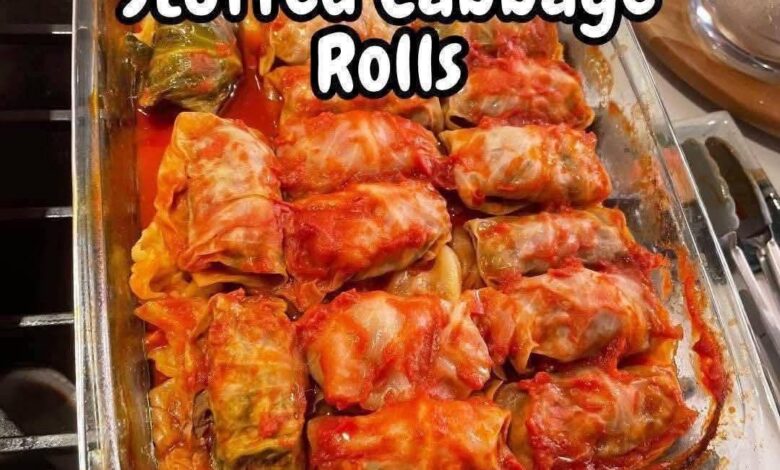
Here is a comprehensive guide to Old-Fashioned Stuffed Cabbage Rolls, exploring everything from its rich history to a detailed recipe and its nutritional profile.
The Ultimate Guide to Old-Fashioned Stuffed Cabbage Rolls: A Timeless Comfort Food
Introduction
When it comes to comforting and hearty meals, few dishes can match the nostalgic satisfaction of Old-Fashioned Stuffed Cabbage Rolls. This beloved recipe features tender cabbage leaves wrapped around a savory mixture of ground meat, rice, and aromatic spices, all baked to perfection in a rich, tangy tomato sauce. It’s a dish that tastes like something straight from Grandma’s kitchen, evoking warm memories of family dinners and cozy gatherings .
These rolls are more than just delicious—they are a culinary tradition that has traveled across continents and through centuries. Join us as we unroll the layers of this classic comfort food, from its ancient origins to a step-by-step guide for making it yourself.
The History of Stuffed Cabbage Rolls
The exact origin of the cabbage roll is unknown, but it is a dish with a pedigree that stretches back at least two millennia . While its precise beginnings are debated, many food historians believe the concept of stuffing leaves originated in the kitchens of the Ottoman Empire, with dishes like Turkish sarma (meaning “a wrapped thing”) being a clear ancestor . From there, the idea spread and was adapted by various cultures.
As the dish traveled, it evolved to incorporate local ingredients and tastes. It’s likely that multiple groups of people invented versions of it independently, given the widespread cultivation of cabbage . In Ukraine, recipes often use buckwheat instead of rice. In China, minced chicken and shiitake mushrooms are common fillings for cabbage wraps. In Egypt, lamb is blended with warm, aromatic spices .
In Hungary, the dish is known as Töltött Káposzta and became a staple, especially during celebrations. It’s said that “there’s no Christmas without cabbage” in Hungary, where the rolls are often cooked on a bed of sauerkraut with generous amounts of smoked meat and paprika . The Polish version, Gołąbki, which translates to “little pigeons,” is typically filled with a mixture of beef or pork and rice, then baked in a tomato sauce . Jewish communities also have a version called holishkes, which is traditionally served on Simchat Torah and often features a sweet-and-sour flavor profile . This rich tapestry of history is what makes stuffed cabbage rolls a truly global comfort food.
The Dish: Components and Flavor Profile
A perfect old-fashioned stuffed cabbage roll is a symphony of textures and flavors. Each component plays a crucial role:
· The Cabbage: The outer leaf serves as a tender, edible wrapper that becomes silky and sweet as it slowly cooks, absorbing the flavors of the sauce and filling .
· The Filling: The savory heart of the dish is typically a blend of ground beef and pork for a rich, fatty depth of flavor. This is mixed with rice (which cooks and expands inside the roll), aromatic onions, garlic, and herbs like parsley and dill .
· The Sauce: The rolls are bathed in a generous amount of sauce, which keeps them moist during the long baking process. The classic tomato sauce is often balanced with a touch of brown sugar and an acid like lemon juice or vinegar, creating a perfect sweet-and-sour counterpoint to the rich meat .
Step-by-Step Formation and Methods
Making stuffed cabbage rolls is a labor of love, but the process is straightforward. Here are the primary methods for creating this dish, synthesized from various trusted recipes .
Part 1: Preparing the Cabbage Leaves
The first step is to soften the cabbage leaves so they are pliable enough to roll without tearing.
1. Core the Cabbage: Using a sharp paring knife, cut around the core of the cabbage at an angle to remove a cone-shaped piece .
2. Blanch the Leaves: Bring a large pot of water to a boil. Carefully place the whole head of cabbage in the pot, or gently separate the leaves and blanch them in batches. Cook for 2-4 minutes, or until the leaves are pliable and can be easily peeled away from the head .
3. Trim the Stem: Using a knife, carefully shave down or cut out the thick, tough center vein from the bottom of each leaf. This makes them much easier to roll .
Part 2: Making the Filling and Sauce
While the cabbage cools, prepare the other components.
· Filling: In a large bowl, gently combine the ground meats, cooked or uncooked rice, chopped onion, minced garlic, beaten egg (which acts as a binder), and your choice of seasonings like salt, pepper, paprika, parsley, and dill. Mix until just combined; overmixing can make the meat tough .
· Sauce: In a separate bowl or saucepan, whisk together tomato sauce, crushed or diced tomatoes, brown sugar, and an acid like lemon juice or vinegar. Some recipes add Worcestershire sauce for extra umami .
Part 3: Assembling the Rolls
1. Lay a prepared cabbage leaf flat on your work surface.
2. Place a portion of the meat mixture (about 1/4 to 1/3 cup, depending on leaf size) near the stem end of the leaf .
3. Fold the sides of the leaf over the filling.
4. Starting from the stem end, roll the leaf up tightly away from you, like a burrito, until the filling is completely enclosed .
Part 4: Cooking Methods
There are several ways to cook your assembled rolls, each yielding slightly different results.
Method Instructions Key Characteristics
Baking (Oven) Spread a thin layer of sauce in a baking dish. Arrange rolls seam-side down. Pour remaining sauce over the top. Cover tightly with foil and bake at 350°F (175°C) for 1.5 to 2 hours . The most common method. Yields tender, evenly cooked rolls with a slightly caramelized sauce.
Slow Cooker Line the bottom of the slow cooker with extra cabbage leaves. Place the rolls on top, seam-side down. Pour sauce over them. Cook on low for 6-8 hours or on high for 3-4 hours . Ideal for a “set-it-and-forget-it” meal. Results in incredibly tender rolls.
Stovetop (Dutch Oven) Place torn or sliced cabbage leaves at the bottom of a heavy pot (to prevent sticking). Arrange rolls seam-side down over the bed. Pour sauce over the top. Cover and simmer gently over low heat for about 1.5 hours . A traditional method. The heavy pot ensures even, gentle heat distribution.
Health Benefits and Nutrition
Old-Fashioned Stuffed Cabbage Rolls are not just comfort food; they can also be a part of a balanced diet, offering several nutritional benefits.
· Rich in Vitamins and Minerals: Cabbage is an excellent source of vitamin K, essential for blood clotting and bone health, and vitamin C, a powerful antioxidant. One serving can more than meet your daily needs for vitamin K .
· High-Quality Protein: With a combination of ground meats, this dish is packed with protein, which is crucial for muscle building and repair. A single serving can cover about 50% of your daily protein needs .
· Dietary Fiber: Cabbage and the vegetables in the sauce provide dietary fiber, which aids in digestion and promotes a feeling of fullness .
· B Vitamins: The dish is also an excellent source of various B vitamins, including B12, which is vital for nerve function and the formation of red blood cells .
Important Nutritional Considerations
· Caloric Density: A serving can be moderately high in calories (e.g., around 470 calories) and fat, depending on the meat used .
· Cholesterol: Due to the meat and egg, this dish has a significant cholesterol content. It should be consumed in moderation by individuals with high cholesterol or cardiovascular disease .
· Sodium: Depending on the canned tomatoes and sauces used, the sodium content can be high. Opting for low-sodium versions can help mitigate this .
· Vitamin K and Medications: Because of its very high vitamin K content, individuals taking anticoagulant medications (blood thinners) like Warfarin (Coumadin) should maintain consistency in their intake of foods like cabbage rolls, as sudden changes in vitamin K consumption can affect the medication’s effectiveness .
Conclusion: Why This Dish Endures
Old-Fashioned Stuffed Cabbage Rolls are a testament to the enduring power of simple, hearty food. They are a dish with a soul, carrying within their tender leaves the flavors of history, tradition, and family. From the Ottoman Empire to the kitchens of Eastern Europe, and finally to our own dinner tables, this recipe has been lovingly adapted and passed down through generations .
It’s a meal that invites you to slow down. The preparation is a ritual, the long cooking time fills the home with an irresistible aroma, and the first bite delivers a comforting warmth that few modern dishes can replicate. Whether you enjoy the classic Polish version with a tomato sauce, the Hungarian style rich with paprika and sauerkraut, or your own family’s unique variation, you are partaking in a culinary tradition that connects us to the past and to each other.
Who Loves Stuffed Cabbage Rolls?
The answer is simple: almost everyone who grew up with them, and anyone lucky enough to discover them later in life. They are a favorite among:
· Families: As a hearty, crowd-pleasing meal that can feed a large group .
· Traditionalists: Those who cherish classic recipes and the act of cooking from scratch .
· Comfort Food Seekers: Anyone looking for a warm, satisfying, and nostalgic dish on a cold day .
· Home Cooks: The recipe is a favorite for meal-preppers, as the rolls freeze beautifully and their flavor often improves the next day (sometimes called “másnapos káposzta” or “next-day cabbage” in Hungarian) .
We hope this guide inspires you to create your own batch of these timeless rolls. Happy cooking