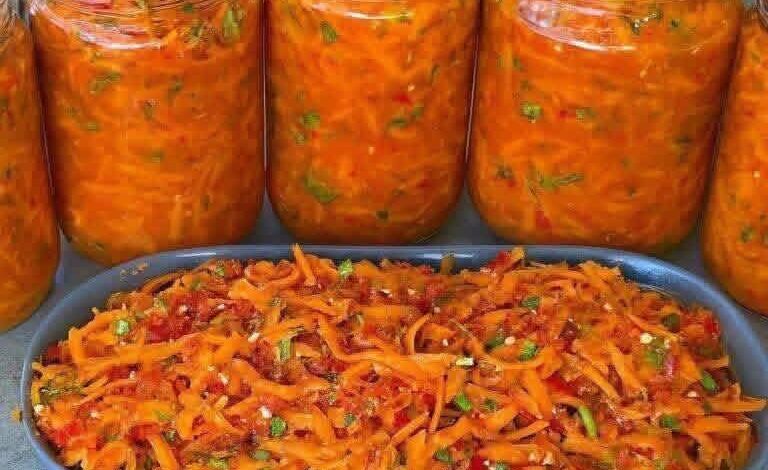
This Korean-Style Carrot Salad (Morkovcha) is a vibrant, spicy, and tangy dish born from the ingenuity of a diaspora. Let’s explore its complete story, from its fascinating history to its delicious preparation and benefits.
🥕 Introduction & History
Morkovcha, also known as Korean-style carrot salad, is a staple in post-Soviet countries like Russia, Ukraine, and Central Asia. Its story begins with the Koryo-saram, ethnic Koreans deported from the Russian Far East to Central Asia in the 1930s.
Unable to find traditional ingredients like napa cabbage for making kimchi, they creatively adapted their culinary heritage using what was abundantly available: carrots. They applied Korean salting, seasoning, and marinating techniques to carrots, inventing a new dish that captured the essence of kimchi in a different form.
Over time, it became a beloved, ubiquitous salad across the former Soviet Union, sold in markets and served at home dinners.
📝 Recipe Formation & Key Ingredients
A traditional Morkovcha is defined by a few key components. The goal is to create a crunchy, spicy, garlicky, and slightly sweet-and-sour pickle-like salad.
· Carrots: The star, cut into fine, long julienne strips for ideal texture.
· Aromatics & Heat: Fresh garlic and ground or cracked coriander are essential. Heat typically comes from paprika and cayenne or Korean gochugaru.
· Dressing Base: A simple mix of vinegar (often white or apple cider), salt, and a touch of sugar for balance.
· Infused Oil: Hot, neutral oil (like sunflower or avocado) is poured over the salad, slightly “cooking” the garlic and blooming the spices. Many recipes also include caramelized onions or onion-infused oil for depth.
🥗 Two Recipe Methods
Here are two excellent approaches: the classic “quick-pickle” and a modern TikTok-inspired version.
Method 1: Classic Morkovcha (Quick-Pickle Style)
· Prep & Salt: Julienne 1 lb (450g) carrots. Toss with 1 tsp kosher salt and let wilt for 10 minutes.
· Season: Add 1 ½ tbsp sugar, 2 tbsp white vinegar, and ½ tbsp gochugaru (or ¼ tsp cayenne + 1 tsp paprika). Mix well.
· Infuse Oil: Heat 3 tbsp oil in a small pot. Add 1 tbsp minced garlic and cook until fragrant (30 seconds). Pour the hot garlic oil over the carrots.
· Marinate: Mix thoroughly. Chill for at least 2 hours, or overnight for best flavor. Stores up to 1 week.
Method 2: Modern “Carrot Ribbon” Salad (Viral Style)
· Ribbon Carrots: Use a vegetable peeler to create wide, flat ribbons from carrots.
· Make Dressing: In a bowl, mix 1 tbsp each of soy sauce and rice vinegar, a few dashes of sesame oil, 1-2 chopped green onions, and 1 tsp minced garlic. Add chili crisp or flakes to taste.
· Combine & Massage: Add dressing to carrot ribbons. Use gloved hands to gently massage for 30-60 seconds to soften and flavor the carrots.
· Serve: Can be eaten immediately or chilled briefly. Garnish with toasted sesame seeds.
Recipe Contrast:
· Classic Morkovcha: Salty, garlicky, with coriander and vinegar tang. Deeply marinated, improves over days. Requires chilling time.
· Modern Viral Salad: Sesame-soy flavor, fresh and light. Crunchy “pasta-like” texture from ribbons. Can be eaten immediately.
📊 Nutrition & Health Benefits
This salad is as nutritious as it is tasty.
· Rich in Beta-Carotene: Carrots are an excellent source, which the body converts to Vitamin A, crucial for vision and immune health.
· High in Fiber: Raw carrots provide dietary fiber that aids digestion and promotes a healthy gut.
· Gut-Friendly: The vinegar acts as a natural preservative and can support a healthy gut environment. Some proponents suggest the specific fibers in raw carrots may help bind to and eliminate excess toxins and hormones, though more research is needed on these specific claims.
· Low-Calorie, Flavor-Packed: It’s a healthy way to add immense flavor and volume to a meal without many calories.
Nutrition Snapshot (Per Serving – Classic Recipe Estimate):
· Calories: ~130 kcal
· Fat: 10g
· Vitamin A: Over 100% of Daily Value
· Key Nutrients: Good source of Vitamin C, potassium, and fiber.
🍽️ Serving & Popularity with Lovers
This salad is incredibly versatile and has won over many fans.
What to Serve It With:
· Grilled Meats: A classic pairing with samgyupsal (pork belly), steak, chicken, or lamb.
· Hearty Meals: Complements rich dishes like roasted chicken, potato dishes, or rice bowls.
· As Part of a Spread: Served as a banchan (side dish) or a zakuska (appetizer) alongside other salads and pickles.
· Modern Twist: Enjoyed straight from the jar as a snack, in sandwiches, or on top of green salads.
Why People Love It:
· Flavor Addicts adore the “crunchy, spicy, salty, and tangy” combination that is “totally irresistible”.
· Meal Preppers appreciate that it lasts for days and “tastes even better the next day” as flavors meld.
· Home Cooks love that it’s “super easy to make” with pantry staples, yet feels special.
· Health-Conscious Eaters enjoy a dish that is “both delicious and packed with vitamins”.
🎯 Conclusion
Morkovcha is more than a salad; it’s a story of culinary resilience and fusion. It represents how a community preserved its food identity through adaptation, creating a dish that is now a staple for millions. Whether you make the classic version or the trendy ribbon style, you’re participating in a living history of flavor. It’s a testament to how simple ingredients, treated with care and tradition, can create something truly extraordinary and beloved across cultures.
I hope this comprehensive guide inspires you to make it! Would you like more details on a specific preparation technique or serving suggestion?