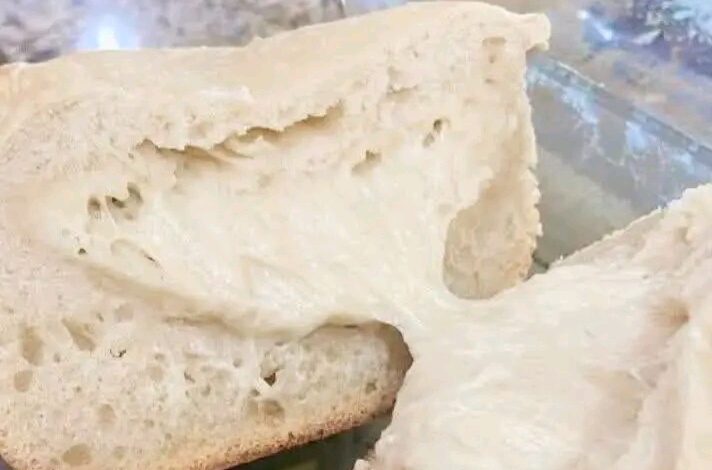
- Troubleshooting an Under-Baked Sourdough Loaf
Introduction
Sourdough baking is both an art and a science. Occasionally, even experienced bakers encounter issues such as a loaf that remains underdone despite extended baking time. If your husband’s sourdough loaf has been in the oven for an hour at 350°F (175°C) but is still undercooked inside—when it normally takes about 30 minutes—several factors could be responsible. Understanding these causes can help ensure consistently well-baked sourdough bread in the future.
Ingredients Quantity (Typical Sourdough Bread Formula)
While your current issue relates to baking rather than ingredient measurement, a standard sourdough loaf typically uses:
500 g bread flour
350–375 g water
100 g active sourdough starter
10 g salt
These proportions create a balanced dough with good fermentation and structure.
Instructions (Typical Baking Method)
Mix Dough: Combine flour, water, and starter. Mix until hydrated. Rest 20–30 minutes (autolyse).
Add Salt: Incorporate salt and knead or stretch and fold.
Bulk Fermentation: Let dough rise 3–5 hours with periodic folds.
Shape Dough: Shape into a loaf and place in a proofing basket.
Final Proof: Allow dough to rise until puffy (1–3 hours or overnight in refrigerator).
Preheat Oven: Heat oven to 450°F (230°C) with a Dutch oven or baking stone.
Bake:
20 minutes covered (steam stage)
20–25 minutes uncovered until crust is deep golden.
Cool: Allow loaf to cool at least 1 hour before slicing.
Description
Sourdough bread is known for its crisp crust, airy crumb, and slightly tangy flavor produced by natural fermentation. When baked correctly, the internal temperature should reach about 205–210°F (96–99°C).
Possible Reasons the Loaf Is Still Underdone
Oven Temperature Too Low
Most sourdough loaves bake at 425–475°F, not 350°F.
A lower temperature slows crust formation and internal cooking.
Incorrect Oven Calibration
Your oven may actually be cooler than the display shows.
An oven thermometer can reveal temperature inaccuracies.
High Hydration Dough
Dough with very high water content takes longer to bake.
Large or Dense Loaf
Bigger loaves require longer bake times.
Poor Fermentation
If the dough did not rise properly, it may bake unevenly and remain gummy inside.
Baking Vessel Issue
A thick Dutch oven or heavy pan may slow heat transfer.
Opening the Oven Too Often
Heat loss can prolong baking time.
Origin and Cultural Significance
Sourdough bread is one of the oldest forms of leavened bread, dating back over 4,000 years to ancient Egypt. Because it relies on naturally occurring wild yeast and bacteria rather than commercial yeast, it became an essential staple in many cultures. Sourdough is particularly famous in places like San Francisco, where local yeast strains create a distinct tangy flavor.
Optional Additions
To enhance sourdough bread:
Seeds (sesame, sunflower, flax)
Whole grains
Herbs such as rosemary or thyme
Olives or roasted garlic
These additions create variations while maintaining the classic sourdough structure.
Tips for Success
Use an oven thermometer to confirm accurate temperature.
Bake hotter: 425–475°F is typical.
Check internal temperature: Aim for 205–210°F.
Use steam or a Dutch oven for good crust formation.
Allow proper fermentation so the loaf rises and cooks evenly.
Nutritional Information (Approximate per slice)
Calories: ~120
Carbohydrates: ~24 g
Protein: ~4 g
Fat: ~0.5 g
Fiber: ~1–2 g
Because of fermentation, sourdough may be easier to digest and can have a lower glycemic impact compared to regular white bread.
Conclusion
An underdone sourdough loaf after an hour at 350°F is most likely due to baking at too low a temperature or oven calibration issues. Sourdough typically requires higher heat to develop its crust and fully cook the interior.
Recommendation
Your husband could try:
Preheating the oven to 450°F
Baking 20 minutes covered + 20–25 minutes uncovered
Checking the loaf’s internal temperature with a thermometer
These steps usually solve most sourdough baking problems.
Embracing Healthful Indulgence
Despite occasional baking challenges, sourdough bread remains a rewarding and nutritious homemade food. With its natural fermentation, rich flavor, and wholesome ingredients, mastering sourdough baking can transform simple flour and water into a deeply satisfying culinary tradition.
If you’d like, I can also explain the 5 most common sourdough mistakes that cause gummy or undercooked bread (many home bakers run into these).